Astrologicalmind

The magic of astrology explored

Tag: traditional astrology

  • Classical Astrology

    As Soul descends through the planetary spheres on its way to incarnation it is bathed in the sleep of forgetfulness. As it awakens, fully inhabiting its new vehicle for experience, the body, it has forgotten from where it came. Time in now its new reality: nothing existed before and nothing will be after.

    So where did we come from? And what are we made of? These are the questions that great minds have grappled with for eons. To seek understanding of classical astrology is to engage in these quests in order to gain wisdom.

    Beginning my astrological study all those years ago I was motivated by the desire to know my fate. But what I found in contemporary astrology was not so much an understanding of my place in the scheme of things as a very concise view into my psyche. As interesting as this was for a short while, I sensed that there was mote. Then I discovered classical astrology (astrology as practiced up until 1700).

    I learnt that the astrology that had been around for thousands of years bears little resemblances to its modern namesake. The foundation of classical astrology is the Hermetic wisdom inherent in the saying “As above, so below” and the acceptance that all emanates from a Divine genesis. The cosmos do not effect or cause events on earth but rather the cosmos and earthlyl realms reflect each other, for ultimately we are all part of the same Divine expression. In classical astrology it is our relationship with the Divine that is of utmost importance rather then the relationship with our parents and peers.

    The biggest criticism hurled at classical astrology is that it is events based, overly focused on prediction and that it lacks the multi-coloured shades of our modern understanding into the process of growth and evolution. But contrary to this popular belief, to be immersed into the astrology of old is to discover the rich essence of Spirit in our life.

    Story of the three realms

    As understood by our forefathers reality is divided into three realms. The highest realm is the realm of the Divine, the realm of first principles. In this world everything is constant; there are no cycles, no decay, no corruption and no form. This is the world of essence, purity and unchanging nature. In this world nothing dies, nothing is born, nothing is created and yet all of creation emanates from there.

    The lower realm is the one we are most familiar with, it is the world we live in. It is the realm of matter, corruption, decay and cycles. It is the world of constant change, creativity, beauty and infinite variety, as well as the realm of certain death. Nothing is constant and everything will change, end and begin again. This is the realm of Earth.

    The middle realm is that of the twilight, the in-between world we may enter into during our dreaming, spiritual disciplines and meditations. This is the realm that shaman travel in their healing quests. In classical astrology this was understood as the planetary realm, or the realm of the planetary spheres, through which the souls descended on their way to incarnation. The final sphere and the one closes to the earth plane was that of the Moon, known to be both entirely of the material and of the spiritual.

    The Descend of the Soul

    From the classical period it was understood that souls choose their life and then fall into matter in order to live out the chosen life. Plato (450 BCE) tells a story in the Myth of Err about souls waiting to be born. An angel, messenger of the Divine comes along with a number of lives from which the souls impetuously grab one, with little regards for the consequence of their choice.

    Taking their chosen life to the three Fates, they would wait while the Fates checked the spindle of life around which the stars, sun, moon and planets spun and make sure that everything lined up to allow the life chosen to unfold and end as it should. Only when everything lined up properly was the soul thrown down into incarnation to live out their chosen life. Falling into incarnation the soul had to pass through the seven planetary gates or spheres. At each gate they would take on qualities and gifts both good and bad that would help shape their temperamental nature.

    The soul’s descent through the planetary spheres begins with Saturn the most distant of the visible planets where they take on structure and authority. Here the soul also takes on grief, the grief of being restricted by the matter and time, the physical reality they so readily jumped into.

    At the gates of Jupiter the soul gains the desire to rule, to give and receive honour as well as the impulse for wealth and the power to act. Envy is the down side of Jupiter’s gifts. Mars gives the soul bold spirit as well as impulsive and reckless daring. Here the soul also acquires discernment and is given the ability to cut through the dross, but with these new found gifts also comes the propensity for aggression and cruelty.

    In the sphere of the Sun the soul acquires vision and the sense of perception. With these gifts comes pride and in the extreme, arrogance. Venus the next planetary sphere through which the soul passes, offers the gift of love and the impulse for passion. Beauty, luxury and the arts are also gifts of Venus, as is her negative expression, lust.

    Mercury gives the soul the analytical faculty of the mind and language with which to communicate. But he also gives them the ability for evil plotting, a yearning for money and greed. The final sphere is that of the Moon, which imparts to the soul its body and the ability to change and grow. This is where the soul acquires hunger and its pains. Gluttony is one of the Moons not so pleasant offerings.

    This journey down through the planetary spheres is most profound for it begins with Saturn ruler of Capricorn which is the point of the winter/summer solstice and ends with the Moon ruler of the summer/winter solstices. Astrologically the Moon is a symbol of the infant and so it should that the soul is born into this plane of existence as an infant.

    On the way out of this life the soul again passes through the planetary spheres in the reverse order, but this time it releases the qualities and gifts back to each planet, finally giving up structure, authority and grief at the gates of Saturn. Astrologically Saturn is the symbol of the old man and death, a fitting end to the incarnated life.

    The beauty of classical astrology goes far beyond the psychological analysis of the individual into the understanding of the soul and its relationship with the earth plane. Through the placement of the planets in our chart we can come to understand the gifts we took from the planetary sphere and the lessons they provide us with. Classical astrology is an art that connects us with our philosophical and spiritual roots and allows us a glimpse at our place within the Divine plan.
  • How the Traditional View of the Planets Differs from the Modern

    The way in which the planets were viewed and understood by the ancients differs fundamentally to the way in which modern astrologers approach them. The actual meaning of the planets has retained some of the traditional essence though much has been distorted through mistranslation and interrupted transmission. As the modern planets; Uranus, Neptune and Pluto, have adopted attributes once worn by the visible planets our understanding of the meanings and association of the classical seven has been watered down.

    Modern astrology understands and works with the planets almost exclusively from the perspective of their “universal” or common significance. Any Astrology book will provide extensive lists of words associated with and describing each planet. Such as Venus being the planet of love and representing our values, Mercury the planet of communication and representing our rational thinking, Saturn the planet of responsibility and restriction, Jupiter being associated with wealth and expansion et cetera. In traditional astrology the common description of a planet is far briefer.

    In modern times whole books have been written about individual planets, exploring every aspects of their meanings and providing thorough analysis of their expression through the signs, houses, aspect and cycles. From the psychological perspective our understanding of the planets as urges of our psyche has given us a model in which planets are seen as equal, though some may challenge us more. Saturn represents authority, father figures or restriction in everyone’s chart. How well we deal with these things will depend on Saturn’s aspects, sign and house position in our individual chart.

    The standard way of presenting the planets is in order from the Sun outwards, except for the Moon that is commonly placed after the Sun, indicating her equal status as one of the luminaries. Following the Sun and Moon we have the inner or personal planets, Mercury, Venus and Mars followed by the social planets, Jupiter and Saturn finally arriving at the trans-personals, Uranus, Neptune and Pluto. This order seems logical and clear yet bears no relation to that used by our astrological forefathers.

    Before considering how the ancients understood the planets we must exclude the so called transpersonal: Pluto, Neptune and Uranus. Planets were referred to as “wandering star” and had to be, by this definition visible like all other stars in our sky. Focusing on the traditional seven planets without competition from their younger more glamorous siblings, allows some of the qualities attributed to these younger members our solar system to be reclaimed by the seven senior planets: Saturn, Jupiter, Mars, Sun, Venus, Mercury and Moon.

    The planets were presented in this order, referred to as the Chaldean order. This order is very important and forms the backbone to our astrology whether we know it or not. It reveals the genesis of how planets relate to each other through aspects, reception and house position. The planets were ordered according to their speed, from slowest to quickest. The “outer” planets consisted of Saturn, Jupiter and included Mars for they were beyond the orbit of the earth. The Sun was, as should be in the center followed by the inner planets; Venus, Mercury and the Moon.

    One of the most beautiful images using this order is that of the descent of the Soul from the realm of the fixed stars through the planetary spheres or gates, beginning with Saturn and finally arriving on earth through the Moon: the Moon being the only planet existing wholly both in this lower world of material generation and the upper world of divine spirit, a beautiful symbol of the Soul. You will notice that Saturn rules Capricorn and the Moon rules Cancer, this is in line with the Solstices. In the earlier times the natural wheel of the Zodiac began with Cancer, the point of earthly birth.

    The ancients understood planets through their essential nature: hot, cold, moist and dry. Though they talked of benefic and malefic planets, it was understood that any planet close to its essential nature would behave well and any planet far from its nature could behave in an exaggerated manner causing trouble for the native.

    The qualities that best promote life are hot and moist, but too much heat with no moisture is not conducive to fertility. Cold and dry are the most destructive to life of all the qualities, but cold with moisture can still create growth. The so called malefic planets: Saturn and Mars, are both overly dry or hot, Saturn is extremely dry and cold, Mars is burning hot and dry. Both inhibit growth.

    The benefic and malefic status of the planets is reflected in the signs they ruled, their relationship to the luminairies, the givers of life and the doctrine of aspects. Traditionally Saturn rules both Capricorn and Aquarius, both these signs oppose Leo and Cancer, the signs of the luminaries. Mars traditionally ruled Scorpio and Aries these signs square Leo and Cancer. While Venus and Jupiter rule signs that are in sextile or trine to the domain of the Luminaries. The only planet to defy this scheme is naturally Mercury, the trickster of the gang who is always out to fool us. He rules the signs on either side of Leo and Cancer so therefore has no connection with either.

    The planets were seen as players in the drama of the native’s life, and these players were versatile; they could take many parts and often share roles. How well they fulfilled their role was dependent upon their celestial and mundane condition, in other words how they related to the unchanging realm of the divine; the zodiac and the ever moving mundane world; the houses which hinge on the horizon and the MC/IC. The planets were understood to have both specific meaning in an individual chart as well as universal or common meaning.

    In natal astrology it was the specific significance or meaning that was most important to the judgment of a native’s life. Jupiter may signify riches and wealth but this means nothing if Jupiter is not the significator of these things in particular chart. Jupiter’s role as universal significator of wealth could assist by being well aspected to the specific significator of wealth; the planet best placed to act as “the bringer of riches”.

    The traditional understanding of astrological judgment and chart delineation meant that you couldn’t deduce anything by just taking one planet in isolation. As I have said the planets played varied roles and interacted with each other in a fashion unique in every chart. A weak planet could make way for a stronger one (through reception, aspect and rulership) to fulfill or at least assist in its role. The strength of a planet would be judged by their essential dignity (rulership, exaltation, triplicity, term or bounds and face) or lack thereof. The ability of a planet to deliver its promise depended on its accidental dignity and debilities: house position, position relative to the Sun, retrograde, speed. The strength and ability to act of a particular planet would indicate how well that aspect of life would unfold.

  • Horary: “Will Harry Potter die?”

    This horary analysis was published in the June 2007 FAA journal

    Who says that astrology has to be serious? If astrology is real, if it truly reflects life and the world we live in, then surely it would reflect our humour, fiction and the make believe stories we tell.

    Unless you have been in a coma for the last six or so years, you would be aware of the Harry Potter phenomenon. If you live with any children or young adults you would surely have the date July 21 2007 marked in your calendar, as this is the day that the last installment of the Harry Potter series will be out.

    In my household it has cause great excitement as have all the previous Harry Potter launches. There is much discussion about what this last installment will contain and the previous six Harry Potter books are being reread in search for clues as to what will happen. I do not believe we are unusual in our madness. Global warming, wars, elections make way for the really important stuff: Harry Potter and his fight against the Dark Lord.

    There has been a lot of speculation about the final showdown between young Harry Potter and the dark Lord Voldemort. That Harry will defeat him seems almost a given, after all, good always triumph over evil, but will he survive the encounter? Should he survive? What would he do with himself afterwards? Fade into the sunset? Worse of all, get a job at the ministry of magic?

    Rereading the first six books was not an option for me so I decided to ask a horary question to put my mind at rest and my predictions out there for all to ponder. We only have till July 21, 2007 to wait for confirmation as to the accuracy my judgment of this horary.

    will Harry Potter die?

    They say that horary questions can only be asked if we seriously need to know the answer. Frivolous questions are not allowed, but this I would argue, is far from a frivolous question. I’m sure that there are millions of Harry Potter fans spending sleepless night wondering and worrying about Harry’s fate.

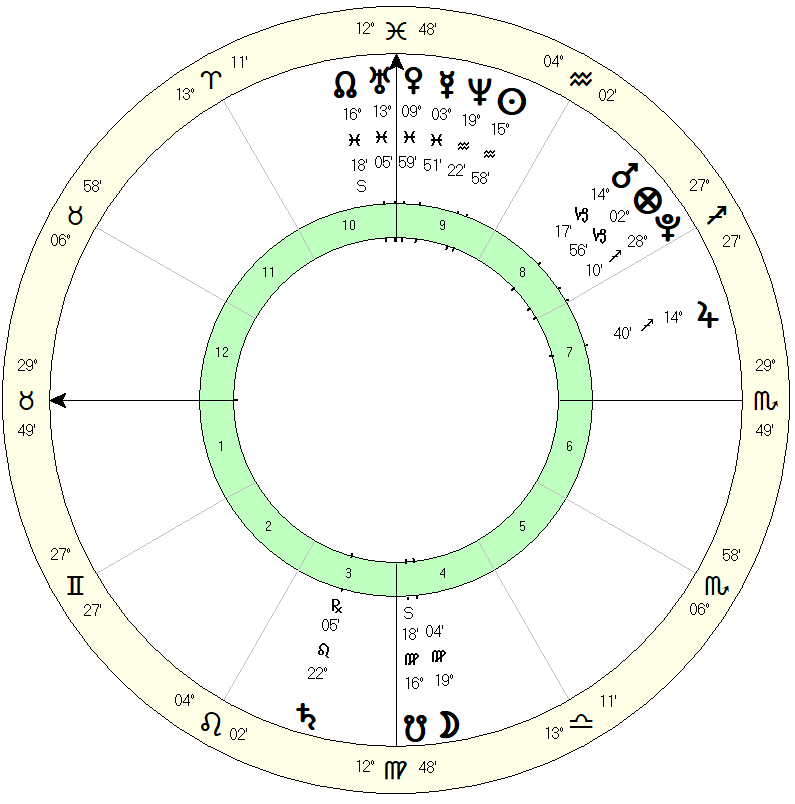
    The question was asked on Feb 5, 2007 in Melbourne Australia at 3:17 pm, giving us a 29 Taurus 50 ASC. The planetary hour is Moon making it compatible with the Taurus rising chart. The late degree of the ASC could be a problem; it indicates that it is too late to ask. Harry Potter’s fate it has already been set in stone (or at least on paper) by JK Rowlings. There’s nothing we can do to change the outcome, from that perspective it is too late, but this doesn’t prohibit us finding the answer to our question in this chart.

    As he is a stranger to me the querent, Harry is 7th house. Scorpio on the cusp makes his significator Mars, exalted in Capricorn, a very apt description of our young hero especially as he is placed in the 8th house of death showing us that death is on his mind. He is disposited by Saturn in detriment and retrograde in his turned 9th. His growing sense of the responsibility he has been fated to carry would weigh heavily on him.

    As well Saturn is co-ruler of his turned 2nd house of his resource and could represent those who support Harry including; fellow students and member of the DA (Dumbledore’s Army) and the Order of the Phoenix, who have all been devastated by the loss of their exalted leader, Albus Dumbledore at the end of book six. That Capricorn is intercepted may show us that there will be some unexpected allies who will appear.

    The last aspect Mars (Harry) made was a trine to the Moon at 14 degree 30 just after his sextile with Uranus at 13 degrees. He did encounter an explosive battle just before the funeral of his mentor Dumbledore and the bittersweet break up with Ginny in order to spare her the danger of being associated with him. Harry is becoming far more serious about his responsibilities (Mars in Capricorn).

    Death would be signified by either the radical or turned 8th house, so Jupiter or Mercury. There is no applying aspect from either to Mars (Harry). There is however an antiscia conjunction between mars & Jupiter. The turned Part of Death is at 0 Gemini and the turned Part of Danger & Violence is at 11 Gemini, so both are ruled by Mercury and again no aspect with Mars is forming. Mercury is in Pisces in detriment much weaker then Harry Potter Mars in Capricorn. The antiscia between Harry and the radical lord of death, Jupiter is not enough to indicate his death, though it may show us that he will come close to it and may even appear dead.

    So Harry will survive, but what about Lord Voldemort?

    Lord Voldemort is signified by the house of open enemies, the turned 7th house. He is Venus in Pisces exalted on the MC. Venus is applying to square Jupiter (Lord of 8th ruler) just after she encounters by conjunction explosive & erratic Uranus. She will then conjunct the North Node before the sextile with Mars (Harry) perfects at 22 Pisces. Jupiter in Sag (death) is stronger then Venus in Pisces (Lord Voldemort), which is also being received by Jupiter. Death receives the Dark Lord.

    The Parts of Death and Danger & Violence, tell us the same story. At 0 and 11 degrees of Sagittarius respectively, they are also ruled by Jupiter (ruler of death) which will square Venus in 5 degree 21 minutes. Could this be the 5 month and 11 days before his public demise, very close to the July 21 2007 date for the release of “Harry Potter and the Deathly Hallows”?

    Wanting to be thorough I looked for any relevant fixed stars. On Harry’s side I found that Mars was with Ascella (13 Cap 41) which according to Vivian Robson is “of the nature of Jupiter and Mercury and gives good fortune and happiness”. Conjunct the 7th house cusp I found Bungula (29 Scorpio 38) which has “the influence of Jupiter and Venus and gives beneficence, friends, refinement and place of honour.” Not bad for our hero!

    Looking at Lord Voldemort I found Skat (8 Pisces 55) with his significator Venus which “is of the nature of Saturn & Jupiter and with Venus gives psychic, occult interests, friends among opposite sex, favorable for gain.” The real gem came when I looked at the fixed star on his ASC; Alcyone (29 Taurus 59), this star is one of the Pleiades and “causes love, eminence, blindness and accidents to the face”. The influence of the Pleiades are “distinctly evil and when rising are said to cause blindness, injuries to the eyes & face, disgrace, wounds, stabs, exile, imprisonment, sickness, violent lust and military preferment.”

    My judgment is clear; Harry will struggle and may have a few setbacks (Mars in the 8th disposited by Saturn in detriment and retrograde), he may even appear to die, but will survive in the end with the help of friends known and unknown. As for Lord Voldemort, he will seem to triumph at first (Venus on the MC) but in the end he will be either blinded or disfigured before meeting his violent death possibly at the hands of one of Harry’s supporters.

    I judge that support for Harry will come at the eleventh hour from an unlikely or unexpected quarter and that there may be some ambiguity in the demise of the Evil Dark Lord. Being a powerful wizard well versed in the dark arts he may cheat or make a deal with death (Venus squares Jupiter with reception), but be slain in his final encounter with Harry (Venus sextiles Mars).

    As a postscript, it is likely to that Harry & Ginny will get back together after the final battle. After all Mars makes its sextile aspect with Venus at 22 Pisces, after Venus encounters Uranus & Jupiter. After Lord Voldemort is finally vanquished, Venus can go back to being Ginny to Harry’s Mars.

    Now for anyone out there still skeptical about the validity of this chart let me tell you a little story about the Pleiades. They were the seven daughters of Atlas & Pleione. Six are visible: Alcyone, Maia, Electra, Taygete, Celaeno and Sterope but their seventh missing or lost sister is said to be Merope who married a mortal and hid her face in shame at being the only one not married to a god. Any keen Harry Potter fan would recognize that Merope is the name of Lord Voldemort’s mother, who like her mythical counterpart shamed her family by marrying a mere muggle (a non-magical person); Tom Riddle.

    Herein lays the true mystery of astrology.

    Postscript

    Not one to usually toot my horn, I will now do so.

    For any of you that haven’t read Harry Potter and the Deathly Hallows here is a round down of the important points: in the final battle between Lord Voldemort and Harry, Harry does appear to die, but doesn’t, His friend Nevil becomes an unlikely hero and bad guy Snape ends up being the good guy after all. Oh! and Harry does end up with Ginny.

    So the blinding of Voldemort doesn’t happen, unless you count the more symbolic blindness of not seeing Harry’s true strengths… Don’t you just love astrology!

  • Temperament: An Astrological Look at two Different Educational Methods: through the temperamental nature of their founders

    According to seventeenth century master astrologer William Lilly, working out the temperament was the first and most important step of natal judgment. In my quest to learn and capture the insights temperaments gave our astrological forefather, I came upon the notion of identifying the significator of manner as a crucial step in understanding how the temperament would manifest in the life.

    Working with temperaments alone, gives us limited information, but identifying the planet that signifies the “manner” seems to unlock the secret of how an individual basic nature will manifest. The significator of manner was also referred to by other authors as the quality of the soul. The temperament shows us the innate nature of an individual whilst the quality of the soul or manner, show us what they want or choose to become.

    The significator of manner was identified by William Lilly as either a planet in the 1st house in the same sign as the ASC, a planet conjunct or in partile (to the degree) aspect with Moon or Mercury, ruler of the ASC if aspected by one of his rulers or finally if no planet fits any of the above conditions you would judge the planet with the most essential dignity at the degree of the Moon and Mercury to be the significator of manner, that is the planet through which the temperament is expressed. It is important to note how the planet signifying manner is configured in the chart, what it rules, aspects and its dispositor.

    The catch was that only Mercury, Venus, Mars, Jupiter and Saturn seemed to be eligible for the role of significator of manner. The luminairies and the outer planets (unknown in Lilly’s time) modify the planet(s) of manner and add much to the story it tells, but can not function alone.

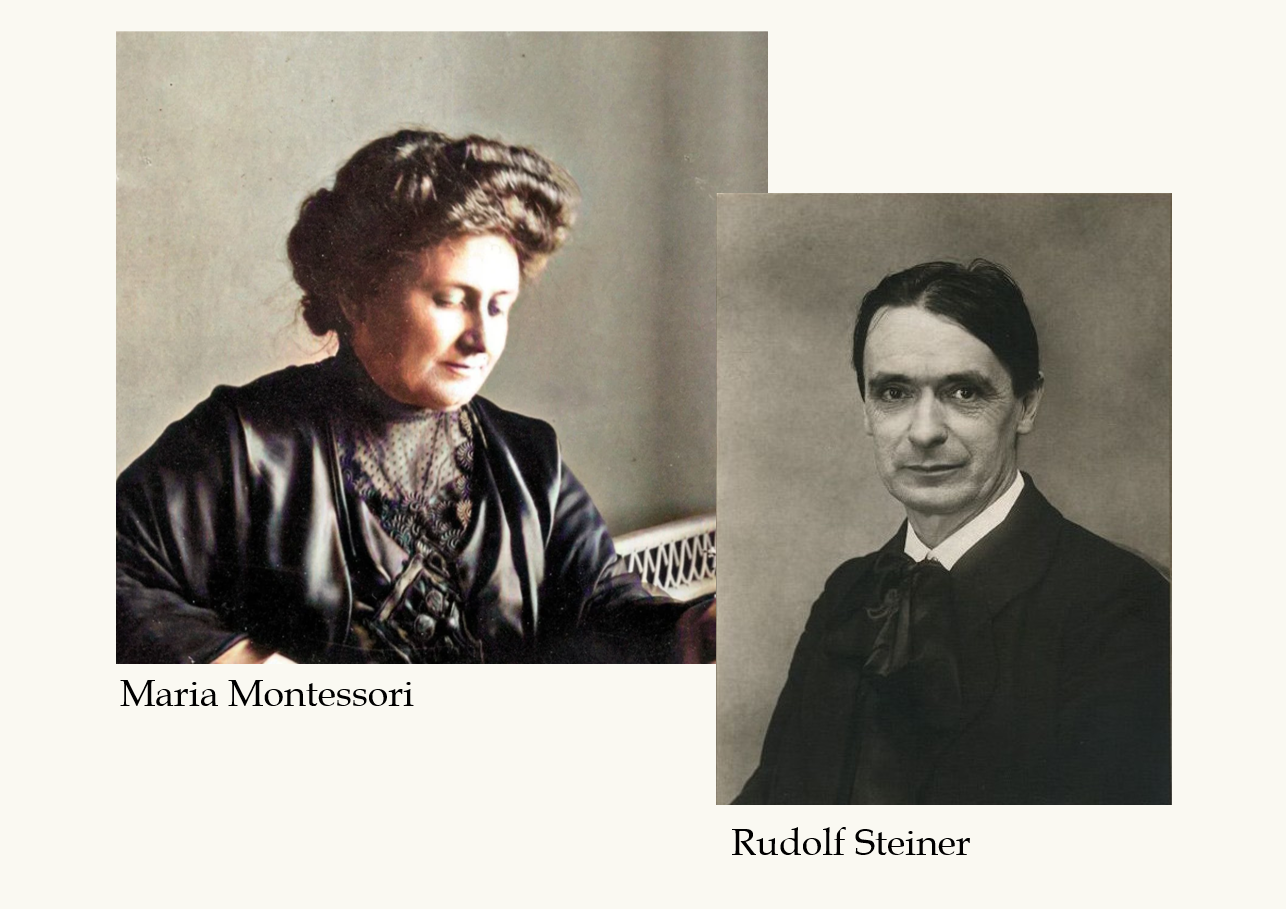
    That a person’s life work reflects their nature should be a given, after all we can not divorce ourselves from who we are (no matter how hard we may try). Looking at the two educational methods that are Maria Montessori’s and Rudolf Steiner’s legacies we should be able to recognize their founders imprint.

    In particular will the basic nature of these gifted individuals as defined by their temperament and the planet that signifies their manner, be reflected in their educational method?

    A brief overview of the two educational methods

    Maria Montessori developed her method of education through the observation of children rather then by the application of theories. Her medical and academic training allowed her to approach her work in a very structured and intellectual manner. She observed the child’s innate ability and joy in learning and understood it to be a natural result of a child’s interaction with his environment. Many of Montessori’s then radical ideas about children and their education have now become part of the excepted norm.

    Whilst Maria Montessori focused her entire working life on education, Rudolf Steiner was far more eclectic. He was a visionary and came to his development as an educator through his profound understanding and experience of the spiritual nature of the world and man. His point was to nurture the spiritual development of the child and to allow it to unfold free from adult (and therefore corrupted) interference.

    Both systems have similarities, in that the respect of the child’s ability to learn is paramount and that the learning environment is child centered and focused. Both maintained that children learn only when treated with respect and in a nurturing environment. Both also contained an element of idealism, believing that through the child the world could be changed.

    Briefly, the Montessori system emphasizes the prepared and ordered environment in which the child is free to explore, naturally learning through his senses, beginning from the concrete evolving to the abstract. The Montessori system believes that the child’s innate desire to learn will lead him to naturally acquire the skills needed at the point when he is ready. Montessori discourages the exposure to fantasy and fairy tales, believing this to confuse the child and that the “real” world was fascinating enough.

    The Steiner method on the other hand encourages imagination and believes that the child comes to understand the nature of the world through colour, play and myth. The Steiner method emphasizes the spiritual nature of the child and encourages its expression through movement, storytelling and play. They advocate not exposing children to the academic subject until the age of eight.

    Maria Montessori, her life and work

    Maria Montessori

    Maria Montessori was born in Italy in 1870. As a child she showed a great interest and aptitude to study and was encouraged by her mother to pursue an academic career. After many difficulties and restrictions she became the first woman in Italy to qualify as a medical doctor. She later went back to school to study psychology and philosophy. In 1904, she was made a professor of anthropology at the University of Rome. She gave up both her medical and academic career in 1906 to focus on the education of children full time. Until her death in 1952 she traveled the world revolutionising pedagogy.

    Her personal life was more austere. She had a son, Mario, with a colleague, Dr. Montesano, the couple never married. It was said that Maria and Dr. Montesano agreed to never marry, but eventually Dr. Montesano reneged on his part and married someone else. Mario was raised by a family in the countryside of Rome and his mother would visit every once in a while.

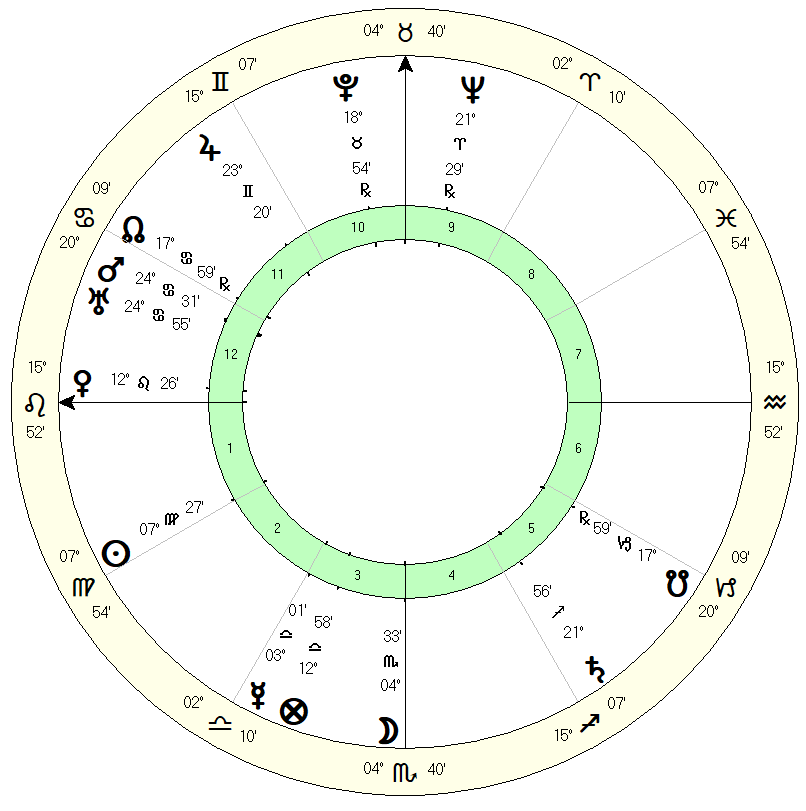
    Judging her temperamental nature through her natal chart we find a woman whose more external nature (ASC and Sun) were predominantly Choleric, so basically hot and dry, with some Phlegmatic (cold, moist). This means that her natural inclination was to expand and move outwards (hot) and be very structured and defined. There can be a tendency for Choleric people to be dogmatic and stubborn and if biographical reports are to be believed, this was a part of her character. The Phlegmatic quality resided entirely in her Scorpio Moon conjunct her IC (foundations) and ruling her 12th house.

    Identifying the significator of her manner, the planet through which her nature is focused, we find that Venus is in her 1st house in the ASC sign of Leo in antiscia conjunction to Pluto in the 10th house.

    Venus is powerfully positioned on her ASC and rules her MC, 3rd house as well as Mercury (conjunct the 3rd cusp). Clearly we see career coupled with early learning and children (Mercury, natural ruler of children, despositor of the 5th house ruler Jupiter and PoF in Gemini). Her choleric nature was most clearly expressed in these realms of life through powerfully placed Sanguine Venus, helping to temper her overly choleric nature. Coupled with the influence of powerbroker Pluto, we can symbolically see the incredible transformation of childhood education that she accomplished.

    As her the phlegmatic part of her nature resides entirely in her Scorpion Moon and was ruled by Mars in all dignities: domicile, triplicity, term and face. We could judge Mars as a secondary significator of manner. Mars himself is in the phlegmatic sign of Cancer (in mutual reception with her Moon in Scorpio) and conjunct Uranus. Today we may forget how radical some of her ideas on children and education were, as well as how radically she lived her private life.

    There is idealism in her educational philosophy that can be seen in the partile trine between her 9th house Neptune and 5th house Saturn: idealizing the structure of the environment. Neptune is also squaring her Mars and is in antiscia conjunction with her natal Sun.

    The relative positions of Venus and Mars in regards to the ASC indicate that Mars came to the forefront later, when by direction the ASC and Mars had conjoined, at about the age of 21/22 when she began to fight to attend medical school. This was a woman who fought for and won everything she achieved in her life, beginning with her conservative father, the authorities at University and later other educationalists. Mars rules her foundation and father (4th house) and higher education (9th house). Privately, her life was not as successful as her career. She had a child out of wedlock (5th ruler Jupiter is in detriment) who was raised by another family and she never married. Her personal fights may have ended in a far more phlegmatic manner then her public ones.

    Rudolf Steiner

    Rudolf Steiner

    Rudolf Steiner was born into a stable working class family. From a very young age Rudolf was aware of things unseen. As a boy he showed such intelligence and eagerness to learn that his father arranged for him to be educated. Steiner studied far more subjects then was required, doing outside reading on subjects as philosophy, psychology, science and geometry.

    He was inspired by Goethe, who he recognized as one who perceived the spiritual in Nature. Eventually Steiner founded the Anthropophy society (a break away faction of the Theosophical movement with more emphasise on the Western mystical tradition, rather then the eastern bent of the Theosophist).

    Unlike Montessri he did not dedicate his life to education, but rather to a far more expansive palette of interests, with an overall theme of transforming society through the recognition of the spiritual nature of man. He was extremely prolific, writing some 33 books and delivering over 6000 lectures in his lifetime. His development of the Waldorf school happened later in life at the age of 57 at the instigation of friends.

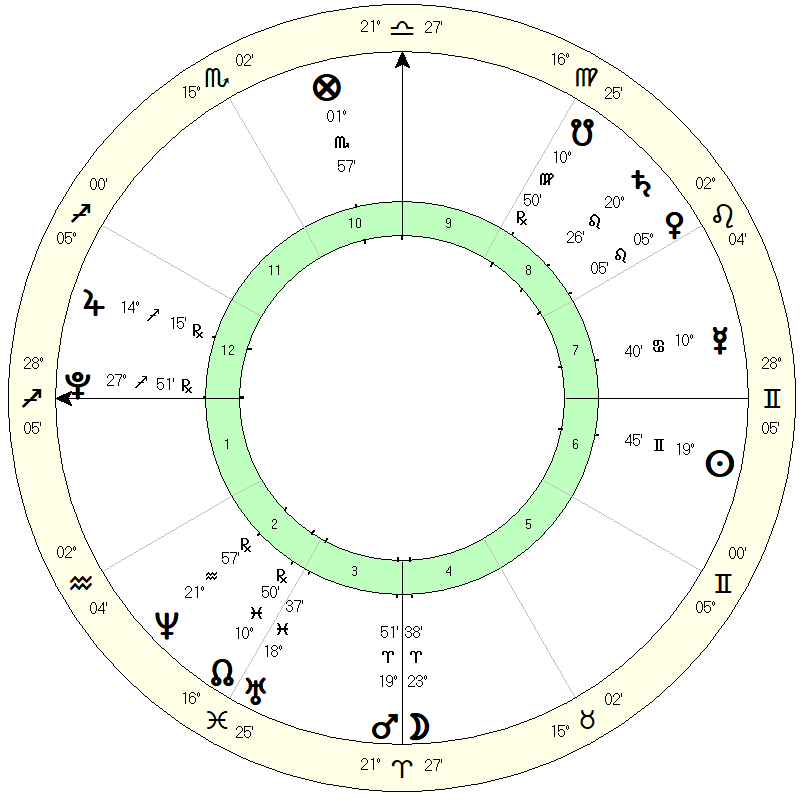
    Rudolph Steiner’s chart indicates a Phlegmatic/Melancholic temperament giving him a predominately cold nature (with equal moist and dry). This means that his movement is down and inwards. This is a man who was able to spend much time alone and in contemplation. The moisture in his nature gave him the ability to connect things together whilst the dryness allowed him the ability to put structure to his insights.

    As no planet was in the 1st house, no planet was in partile aspect or conjunction to either Moon or Mercury (though Neptune conjuncting Mercury will be a modifying influence), the ASC ruler Mars was not aspected by any of his rulers, we are left with Mercury as the planet with the most dignity at the Moon and Mercury degrees as the significator of manner.

    So his manner was signified by occidental therefore melancholic Mercury, conjunct Neptune in Pisces. The dispositor of both is Jupiter in Leo conjunct this MC. Jupiter is the universal significator of all things philosophical, religious and spiritual. This indicates that his nature was expressed through a dry mind that was able to perceive things unseen (Neptune). He would want or choose to communicate and share these perceptions with the world.

    Mercury also tells us about the great variety and amount of interest and work he did. Mercury rules the 8th and 11th houses, Moon, Uranus and Saturn giving us further clues as to how and in what areas of life Steiner’s very cold, contemplative nature would be best expressed.

    The Lunar contact, Moon is in opposition and is received by Mercury, supported by Neptune conjunction, indicates the reflective nature of Steiner’s mind. Through his Moon, ruler of the traditional 9th house of dreams, philosophy and religion, his nature is drawn to the unseen. The Melancholic nature of his Moon (and Mercury) gives him the ability to structure his perception of the spiritual world. His desire to awaken humanity consciousness to the spiritual nature of life is clearly indicated by Mercury’s dominion over the 11th house of community and 8th house of death. After all we need to accept the death of the body before we can understand the life of the Soul.

    The only heat in the temperament comes from his ASC ruler Mars. It is interesting to note that Pluto is conjunct ASC ruler Mars and is in almost perfect antiscia with MC. This allowed him to bring the energy and power (Mars conjunct Pluto) needed to project his work out to the world as he did.

  • Horary: What’s wrong with Sally?

    What’s wrong with Sally?

    Having spent the day with a friend of mine I became concerned for her well being. She seemed very nervous and stressed, to the point where I was compelled to ask a horary. At the time of asking I was not aware of her medical history.

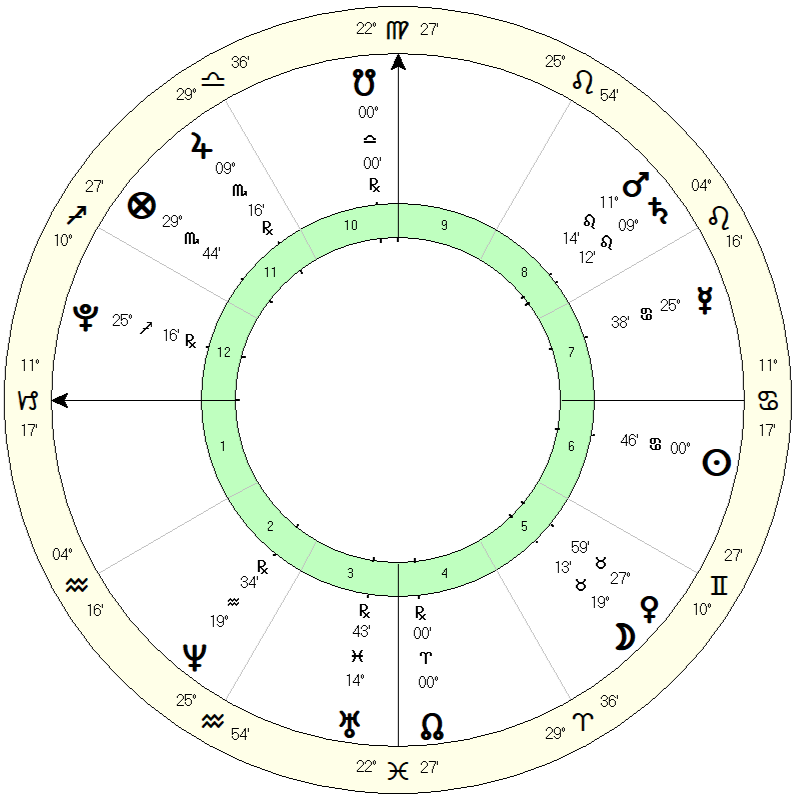
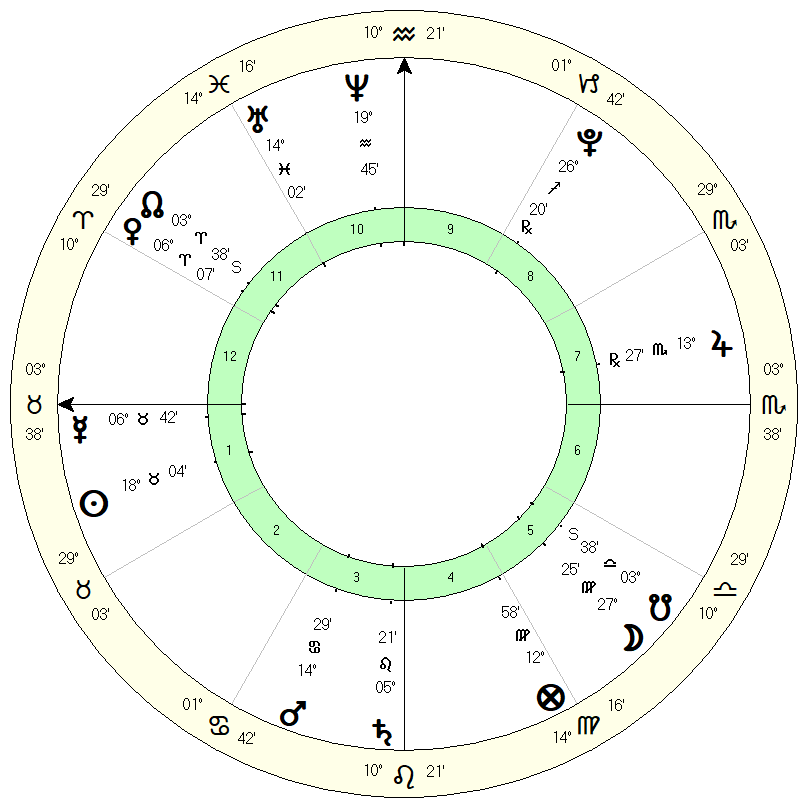
    On June 22, 2006 at 5:51 PM in Melbourne Australia (AEST –10:00) I asked the question: “What’s wrong with Sally?”. Seeing as Sally is my friend I gave her the 11th house therefore Venus signifies her, appropriately as she is a young, blond Venus like woman. Because this is a medical horary I would also use the Moon as representing her body.

    What\'s wrong with sally?

    Looking at Venus we see that she is in Taurus, at first this looks pretty good as this is the sign of her rulership. But on closer inspection we see that Venus in an oriental position to the sun and is therefore sanguine; hot and moist, but she is in the melancholic; cold & dry sign of Taurus. This is a positive indication that she is seriously out of sorts. Moon is exalted in Taurus and disposited by Venus. Both are strongly essentially dignified which is a good sign that she will survive this ailment.

    To understand what afflicts Venus (Sally) we need to find which planet is causing her problems. She rules herself, with Moon holding the exaltation and triplicity over her. Moon represents the body and it’s last aspect was a square to Mars (in Leo). Venus has been chasing an applying sextile to Mercury, but this will not perfect. Venus and Mars represent the disease, both are in fixed signs indicating that this is a chronic long term condition.

    Venus in her own sign, her “first house” is an indication that what afflicts her is located in her head. (Venus at 27 Taurus = disease of thick melancholy and thin phlegm. Causing pain to the head.) Venus is chasing Mercury in Cancer, and though she will never perfect, being within orb indicates that the eyes maybe afflicted. This would be a secondary reaction rather then a primary cause of the illness. Mars also indicates the head and in Leo indicates a lot of heat, fever. (Mars 11 Leo = Causes headaches and too much blood.)

    All this is supported by the ruler of the turned sixth house (6th from the 11th = 4th with Pisces on the cusp) Jupiter as the indicator of her illness being in her 1st house, the head again. Jupiter is retrograde, this is a recurring problem and is fixed so long term as opposed to acute. Jupiter is being received and squares Mars adding support to Mars’s involvement with the situation. He is also in partile square to Saturn in detriment. Both of these planets are in her 10th house indicating the involvement of the work sector in this problem.

    There is no perfecting aspect between Venus and either the radical or turned Lord of the eighth (death). She (Venus) is essentially stronger then the Lord of her disease Jupiter more indication that she will not die of this condition.

    I judged Sally to be suffering from a problem of too much heat or blood to her head, a recurring disease that possibly affected her eyes as well. She is stronger then the disease and therefore will survive the ailment. The disease is caused by her (Venus) with an involvement of Mercury, so too much stressful thinking. With the connection to Saturn/Mars in the 10th the stress may have been brought on by work.

    Venus is at 27 Taurus 59, she will move into Gemini (a hot moist sign, like herself) in just over 2 degree. Being in a fixed sign I judged that she would recover from her illness in just over 2 months when she (Venus) would move into a more congenial sign.

    The outcome:

    Sally suffered from bleeding in the brain. This was a recurring condition from which she first suffered 5 years previously, and is a weakness in the actual brain itself. The flair up of the problem first makes itself known by affecting her eyes and with fuzzy headaches. This current bout was brought on by too much stress at work. She lost her job in a very underhanded manner. The only treatment is rest and avoiding stress. She began to recover after about 2 months in late Aug 2006.

    It was later discovered that her stress level was also affected by a hormonal imbalance. I wondered whether this could be related to Venus thing.

  • Horary: Beaconsfield Gold Mine Disaster

    Horary astrology can reveal and illustrate the most mysterious and paradoxically the most practical and verifiable aspects of astrology. All horary astrologers have examples of charts that “speak” so eloquently the truth that they want to share them with anyone capable of understanding. There is no denying astrology when a horary chart works; the answer is clearly visible, the story behind the question symbolically illustrated in detail and the magic of astrology validated.

    Some say that a horary question can only be asked by someone who has a vested interest or relation to the thing being asked about, but as long as there is a genuine desire or need for the answer a horary can be asked. Here is an example of a chart that illustrates its validity regardless of the lack of direct relationship between the querent and the thing being asked about. Ultimately this chart is an outstanding example of the power and beauty of astrology.

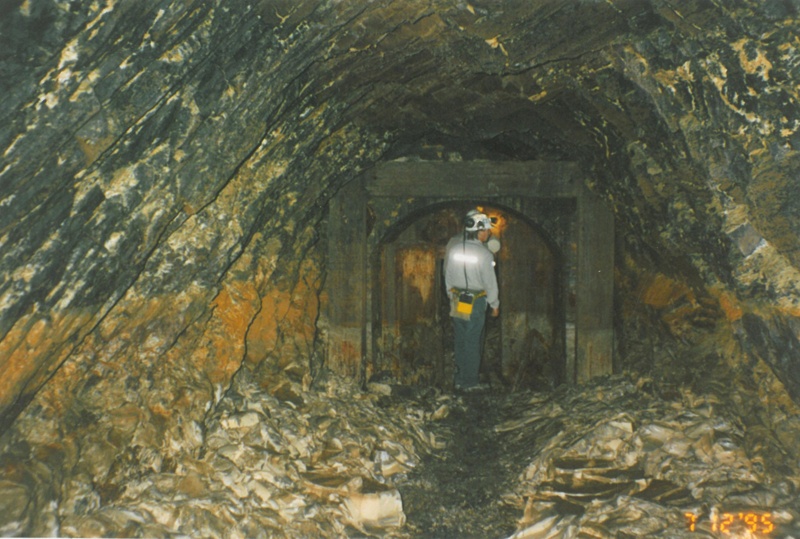
    Everyone in Australia would be aware that on Tuesday April 25th, 2006 a seismic event triggered an underground rock fall at the Beaconsfield gold mine in northern Tasmania. Three men were trapped below ground: Larry Knight, Brant Webb and Todd Russell. Two days later (April 27 at 7:22 am) the body of Larry Knight was found. Miraculously the other two men were found to be alive on April 30th at 5:45 pm when rescuers heard them singing. The news of their survival created euphoria in the small mining community of Beaconsfield and an international news media frenzy.

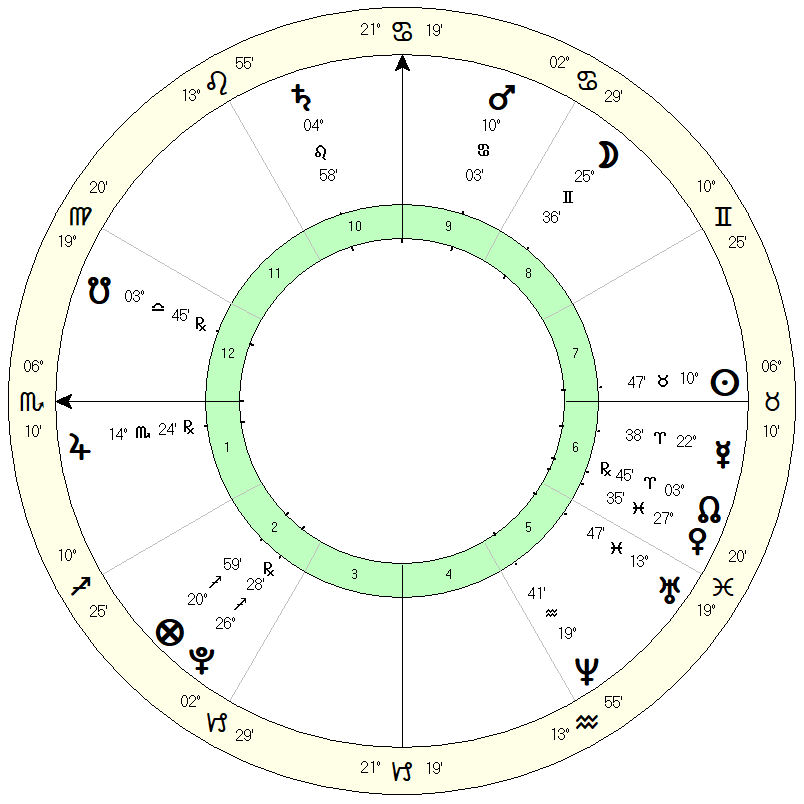
    The next day this horary question was asked by someone unrelated and unknown to anyone associated with this event: “Will these men get out alive?” (May 1 2006, 5:16 pm, Melbourne Australia AEST) The querent was motivated to ask the question because the initial reaction to Brant and Todd’s discovery was overshadowing the fact that they were still trapped deep underground in a very dangerous situation. At that point in time the media was reporting that the men would be out within 48 hours. The querent felt strongly that their rescue far from being a certainty.

    Will these men get out alive?

    In horary the most important thing is to identify the significators of the question. The most common way of identifying a significator is to use the ruler of the house in concern. The other way is to use the planet which is the natural ruler of the matter.

    In this question we need to find significators for the trapped men, the rescuers and death. The rescuers are workers to whom we can give the 6th house and therefore they are signified by Jupiter in Scorpio retrograde. Death would be the radical 8th house, Mercury in Aries, as well as the turned 8th house once we have identified the trapped miners.

    Because the querent has no connection with the question or its outcome we need not be concerned with her. The question is what signifies the trapped men?

    We could use the 7th house, being the house of “strangers and others”, giving us Venus in Pisces conjunct North Node, albeit in the turned 12th house. The exalted nature of Venus with the benefic North Node doesn’t seem to describe two men trapped underground with a lot of loose rock over their heads. We could use the 1st house, in which case we get Mars in Cancer, receiving both the rescuers (Jupiter) and death (Mercury). At first this seemed a good choice, but when we consider the natural ruler of miners, Saturn, we find a much better candidate for significator.

    Saturn (the miners) is in detriment in the 10th house, at 4 degrees 58 minutes of Leo. He also rules the 4th house of the chart which is mines and his dispositor the Sun rules gold, this seemed appropriate; they were trapped in a gold mine!

    Though underground they are very exposed through the media. Interestingly Saturn was nearly 5 degrees into Leo and the men were found almost 5 days after they became trapped. Also the Sun receives the miners into his rule and is separated from a square with Saturn by 6 degrees, at the time of the question the men had been trapped for 6 days. Both of these facts give us a clue as to the timing in this chart.

    Now the question is about the men’s survival or lack of, therefore their possible death. Looking at the ruler of the radical 8th house of death we find Mercury at 22 degrees of Aries. There is no aspect between the men and significator of death. Expect for Saturn receiving Mercury into his fall (which could indicate the men’s understandable fear of dying), there is no reception between the two. Nor do we find any antiscia connection. This bodes well; they will come out alive, but when? Can this chart tell us?

    Digging further (no pun intended) we look to the rescuers which are signified by the ruler of the 6th house of workers, Jupiter in Scorpio retrograde. Jupiter is moving back into the via combusta (15 degree of Libra to 15 degrees of Scorpio), seen as a malefic part of the zodiac and is in opposition to the Sun (gold mine) in Taurus (earth) both indicating their dire situation. The rescuers certainly were facing opposition to a lot of earth down in the mine. The retrograde condition of Jupiter tells us something about the slow progress the rescuers were having in getting to the trapped men. Jupiter will perfect a square with Saturn at around 9 degrees Scorpio/Leo, possibly indicating 5 days (degrees) time frame.

    Looking to the Moon for the timing of events we find that she separated from a sextile with Mercury (significator of death) 3 degrees ago. This fits in roughly with the timing of the finding of Larry Knight’s body. The Moon will next square Venus in Pisces before ingressing into Cancer. Her move into her domicile is another promising sign for a positive ending to the situation.

    In mundane astrology the Moon represents the people. If we take the Moon to indicate the people, her position in Gemini indicates being in two minds; exhilaration at Brant and Todd’s survival, worry at their continuing state of danger and grief at the death of their colleague Larry. The Moon’s antiscia degree is 4 Cancer 23, squaring the Nodes, a clear picture of the people’s future, hanging on the balance of fate. This is interesting but doesn’t give us any timing for the men’s rescue.

    Going back to the question, we see that it is about their death or rather their escape from it. Looking at Mercury (death) we see that he is Saturn’s FALL, therefore is being received by Saturn in a negative way. Once he moves into Taurus, the situation will be changed and (death) will have no connection with Saturn.

    The miners were under the threat of death (receiving Mercury into their fall) until the moment they walked out of the mine, and they would have been aware of all the possible dangers. There could have been another earth tremor that would have killed them or their rescuers …So once the miners (Saturn) no longer receive death (Mercury), they are no longer under its threat or power, they are free. Mercury will ingress out of Aries and into Taurus in seven and half degrees or 7 and half days; could this be our time timing?

    On May 9 at 5:58 am Todd and Brant walked out of Beaconsfield mine. This was exactly 7 days, 12 hours and 42 minutes after the question was asked. Mercury was 7 degrees and 21 minutes from its ingress out of Aries. Not quite exact, but pretty close. In fact Brant & Todd were freed from the mine at 4:47 and 4:54 respectively making it 7 days, 11 hours and 31/38 minutes, making it even closer. When Mercury moves out of Saturn’s fall, death (Mercury) ceases to be a threat to the men. And so it was!