
Astrologicalmind

The magic of astrology explored

Tag: planets

  • How the Traditional View of the Planets Differs from the Modern

    The way in which the planets were viewed and understood by the ancients differs fundamentally to the way in which modern astrologers approach them. The actual meaning of the planets has retained some of the traditional essence though much has been distorted through mistranslation and interrupted transmission. As the modern planets; Uranus, Neptune and Pluto, have adopted attributes once worn by the visible planets our understanding of the meanings and association of the classical seven has been watered down.

    Modern astrology understands and works with the planets almost exclusively from the perspective of their “universal” or common significance. Any Astrology book will provide extensive lists of words associated with and describing each planet. Such as Venus being the planet of love and representing our values, Mercury the planet of communication and representing our rational thinking, Saturn the planet of responsibility and restriction, Jupiter being associated with wealth and expansion et cetera. In traditional astrology the common description of a planet is far briefer.

    In modern times whole books have been written about individual planets, exploring every aspects of their meanings and providing thorough analysis of their expression through the signs, houses, aspect and cycles. From the psychological perspective our understanding of the planets as urges of our psyche has given us a model in which planets are seen as equal, though some may challenge us more. Saturn represents authority, father figures or restriction in everyone’s chart. How well we deal with these things will depend on Saturn’s aspects, sign and house position in our individual chart.

    The standard way of presenting the planets is in order from the Sun outwards, except for the Moon that is commonly placed after the Sun, indicating her equal status as one of the luminaries. Following the Sun and Moon we have the inner or personal planets, Mercury, Venus and Mars followed by the social planets, Jupiter and Saturn finally arriving at the trans-personals, Uranus, Neptune and Pluto. This order seems logical and clear yet bears no relation to that used by our astrological forefathers.

    Before considering how the ancients understood the planets we must exclude the so called transpersonal: Pluto, Neptune and Uranus. Planets were referred to as “wandering star” and had to be, by this definition visible like all other stars in our sky. Focusing on the traditional seven planets without competition from their younger more glamorous siblings, allows some of the qualities attributed to these younger members our solar system to be reclaimed by the seven senior planets: Saturn, Jupiter, Mars, Sun, Venus, Mercury and Moon.

    The planets were presented in this order, referred to as the Chaldean order. This order is very important and forms the backbone to our astrology whether we know it or not. It reveals the genesis of how planets relate to each other through aspects, reception and house position. The planets were ordered according to their speed, from slowest to quickest. The “outer” planets consisted of Saturn, Jupiter and included Mars for they were beyond the orbit of the earth. The Sun was, as should be in the center followed by the inner planets; Venus, Mercury and the Moon.

    One of the most beautiful images using this order is that of the descent of the Soul from the realm of the fixed stars through the planetary spheres or gates, beginning with Saturn and finally arriving on earth through the Moon: the Moon being the only planet existing wholly both in this lower world of material generation and the upper world of divine spirit, a beautiful symbol of the Soul. You will notice that Saturn rules Capricorn and the Moon rules Cancer, this is in line with the Solstices. In the earlier times the natural wheel of the Zodiac began with Cancer, the point of earthly birth.

    The ancients understood planets through their essential nature: hot, cold, moist and dry. Though they talked of benefic and malefic planets, it was understood that any planet close to its essential nature would behave well and any planet far from its nature could behave in an exaggerated manner causing trouble for the native.

    The qualities that best promote life are hot and moist, but too much heat with no moisture is not conducive to fertility. Cold and dry are the most destructive to life of all the qualities, but cold with moisture can still create growth. The so called malefic planets: Saturn and Mars, are both overly dry or hot, Saturn is extremely dry and cold, Mars is burning hot and dry. Both inhibit growth.

    The benefic and malefic status of the planets is reflected in the signs they ruled, their relationship to the luminairies, the givers of life and the doctrine of aspects. Traditionally Saturn rules both Capricorn and Aquarius, both these signs oppose Leo and Cancer, the signs of the luminaries. Mars traditionally ruled Scorpio and Aries these signs square Leo and Cancer. While Venus and Jupiter rule signs that are in sextile or trine to the domain of the Luminaries. The only planet to defy this scheme is naturally Mercury, the trickster of the gang who is always out to fool us. He rules the signs on either side of Leo and Cancer so therefore has no connection with either.

    The planets were seen as players in the drama of the native’s life, and these players were versatile; they could take many parts and often share roles. How well they fulfilled their role was dependent upon their celestial and mundane condition, in other words how they related to the unchanging realm of the divine; the zodiac and the ever moving mundane world; the houses which hinge on the horizon and the MC/IC. The planets were understood to have both specific meaning in an individual chart as well as universal or common meaning.

    In natal astrology it was the specific significance or meaning that was most important to the judgment of a native’s life. Jupiter may signify riches and wealth but this means nothing if Jupiter is not the significator of these things in particular chart. Jupiter’s role as universal significator of wealth could assist by being well aspected to the specific significator of wealth; the planet best placed to act as “the bringer of riches”.

    The traditional understanding of astrological judgment and chart delineation meant that you couldn’t deduce anything by just taking one planet in isolation. As I have said the planets played varied roles and interacted with each other in a fashion unique in every chart. A weak planet could make way for a stronger one (through reception, aspect and rulership) to fulfill or at least assist in its role. The strength of a planet would be judged by their essential dignity (rulership, exaltation, triplicity, term or bounds and face) or lack thereof. The ability of a planet to deliver its promise depended on its accidental dignity and debilities: house position, position relative to the Sun, retrograde, speed. The strength and ability to act of a particular planet would indicate how well that aspect of life would unfold.
  • Horary: Beaconsfield Gold Mine Disaster

    Horary astrology can reveal and illustrate the most mysterious and paradoxically the most practical and verifiable aspects of astrology. All horary astrologers have examples of charts that “speak” so eloquently the truth that they want to share them with anyone capable of understanding. There is no denying astrology when a horary chart works; the answer is clearly visible, the story behind the question symbolically illustrated in detail and the magic of astrology validated.

    Some say that a horary question can only be asked by someone who has a vested interest or relation to the thing being asked about, but as long as there is a genuine desire or need for the answer a horary can be asked. Here is an example of a chart that illustrates its validity regardless of the lack of direct relationship between the querent and the thing being asked about. Ultimately this chart is an outstanding example of the power and beauty of astrology.

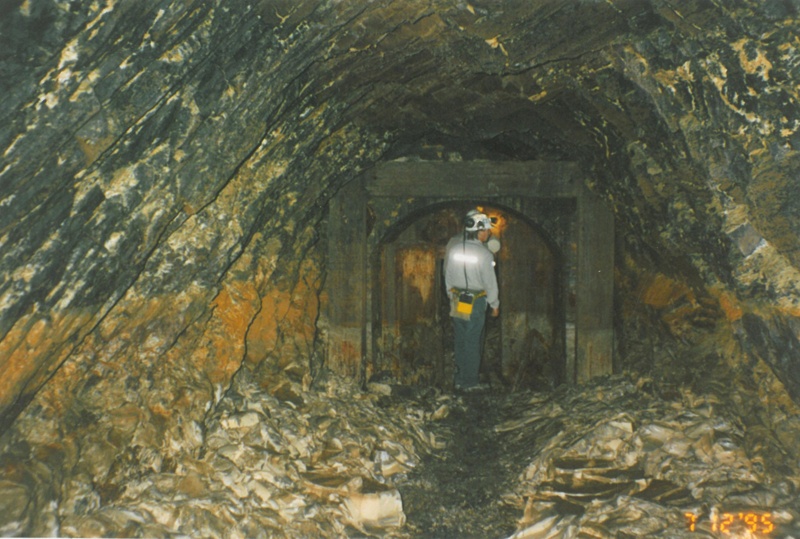
    Everyone in Australia would be aware that on Tuesday April 25th, 2006 a seismic event triggered an underground rock fall at the Beaconsfield gold mine in northern Tasmania. Three men were trapped below ground: Larry Knight, Brant Webb and Todd Russell. Two days later (April 27 at 7:22 am) the body of Larry Knight was found. Miraculously the other two men were found to be alive on April 30th at 5:45 pm when rescuers heard them singing. The news of their survival created euphoria in the small mining community of Beaconsfield and an international news media frenzy.

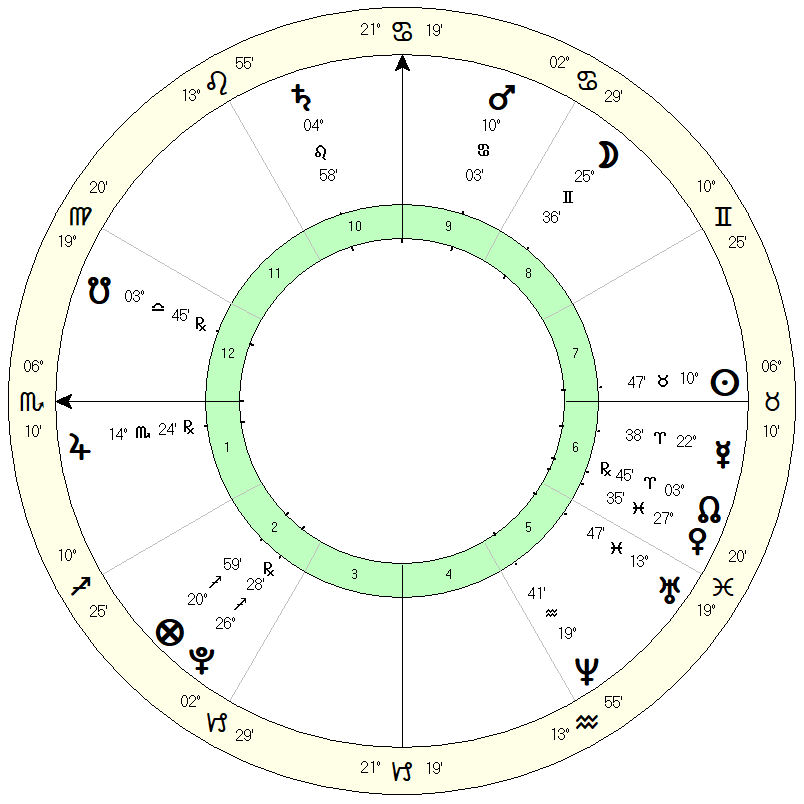
    The next day this horary question was asked by someone unrelated and unknown to anyone associated with this event: “Will these men get out alive?” (May 1 2006, 5:16 pm, Melbourne Australia AEST) The querent was motivated to ask the question because the initial reaction to Brant and Todd’s discovery was overshadowing the fact that they were still trapped deep underground in a very dangerous situation. At that point in time the media was reporting that the men would be out within 48 hours. The querent felt strongly that their rescue far from being a certainty.

    Will these men get out alive?

    In horary the most important thing is to identify the significators of the question. The most common way of identifying a significator is to use the ruler of the house in concern. The other way is to use the planet which is the natural ruler of the matter.

    In this question we need to find significators for the trapped men, the rescuers and death. The rescuers are workers to whom we can give the 6th house and therefore they are signified by Jupiter in Scorpio retrograde. Death would be the radical 8th house, Mercury in Aries, as well as the turned 8th house once we have identified the trapped miners.

    Because the querent has no connection with the question or its outcome we need not be concerned with her. The question is what signifies the trapped men?

    We could use the 7th house, being the house of “strangers and others”, giving us Venus in Pisces conjunct North Node, albeit in the turned 12th house. The exalted nature of Venus with the benefic North Node doesn’t seem to describe two men trapped underground with a lot of loose rock over their heads. We could use the 1st house, in which case we get Mars in Cancer, receiving both the rescuers (Jupiter) and death (Mercury). At first this seemed a good choice, but when we consider the natural ruler of miners, Saturn, we find a much better candidate for significator.

    Saturn (the miners) is in detriment in the 10th house, at 4 degrees 58 minutes of Leo. He also rules the 4th house of the chart which is mines and his dispositor the Sun rules gold, this seemed appropriate; they were trapped in a gold mine!

    Though underground they are very exposed through the media. Interestingly Saturn was nearly 5 degrees into Leo and the men were found almost 5 days after they became trapped. Also the Sun receives the miners into his rule and is separated from a square with Saturn by 6 degrees, at the time of the question the men had been trapped for 6 days. Both of these facts give us a clue as to the timing in this chart.

    Now the question is about the men’s survival or lack of, therefore their possible death. Looking at the ruler of the radical 8th house of death we find Mercury at 22 degrees of Aries. There is no aspect between the men and significator of death. Expect for Saturn receiving Mercury into his fall (which could indicate the men’s understandable fear of dying), there is no reception between the two. Nor do we find any antiscia connection. This bodes well; they will come out alive, but when? Can this chart tell us?

    Digging further (no pun intended) we look to the rescuers which are signified by the ruler of the 6th house of workers, Jupiter in Scorpio retrograde. Jupiter is moving back into the via combusta (15 degree of Libra to 15 degrees of Scorpio), seen as a malefic part of the zodiac and is in opposition to the Sun (gold mine) in Taurus (earth) both indicating their dire situation. The rescuers certainly were facing opposition to a lot of earth down in the mine. The retrograde condition of Jupiter tells us something about the slow progress the rescuers were having in getting to the trapped men. Jupiter will perfect a square with Saturn at around 9 degrees Scorpio/Leo, possibly indicating 5 days (degrees) time frame.

    Looking to the Moon for the timing of events we find that she separated from a sextile with Mercury (significator of death) 3 degrees ago. This fits in roughly with the timing of the finding of Larry Knight’s body. The Moon will next square Venus in Pisces before ingressing into Cancer. Her move into her domicile is another promising sign for a positive ending to the situation.

    In mundane astrology the Moon represents the people. If we take the Moon to indicate the people, her position in Gemini indicates being in two minds; exhilaration at Brant and Todd’s survival, worry at their continuing state of danger and grief at the death of their colleague Larry. The Moon’s antiscia degree is 4 Cancer 23, squaring the Nodes, a clear picture of the people’s future, hanging on the balance of fate. This is interesting but doesn’t give us any timing for the men’s rescue.

    Going back to the question, we see that it is about their death or rather their escape from it. Looking at Mercury (death) we see that he is Saturn’s FALL, therefore is being received by Saturn in a negative way. Once he moves into Taurus, the situation will be changed and (death) will have no connection with Saturn.

    The miners were under the threat of death (receiving Mercury into their fall) until the moment they walked out of the mine, and they would have been aware of all the possible dangers. There could have been another earth tremor that would have killed them or their rescuers …So once the miners (Saturn) no longer receive death (Mercury), they are no longer under its threat or power, they are free. Mercury will ingress out of Aries and into Taurus in seven and half degrees or 7 and half days; could this be our time timing?

    On May 9 at 5:58 am Todd and Brant walked out of Beaconsfield mine. This was exactly 7 days, 12 hours and 42 minutes after the question was asked. Mercury was 7 degrees and 21 minutes from its ingress out of Aries. Not quite exact, but pretty close. In fact Brant & Todd were freed from the mine at 4:47 and 4:54 respectively making it 7 days, 11 hours and 31/38 minutes, making it even closer. When Mercury moves out of Saturn’s fall, death (Mercury) ceases to be a threat to the men. And so it was!