In the past astrologers were called upon to answer all manners of enquiries: from lost objects, missing animals, health & money concerns, interests related to work & and public life and the perennial, matters of the heart. The use of natal charts was not as common as it is today, as few had accurate birth data; and on a practical level, the information that can be extracted from a natal chart is not detailed enough to shed light on specific everyday concerns. To assist with their enquiries, astrologers would use a ‘consultation chart’ cast for the moment they met with their client and understood their concerns.
Over the centuries this evolved to become known as Horary; the art of answering a specific question posed to the astrologer. The word horary means ‘of the hour’ and relates to the measure of time. Horary astrology is the astrology of the moment. A question is asked; once the astrologer fully understands it, and makes a commitment to judge the matter, a horoscope is cast.
The historical importance and prevalence of horary in practice, is attested to by the many ancient texts that have codified the technical and philosophical foundations of horary judgement. Take for instance the first of Guido Bonatti1 “146 Considerations”; it relates to the question.
“The first consideration is of those things which move a man to pose a question (and there are three motions). The first is the motion of the soul, when someone is moved by his intention to pose a question…”2
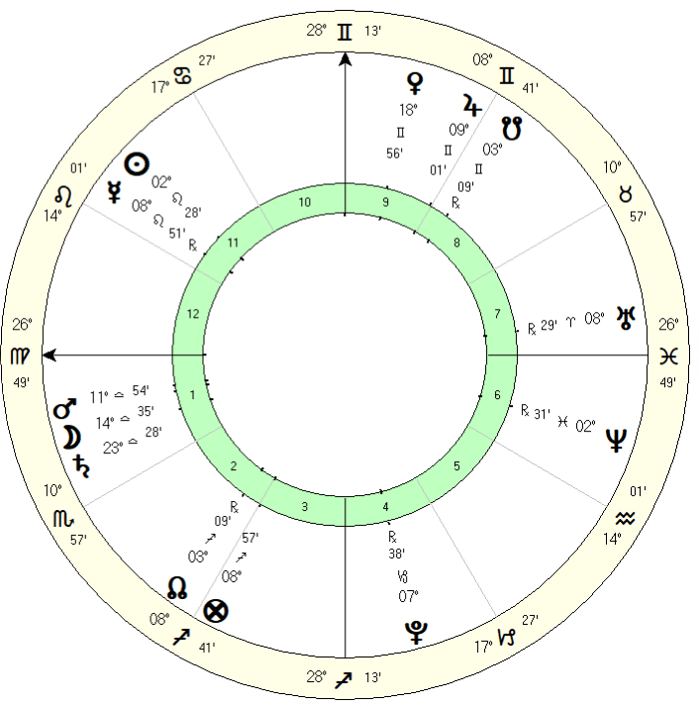
A horoscope captures & anchors a moment, crystallizing it into a symbolic framework that provides a wealth of information. Past, present & future are all present in the horary. In essence horary is astrological divination, a system of prognostication that comes to us from the divine realm; the Cosmos.
“The second is the motion of the superior bodies, namely when someone asks, that they at that time imprint on the thing enquired after, what shall become of it…“3
The Cosmos provides a clear and profoundly detailed snapshot of a moment, that captures what was, what is and what could be within the confines of the horoscope. The Cosmos speaks to us via the planets (the superior bodies), through their movement, placement, condition and influence. It is our responsibility to understand what the Cosmos is communicating through the symbolism present in the horoscope.
“The third is the motion of free will, which can itself be an act of the one asking, because even though the soul is moved to ask, it does not suffice unless the superior bodies lead him to pose the question, nor does the motion of the stars suffice, unless from the motion of the free will the act of asking is reached.”4
The act of asking involves two people; the one who poses the question and the one who receives it. Both must engage their free-will to offer and accept the responsibility of engaging with the Cosmos in seeking its assistance. The one making the enquiry, must be prepare to accept the judgement unconditionally. As astrologers, we have a choice to make judgement on a question, but once we choose to do so, we are committed to judge the matter regardless of its outcome.
The study of horary helps us to decipher the symbolism inherent in a chart. Approaching a chart in order to find an answer to a specific question, we are called upon to understand the power of planetary movement, diurnal and zodiacal; to know the nature of the planets, how they interact and bestow influence within a particular context.
The practice of horary hones our skill in interpreting astrological symbolism within any focused context; be it horary, natal, or event. It teaches us to recognise that which is of primary importance and that which is inconsequential relative to the issue being investigated. It improves our ability to understand a moment as a dynamic, unfolding potential.
Horary, like all astrological applications reveals different levels and facets on the matter at hand. Seeing a chart unfold and reveal the answer to a seemingly simple question is to experience the magic of astrology in action. branch of government having full or limitless power over an area of governance.

 Astrologicalmind