Would this property be worth it financially? Oct 17, 2025 at 16:43 AEDT -11:00 Melbourne, Australia
BACKGROUND
The question was asked after the querent and her husband saw a property that interested them. The property would need quite a bit of work, but had great potential. They had renovated several old properties so were aware of the work involved. They loved unique properties and this one seemed to tick all the boxes. They were drawn to the creative challenge & potential that this property offered them.
There were two building on the property: a small three bedroom circa 1839 cottage, classified by the National Trust, with heritage overlay; and a small double story ‘studio’ that could be converted into a one-bedroom maisonette. The property promised a two-income stream, once works were completed.
CONSIDERATIONS
There is no accord between the Lord of the hour, Moon and the ASC or its ruler, Jupiter. This indicates that there maybe an emotional pull regarding the issue in question. Another consideration would be the presence of Saturn in the 1st house warning that there may not be a satisfactory resolution to this question.
This chart is radical as both the querent and her husband’s natal charts have strong connection.
The MC on the querent natal Saturn degree Mercury on the querent Mars/IC degree Mercury on the querent Mars/IC degree The Moon opposes the querent natal Moon and squares her Sun Mars on her husband’s natal Saturn degree Mercury on the husband’s natal MC The ASC on the husband’s natal Mars
SIGNIFICATORS
Querent/husband –Pisces ASC (double bodied sign: querent & her husband, they are one relative to the question); and its ruler Jupiter in Cancer on the 5th cusp, as well as the Virgo Moon in the 6th.
The Property – Gemini IC and its ruler Mercury in Scorpio in the 9th house conjunct Mars. We could also look at the Moon.
The querent’s finances – The Aires 2nd house and its ruler Mars in Scorpio.
Debt/ money owed – Libra 8th house, ruler Venus in Libra and Libra Sun in the 8th house
Potential profit – Sagittarius MC/10th and Jupiter in Cancer.
The significators are very descriptive of the situation. Jupiter on the 5th cusp signifies the querent and her husband, which is very indicative of their excitement at the creative potential before them. Jupiter’s partile aspect with the Sun, shows their strong vision of what could be done with place. Jupiter’s exalted state, and Neptune in the 1st is indicative of the illusion they are under regarding the amount of work required to make their vision a reality. The exact square between Jupiter and the Sun, ruler of the 6th, in the 8th; their vision and its cost, in time and money, are at odds.
The overall state of this property is described by the 4th house, its ruler Mercury and the Moon. The double-bodied sign of Gemini on the IC indicating two buildings. Gemini like most Air signs, can describe a hilly or high place; this property is on a hill, the front cottage being on the lower side, the back rising high behind.
Mercury, is peregrine in Scorpio, cadent and just beginning to slow down; the place has been neglected and seen better days. Mercury is conjunct the 9th ruler Mars; this warns of potential legal or bureaucratic issues and delays regarding permits. The peregrine Moon in Virgo is slow, located in the 6th house and applying with reception to Mercury by sextile. This is indicative of the amount of work required to renovate this property; and how much the property would benefit from it. Supporting this testimony is the placement of Mercury/Mars in the turned 6th from the 4th… indicating that the property is currently unwell:)
Mercury and Mars in Scorpio (stagnate water), and Lord of the 12th, Saturn retrograde in Pisces in the 1st house warns there are likely to be issues with water and drainage. The closeness of the water grand trine between: Mercury/Mars, Jupiter (querent) and Saturn reaffirm that water/moisture may be a problem. As the property is on a hill this is not unexpected. Saturn retrograde shows time being slow, so not only are there problems but they may take far more time to fix.
Their money signified by Mars in Scorpio, shows that at present their finances are fine, but being Mars there is a danger of overspending in regards to this property. The potential for debt is great as Venus the Lord of the 8th is the most dignified and well-placed planet in the chart. Being in the 7th this shows that debt could be their enemy. The Sun, ruler of the 6th in the 8th, indicates that some work needed to be done on this property may currently be invisible, underground and unknown; all of which will be expensive.
Exalted Jupiter rules the 10th house of the potential for profit, would at first seem a positive testimony, but on closer inspection it appears to be an illusion. The MC is conjunct the querent’s natal Saturn and Jupiter is on the contra-antiscia of her natal Sun; and it is also on the husbands DES.
JUDGEMENT
The overall judgement is simply that this is not a good investment to make at this time. The property needs more work than may be obvious. While the vision they have for the place is exciting and could result in a great investment, the reality of the work and time required to make it happen is greater than their finances can support. The money commitment far exceeds their ability to fund it. They would need to borrow a lot of money putting them into debt that would put undue stress on them. This stress is also indicated by the fact that the querent’s natal Saturn is on the degree of the MC (potential profit from the property); and her husband’s natal Saturn is at the degree of Mars (their finances).
As a final testimony showing that this property would be an unwise deal for their finances, the ASC of this horary at 17 Pisces, has its antiscia degree at 12 Libra, the degree on the 8th house cusp… the house of debt.
Charlie Kirk was a polarising public figure who was admired by some, loathed by many and ignored by most until his shocking public assassination on September 10, 2025 in Orem, Utah. He was born into a politically moderate household and grew up in the affluent Chicago suburb of Prospect Heights, Illinois. While his family were financially comfortable rather than wealthy, he nonetheless entered the world with privilege and financial comfort. A comfort that grew exponentially during the course of his short life.
Charlie made a name for himself as a young conservative political activist and right-wing influencer. At the age of 18 and with the help of a rich benefactor he founded TPUSA (Turning Point USA) a non-profit organisation that advocated for conservative politics on high school, college, and university campuses. He claimed himself to be a proponent of free speech, expressing his right-wing, at times provocative views on politics, race, morality, gender and religion. He was an avowed Evangelical Christian who strongly supported Trump and white Christian nationalism; he vehemently opposed abortion, DEI and gun control; was highly critical of feminism, civil, gay and transgender rights, Islam and immigration. He also promoted conspiracy theories including false claims about the 2020 stolen election, Covid-19 and the ‘great replacement theory’.
His tragic public assassination propelled him into the limelight. Ironically, as his supporters elevate him to the status of martyr: the slain hero of free-speech; there is a move to suppress any public criticism of the man or the words he spoke. The myth making and distortion of truth regarding Charlie Kirk the man, is so thorough that he may forever remain an enigma.
We shall never know whether Charlie Kirk would have made amends for the pain his speech caused, because he was robbed of his potential to mature, to evolve and gain wisdom. For better or worse history will judge Charlie Kirk by his word and the ideas he gave voice to.
Astrological Chart
Charlie Kirk was born on October 14, 1993 in Arlington Heights, Illinois. There is no recorded birth time, so I have used the pre-natal eclipse angles.1 The resulting chart has 20 Cancer 11 rising and 0 Aries 35 on the MC2. We will look at how this chart was impacted on the day of his death, but first let us delineate this chart. It is often the case that the astrological chart of a public figure or a person we know, is not what we expect. People are far more layered than is evident, so it is important to let the chart guide us, rather than impose our own opinions on what it should mean. Easier said than done!
Oct 14, 1993 in Arlington Illinois – PNE angles
General Observations
Almost everything is under the horizon, indicating that there is much that is hidden beneath the surface. What you see is not necessarily what you get. It is worth noting that both benefics are in essential debility, while the two malefics: Mars and Saturn are in their signs of rulership. Located on the IC, the root of the chart, the essentially debilitated Venus has a lot of influence over the life.
There is an abundance of Air in this chart, with both luminaries, Jupiter, Saturn, the South Node and IC in Air signs. The hot, moist element of Air indicates a sanguine temperament, being of a friendly and social nature. Air is associated with intellect, ideas, communication and social interchange. Unless balanced by the cold, dry Earth element, Air can tend towards shallowness and an avoidance of deep contemplation. Earth with its natural inclination to stillness, depth, scholarship and tangible reality, will ground the idealised, hypothetical and intellectualised reality of Air. In this chart there is very little Earth; with only Venus in Virgo and Uranus/Neptune conjunct the Capricorn DES; the angle representing the other and the open enemy.
An essentially strong Mars in Scorpio conjunct Mercury and Pluto and the Cancer ASC provides water in this chart. The cold, moist element of water is associated with emotions and feelings. Here, they would be driven by Mars, the most essentially dignified and well placed planet in the chart.
Missing from this chart is Fire, with only the North Node in Sagittarius and the Aries MC. The hot, dry Fire element is associated with light and spirit. Fire takes us outside ourselves to inspire3.The inspiration brought to us through the Fire signs, leads to insights which can reshape our understanding of life; bringing us to a higher, broader and more wholistic perspective of the world and ourselves.
The angles, Sun, Jupiter and Moon (L1) are in cardinal moveable signs. Associated with the initiating impulse, action and beginnings. Cardinal signs are focused, vibrant and associated with excitement; anything is possible, but they do not carry much staying power. The MC degree at 0 Aries is especially telling, in that this is the very beginning of the entire zodiacal circle. The symbolism of Aries being singularly focused on their objective and blind to the other, is at its most potent at this first degree.
Like the missing element of Fire, there is a notable lack of mutable energy in this chart with only the Nodes and Venus in mutable signs. The reputation of mutability equating to indecisiveness, belies the fact that they are best able to consider multiple perspectives and change direction if needed. Mutability can impart subtlety and shades of meaning.
The Chart in Detail
The Moon being the ruler of the ASC being, emphasises the importance of needing to feel safe and secure. In this chart the Moon is much afflicted, so Charlie’s sense of safety would be challenged. The Moon being in the 4th house of family and roots, conjunct the two planets associated with God and religion, indicates that he found safety within family and through religion. Sun is the natural significator of God and Jupiter is naturally associated with religion and philosophy, especially in this chart as Jupiter rules the 9th house.
The Moon, is only a few degrees from his exact conjunction to the Sun, after which he begins a new cycle. The beginning of any cycle holds the immature potential of its unfoldment. There is a fragile innocence or naivety that has yet to be moulded by experience, reminiscent of a new born child’s almost infinite potential in need of support.
So how supported is the Moon? It is peregrine4, in the via-combusta5, combust the Sun, square Uranus/Neptune, trine and received by Saturn in the 8th into his exaltation. It is interesting that Saturn and the Moon are in each other face (decan), a dignity which bring a sense of concern, anxiety or fear with it6. This connection with Saturn would exacerbate the insecurity that the Moon’s condition indicates and imply the need for a strong external authority or structure to rely on.
The Moon’s dispositor Venus, provides little support as there is no aspect between them. This being a night chart Venus, the universal significator of relationship, is in fall and peregrine. Moon in air can impart the ability to distance one’s self from their emotions, by approaching them from the safety of their intellect. Those with Moon in Libra tend to use relationships with others to define, recognise and validate their feelings.
The Sun is essentially afflicted by being in fall and peregrine. The negative expression of an afflicted Sun is arrogance, something that Charlie was often accused of. The Sun makes the same difficult contacts as the Moon. As the ruler of the 2nd house and the exalted ruler of the 10th the Sun informs us as to his attitude around money and power. A planet is essential debility can convey an insecurity or lack of confidence around the matters it governs. Insecurity around money, can lead to focusing on what is lacking and constantly striving for more. The Sun’s dispositor Venus though in essential debility, is strongly placed on the IC and is also the lord of the 11th house of good fortune and benefactors. He had financial benefactors who supported him from the time he was eighteen years old.7
The Sun is received by Saturn in the 8th, ruler of the 7th house of “others” and 8th house their money. Normally we would see reception as helpful especially coming from an essentially dignified planet such as Saturn in Aquarius. However, there are a couple problems here; the Sun is very uncomfortable with Aquarius where it finds itself in detriment, so this reception will fail in its promise. Saturn would provide support, but would also have much power over the Sun. A retrograde planet will often express itself in a very tangible manner; here this could literally be other people’s money. Saturn (OPM) was able to provide tangible resources to the Sun (L2), but these would come at a price.
The Sun’s conjunction to Jupiter, also bestowed good fortune, but like with Saturn, there would be a cost. Jupiter is conjunct the lucky fixed star Spica and the Sun would have shared in its good fortune. Charlie’s ability to generate money was strong. Jupiter’s rulership of the 6th house indicates that he no doubt worked hard for it.
Jupiter only has dignity by face, squares the ASC/DES, is combust the Sun at the tail end of its synodic cycle8 and will shortly begin a new one. The same sense of immaturity we see in his Moon, envelops Jupiter who also receives no help from his dispositor Venus, in Virgo the sign of her fall and Jupiter’s detriment. Though received by Saturn, his dispositor by exaltation, what Saturn as Lord 8 in the 8th offers is the antithesis to Jupiter’s expansive and optimistic nature. Mars as ruler of the MC and the 5th house, shows that he was inclined to focus his energy on his career and public life. Having Mercury, the natural communicator & the lord of the 3rd house, along for the ride, was made evident through the creation of his successful platform that communicated to masses of people. In true Mars/Mercury fashion this was achieved in a way that engaged and inflamed emotions. Through incendiary verbal pronouncements, that provoked reaction and pushback, he was able to successfully project himself into the world.
Mercury in Crisis
As Charlie was most known for the words he spoke, it is interesting that Mercury is in such a terrible position in this chart. He is peregrine, having no essential dignity whatsoever. This Mercury has no mooring, which only exacerbate the tendency of Mercury to take on the nature and characteristic of those around him. He is besieged between a conjunction to his dispositor Mars and the square with Saturn, both in rulership. He is also afflicted by his conjunction to Pluto and sextile to both Uranus and Neptune. He is devoid of any benefic influence.
Saturn in Aquarius, fixed air sign can impart on the native a tendency towards fixed, dogmatic ideas, while Mars in Scorpio will tenaciously defend their position to the end. The two malefic planets in their fixed signs of rulership would strongly impart their nature on to Mercury. The fixity and confidence of Mars & Saturn would endow Mercury with the ability to forcefully express and defend his opinions with absolute authority. It is reported that his views on many topics became more extreme over time.
Mercury rules the 3rd house as well as the 12th. He was a confided communicator who may have painted himself into a corner. One has to wonder if his meteoric rise and success, beholden to other people’s money and power may have entrapped him into an immutable position that in time could have become untenable. We shall never know as his life was cut short, ironically by a gun; the ownership of which he defended as a ‘god given right’.
There is no aspect between Mercury and the Moon; there is nothing that connects them except their applying aspect to Saturn; which Mercury will not perfect as he stationed retrograde a full degree before his square to Saturn. This disconnect between the sensible mind (Moon) that is informed through the bodily senses, emotions and feelings; and the rational mind (Mercury) that is informed by the intellect and objective thinking reinforces the difficulty he would have in forming nuanced understanding or recognition of the paradoxical and interwoven nature of life.
Venus is also the ‘significator of the mind’9 in this chart. The significator of the mind does not denote intelligence but rather the manner in which one uses their mind and to what end. As such, she does not herald a positive use of his mind. She is essentially debilitated, being both in fall and peregrine. She is unaspected, except for her separating sextile with Pluto. Being located on the IC, the root of the chart, Venus had a lot of influence over the life.And here we find an enigma.
Symbolically her location in the darkest part of the chart and in fall is descriptive of his voiced opinions of a woman’s place in society10; in the home with the children and submissive to the man. From all reports he was in a good marriage; his wife who was 5 years older (Saturn Lord 7), was educated and a successful business woman.
Conclusion
Charlie Kirk died so young that he did not receive the opportunity to mature, to gain depth and wisdom through experience. Wisdom is rarely present in the young, but I firmly believe that we all have the ability to find that wisdom in time. He was clearly an intelligent man who held fixed notions about life, society and morality. At the moment of his death, he still had that exaggerated swagger and self-assurance in himself that only the young can have.
He was born with an innate sense of naivety and lack of self-confidence. He would have been influenced by the strongly expressed ideas of others especially if they were void of subtlety. In order to find safety, he needed a clear and strong structure to believe in. He found comfort and confidence through his evangelical Christian faith and his family that mirrored the moral values of that faith.
He was motivated by fear. His Christian faith provided him with the arrogant notion that he was on the righteous side with God. Therefore, he could cruelly condemn and dismiss all who differed from him. He defended ignorance as a virtue, cruelty as strength and prejudice as common sense. At his core he was insecure, seeking strength and power outside himself, whether through money or powerful friends.
He was a talented communicator who expressed himself with absolute conviction, using his intellect to craft simple and straight forward opinions of good versus evil. The ability to think with nuance did not come naturally to him; far easier to have a clear black-and-white view to hang on to. In time he may have allowed himself to consider the grey. But we shall never know.
It is to be noted that the USA (Sibley) chart has 1 degree Aries on the IC. ↩︎
The word inspire means; “to influence, move, or guide by divine or supernatural influence or action”. The meaning is a metaphorical extension of the word’s Latin root: inspirare meaning “to breathe or blow into.” The metaphor is a powerful one, with the very breath of a divine or supernatural force asserted as being at work. ↩︎
Having no essential dignity. The planet has no connection to that part of the zodiac. It is like a person that is lost in a foreign land. ↩︎
Via Combusta is Latin for “the burning way”; it refers to the last fifteen degree of Libra and the first fifteen degrees of Scorpio. Considered to be particularly afflicting to the Moon at those degrees. ↩︎
Lee Lehmann, Essential Dignities, Whitford Press 1989 Chapter 5, p. 127 -136 ↩︎
In 2012 at the age of 18, Charlie met Bill Montgomery with whom he founded TPUSA (on June 5 2012) and Foster Friess who financed it. ↩︎
It would not be until March 2016, that by progression, Jupiter would emerge from the beams of the Sun. The same year that he made his appearance at the 2016 Republican convention on July 18, 2016. On that day progressed Mercury was on the degree of his natal Mars.↩︎
The significator of the mind is the compound almuten of the ASC, Moon and Mercury ↩︎
Kirk repeatedly stated that women should prioritize motherhood over careers, asserting young women are suffering because they are encouraged to focus on jobs over families. He criticized birth control, claiming it makes women “angry and bitter” and that females over 30 “aren’t attractive in the dating pool.” Discussing news of Taylor Swift and Travis Kelce’s engagement on The Charlie Kirk Show, 26 August 2025He said: “Reject feminism. Submit to your husband, Taylor. You’re not in charge”. Responding to a question about whether he would support his 10-year-old daughter aborting a pregnancy conceived because of rape on the debate show, “The answer is yes, the baby would be delivered.” published on 8 September 2024↩︎
Traditional astrologers viewed the planets quite differently than how we understand them today. They understood the planets to be living conscious beings, or as 12th century Guido Bonatti called them: superior beings.
“…On those things which move a man to pose a question. The first is the motion of the soul, when someone is moved by his intention to pose a question. The second is the motion of the superior beings, namely when someone asks what they are impressing into the quaesited thing, what will come of it…”1
Planets were not owned in the way we speak of them, when we claim some authority over “my Saturn” or “my Moon” … In the past each planet was understood as having a fundamental nature that dictated its specific function, promise and associated chain of correspondence. Depending on their condition at a particular moment in time, they would express the best or worst of their nature and fulfill their promise to a lesser or greater degree.
The notion of some planets being “malefic” and others “benefic” is one that sits uncomfortably with contemporary norms. Our world promotes the notion of equality and neutrality, to the detriment of natural order. Each of the seven classic planets was understood to govern an aspect of the divine order which dictated that everything in this world must be born, grow, sow their seed and die. The benefic planets were life promoting, initiating growth, birth and expansion; whereas the malefic planets functioned to restrict and destroy, ensuring that no one out stayed their allotted time. Each was crucial in maintaining balance in the world.
The human experience tends to judge one side of this balance more favorably that the other. We want to avoid the pain that comes with lose, grief and death; and to seek out that which promotes life, joy and happiness. One is brought to us via the malefic planets Mars and Saturn, while the other by the benefic Jupiter and Venus.
Who is Saturn?
Saturn rules time and the restriction this imposes on our earthly existence. As astrologers, we deal in time and are prone to get caught in its apparent, but deceptive forward momentum. However if we are to look honestly into our past, we can recognize that we have not moved far. The cycles of life, the movement of the planets and stars, mark our experiences, but time stands still in a forever present moment that is re-experienced over and over and over.
Traditional astrology understood the importance of Saturn, not only as the significator of time but also as the ally of the astrologer. For it was only through hard study and serious application to this sacred Art that any relationship with the “superior beings” (the planets) is possible.
Saturn is encountered at the beginning and at the end of all endeavors, including life. He provides the body that allows us this earthly experience, and at the appropriate time, he takes it away. It is for this reason that he is associated with the ASC and 1st house, the beginning point that marks our birth; and the 8th house of death.
Saturn is the first planet in the Chaldean order, the first planetary gate through which the Soul must pass on its journey into incarnation. Encountering Saturn, the soul takes on structure and authority as well as the limitations of the physical body, matter and time. Even as modern astrologers we are well aware of the association of Saturn with restriction and limitation. The reason for this becomes obvious when we consider that Saturn exists at the outmost edge of our visible solar system, and defines our natural limits. Saturn is the border between our known world and the Divine sphere of the fixed stars.
The basic qualities that make up Saturn’s temperament are cold and dry to the extreme. Cold constricts and dry limits movement. Saturn is of a melancholic temperament; he is stern, serious and authoritative. He is a masculine and diurnal or day planet. Saturn’s extreme cold nature needs the warmth of the Sun to function in a more balanced manner, therefore though he may like and feel at home in the cold darkness of night, he functions better in the heat and light of the day.
Saturn’s extreme cold and dry nature is what accounts for his reputation as a malefic planet. The absence of warmth and moisture is antagonistic to life and growth. Yet it is these qualities of Saturn that allows matter to crystallise and take physical form. It is the discipline and structure of Saturn that allows life to exist and ideas to take shape. From a human psychological perspective, it is only when we engage with the discipline and structure of Saturn that we accomplish anything.
The tears of grief are another of Saturn’s gifts to the soul. Hidden deep in Saturn’s strictness and authority lays the impossible longing for the return to the divine. The grief of Saturn is the knowing that one must pass through incarnated life, with its pain and joys and that one’s authority is fleeting and illusionary. The ruins of the past, the laws of old, and the desolation of yesterday are all part of Saturn’s cold and dry rule; and so, his association with melancholy and in its extreme form, depression.
The great malefic demands hard work and is associated with death and the inevitable end to all beginnings. Interestingly he is also connected with births, to which death is always a close possibility. This is illustrated by the fact that the birthing process is called “labour”, for it is indeed hard work to give birth and hard work is Saturn’s territory.
From a traditional medical understanding Saturn governs the memory function of the “animal spirit” which resides in the brain. Without Saturn our individual thoughts and knowledge could not be retained. Saturn is the storehouse of wisdom.
Saturn is associated with the hardest, heaviest and oldest things. He is associated with old age (from 70 to 99 years old) and the seventh age of man, the age of resignation and ideally, wisdom. Saturn is associated with the metal lead, the heaviest and most poisonous of all the metals. Saturn corresponds to the most toxic and poisonous plants, including hemlock and belladonna.
Saturn is said to rule the bones, teeth and skin of the body, that which defines the structure and limits of the physical body. All boundaries are under the rule of Saturn. At the borders of our travels, we encounter Saturn in the form of immigration and border authority which demands that we present our documents, our right to passage, or we can go no further.
No need to fear the great malefic?
Once we enter the world of traditional astrology our view of life and reality changes. Once we open our minds to the wisdom of our lineage, it is very difficult not to be influenced by the great astrologers that came before us. However, it is the incredible commonality between human experience of the past and our own that takes us by surprise. The emotional and psychological needs of the everyday person have not changed over the centuries, even though our technology has.
We live in a linear world that is imbued with the ideas that promote evolution and progress. Whilst everything on earth is born, grows, withers and dies in the endless cycle of life, giving rise to the illusion of a forward movement of time, it is but that; an illusion.
Saturn is the path less taken, because it is the path of greatest hardship; the path of blood, sweat and tears. Saturn provides us with challenges and obstacles that in the end force us to confront the inevitable transient nature of life. Saturn teaches us that this life is an illusion to which we are not meant to get attached. But by making the effort to befriend Saturn and do the hard work he requires, we are rewarded by the awe-inspiring storehouse of ancient wisdom that is his domain; and by making friends with Saturn the door is open to the other superior beings in our cosmos: Jupiter, Mars, Mercury, Venus and the Luminaries.
Guido Bonatti Book of Astronomy – Treatise 5: 146 Considerations translated by Benjamin Dykes ↩︎
One of the most important and mysterious aspects of horary is the asking of the question. While it may be true that almost any question can be asked, some question make for better horary. Without a clear, concise and honest question, the resulting chart will be vague and confusing. The symbolism inherent in the horary will reflect the state of the querent relative to the matter in question. Any vagueness or dishonesty in the question (be it conscious or not) will be evident in the resulting horary.
We often hear of the need for a horary chart to be radical, but in fact it is the question that needs to be radical. The term ‘radical’ means rooted. A radical question is one that is firmly rooted to the client’s core. The more understanding on why they are seeking clarification on the issue, the more thought and reflection on the matter by the client; the more radical the question and resulting chart will be.
William Lilly stated that one should contemplate the question for a good 24 hours before asking the astrologer. There is much to be said for taking as much time as is needed to get the question right. Think of it as a gestation period!
Our responsibility as astrologers, is to ensure that not only we understand the question fully, but that our client is also clear. Context is everything. In order to gather the relevant background to the question, we may need to probe them for details that they may not recognise as important or want to share. The original question often transforms, ending up looking very different to what it started off being.
Not all questions will appear to or need to have a deep ‘soul’ connection. Some questions are more mundane, for example a lost object question. Though seemingly simple and clear, this question would still need clarification. When was the object last seen? Where? What are the circumstances that led to it going missing? What is the layout of the house and/or locality where the thing has been lost. With this understanding we can interpret the symbolism in the chart to fit the circumstance of the loss. Remember that if it is important enough for a client to ask about, then that lost object may have a far deeper importance to them than it appears on the surface.
The chart will reveal whether it is worthy to be read by its symbolic description of the players in the drama behind the questions. This is why it is crucial to understand all the facts surrounding the question. Sometimes the very thing that could be described as a “consideration before judgement” is what describes perfectly the circumstances surrounding the question. I have often found that in these circumstances the question may not be easily answered, but the chart still reveals something to the querent about the matter. Every horary chart has a function, but it is not always to provide an answer.
The question is the most important step in the horary process. Without a clear question there will not be a clear chart to interpret. It is not the subject matter that is important, but rather the motivation in its asking. There needs to be a soul intention to the question, it must be genuine and carry an unconditional resolve to accept the judgement made. Only then will the question must be radical or rooted. A radical question will result in a radical chart fit to be judged.
Such a horary will provide clear symbolism and clear answers. However, it is wise to understand that life is complex and multi-facetted, this fact is reflected in astrology. The depth of insight that can be gleaned from a simple horary is astonishing.
When you work as a horary astrologer you quickly learn that the horary chart is a powerful tool which must be given respect. Horary is never to be treated lightly. There is much written in the astrological literature about the importance of the question and warnings about asking your own question, but honestly there would be few horary astrologers who have not done so.
I asked a question that produced a chart so full of ominous testimony that at first, I simply refused to engage with it. Experience has taught me the power and accuracy of horary and so my heart sank on first viewing this chart: what it showed I did not want to face. But as always, the chart proved overwhelmingly accurate.
In order to interpret a chart, we must understand the background to the question. I was about a week away from leaving for an overseas trip that was going to take me to Cambodia to visit my son, then to England where I was to present a talk on Medical horary at the AA conference and speak at the Lodge in London, spending the final two weeks visiting my family in the US; three continents in just over five weeks. An important background factor was that I had undergone a brain surgery on Feb 12 of that year, and had only been cleared to travel by my neurosurgeon two months previously. I was generally apprehensive about travelling as I was still feeling fragile, having minor concerns with dizziness and balance.
My question was simple: “Will my trip go well?”
The natal contacts to my chart make this a very radical chart1. The angles of this chart are the reverse of my natal angles (21 Leo rising and 14 Taurus MC) symbolically this shows circumstances that maybe contrary to or oppose my natural inclination. My natal Mars is at 13 Scorpio 43 conjunct the MC and my natal Moon at 6 degrees Pisces in on the horary Neptune (meaning that I was having a Neptune transit to my Moon). The hour ruler Mercury does not accord with the ASC or its ruler in this chart, indicating that there will be no easy outcome to the situation in question.
In a nutshell this was the judgement: the indications are that this trip will not go smoothly as the two malefic planets Mars & Saturn sit on the MC and the Moon is combust the Sun on the cusp of the 8th house of death, loss and anguish of mind. The testimony for this judgement are:
My significator is the Aquarius ASC(which sits on my natal DES – the portal of death) and its ruler Saturnat 17 Scorpio, peregrine2 and conjunct Mars on the MC; as well as the Moon at 10 degrees Virgo, combust the Sun at 2 Virgo (opposing my natal Moon) and conjunct the 8th house cusp. Mercury ruler of the 8th house is very strong, being in rulership and exaltation; he is making a close sextile to Saturn and Mars.
There is a new Moon indicating a new beginning, which by definition means there was an ending. Saturn on the MC shows that the trip was partly taken for career reasons and to visit my parent particularly my mother3 who had not been well for a number of years.
As this is an overseas trip taking me to foreign places, it is signified by the 9th house and its ruler Venus on the DES (the portals of death) and approaching a partile square of both Saturn and Mars at 17 Leo. There is a negative reception between Saturn in Scorpio and Venus in Leo, mitigating the positive testimony of an angular Venus. Pluto makes a square the cusp of the 9th house. So the trip will encounter malefic influences.
Outcome
The chart proved to be accurate, as on September 4th, the day after arriving in Cambodia I received word that my mother had had a bad fall. At her age and in her fragile physical state, I knew that this was not something which she would likely recover from. Though my father told me not to change my plans as she was currently in hospital and being well looked after, I began to contemplate getting to the US as soon as I could. In the interim I focused on sending her much love and light; I sent messages that I would be there as soon as I could.
A few days later I was having trouble sleeping, I awoke thinking of my mother, tearfully trying to let her know that I was there with her in spirit if not in body. I finally got up as I could not sleep and turned my computer on to see the time. There was a message from my brother saying that he did not think I would make it in time as my mother was having difficulty breathing. I knew that she had died. Minutes later the phone rang; my mother had died (September 8) at 4:39 pm Chicago time, exactly 4:39 AM Cambodian time (September 9). It was then 7:15 AM.
I would like to think that she felt the love I was sending to her, but I shall always regret that I missed her. The last time I was in Chicago had been in April 2013, having planned to return in April 2014, however a benign brain tumour derailed my plans and delayed my trip.
The angles on my mother’s solar return chart for 2014 are almost identical to those of my natal chart so the horary chart plugs into her chart as well as mine. At the moment of my mother’s death in Chicago, the MC was at 17 Scorpio and the Moon was full with the luminaries straddling the 2nd/8th cusp of the horary chart.
Mars as ruler of the 10th house signifies my mother in this horary. The testimony of her death in this chart are: Saturn on her Turned ASC (MC), Mercury the lord of both the radical and turned (from the 10th) house of death being the only dignified planet in the chart. The Moon’s next aspect will be to Mars/Saturn after which she carries their light to Mercury.
A radical chart is connected to the querent or the moment. It has roots and will provide a clear answer. ↩︎
A peregrine planet is one that has no essential dignity in any of the five dignity levels: rulership, exaltation, triplicity, terms and face. It is lost, wandering, unconnected to its location. ↩︎
In traditional astrology the 10th house signifies the mother in particular. ↩︎
Astrology has a problem; it is a perennial issue that most will encounter at some point in their astrological studies, and which can never be fully shaken off. Throughout Western horoscopic astrology’s history this inconvenient problem has caused many a discourse to descent into bitter disagreement and threatened to derail the profound truth and beauty of astrology.
House systems have always been a great point of debate amongst astrologers, sometimes to the point of ridiculousness, as has been made evident by the recent drama unfolding online. The self-aggrandizing and emotionally charged condemnations of those who hold different views regarding the topic; belies the illusion that this may have any real importance in the grander scheme of life, or dare I say, astrology. This is at once sad and laughable.
Over the past few decades, the notion of a whole sign houses (WSH) has become very popular particularly in the US. This has been primarily due to the work of project hindsight, which promoted the notion that the WSH was the original system used by Hellenistic astrologers. The basis of this idea stemmed from their translations of Greek texts, in particular the work of Vettius Valens (75 CE). These texts are actually somewhat vague on which house system was used in practice, and are devoid of any actual drawn charts. Whether the idea of WSH stems directly from any clear statement found in the translated texts, which is debatable; or that it arose from the translator’s interpretation of the texts seen through the lens of their own expectations and preconceived notion on the subject is not the issue that I will be discussing1However, the ensuing controversy is.
While there is still much debate that can be made as to whether this ‘new’ house system is in fact the original system, it is in many regards a moot point. No other area of astrological doctrine has caused so much bickering over the centuries as the division of the sky into astrological houses.
How we choose a house system
Many years ago, I began my formal study of astrology. This was during the height of enthusiasm for humanistic or psychological astrology. As with any astrological course we were introduced to the signs, the planets, and the houses. Charts were presented to us in the preferred format of our teachers. There was no reason or need to question that format, which included the house system of their choice.
Years later when I began to explore works by different astrologers, I started to notice that charts did not always look the same. There was the obvious fact that some astrologer included different points in their chart (asteroids, vertex, Part of fortune); but sometimes the chart looked different because they used a different house system.
At first, I ignored these different house systems continuing to use the one favoured by my original teachers: Placidus. I told myself that it worked, so why go change things. I was not aware of the reason I used Placidus, nor did I know exactly how the Placidus system differed from other house systems, such as Campanus, Regiomontanus, Porphyry, Alcabitius to name a few2. Like many students of astrology, I chose to use a particular house system by default.
As my studies continued, I learned that astrologers have different ways of approaching chart delineation. They had different opinion regarding which technique were best and held differing views on the planets, signs, and aspect. As with any art, the artists choose their tools Astrologers could discuss these differences more often with interest and respect for the other, without resorting to attacks and impassioned demands that their way is the only way and the ultimate truth of the matter. To understand why the subject of houses is so fraught with emotion and passion, I believe it is important to look at the whole of astrology from a larger perspective.
Humans are by nature creative beings. The human experience gave rise to stories and myth which they projected onto their environment. It was only natural that humans would stand in awe and wonder at the Cosmos which enveloped them and lite up the night sky. The heavens inspired a sense that there was a higher realm populated by divine beings and gods, who played out the everyday drama of human life on a grander scale. They came to believe that our earthly experience was intricately linked to the heavens, and so ritual evolved in order to commune and interact directly with the divine realm of the gods.
Human are also by nature rational beings. The perpetual movement of the cosmos was observed and over time the reoccurring patterns and phenomena noted. This elicited a need to record, measure and find some rational meaning to this constant and yet ever-changing sky. Astrology may reflect life’s mysteries, but it grew out of human curiosity and the desire to decipher the mechanism by which these mysteries might works.
Out of this competing mixture of human experience and divine beings; of mathematics and poetry; of science and art, horoscopic astrology emerged. As groups of stars and planets were identified, the building blocks of astrology were set: the signs of the Zodiac and the planets including the Sun and Moon that traversed them. The signs and planets may have been understood to exist in a distant realm of the deities, but they manifested themselves by rising, culminating and setting within the confines of our local sky. And so, we divided the local sky and created ‘houses’ so as to know where these divine emissaries were having their effect relative to our mundane human experience. Houses are the interface between the heavens and earthly experience.
The Philosophical Basis of the World
The philosophical notion that at the beginning of time everything emanated from one pure source. Existence being the result of a Creator dreaming, thinking, or speaking us/it into being, is a thread found in the fabric of many traditions. The notion that the further one gets from the source, and the closer to physical manifestation, the more complex, changeable and corrupted3 things become.
According to Plato the world that we inhabit is but an imperfect manifestation of a greater reality consisting of non-material ‘qualities’ that combine to make up all that exists. Plato called these qualities ‘forms’ and hypothesized that these essential ‘beings’ existed in a realm that laid beyond the physical manifested world that we experience. To have knowledge of a thing according to Plato, one needed to go beyond the sensory experience of that thing and come to know the essential ‘forms’ of which it was made.
In effect the idea that our world and physical body are but imperfect reflections of the essentially pure, non-material spirit from which it is born. Our senses inform us only of the manifested and therefore imperfect material reality we inhabit. True knowledge and its ensuing wisdom can only come by piercing through the illusion of the senses and engaging our rational mind or Spirit. Without doing this we are left with mere illusion of knowledge and opinions4.
This idea was further expounded on when looking at the model of the universe according the Aristotle/ Ptolemy that puts the earth at its center, divided into the four level of the element (Fire, Air, Water and Earth) and surrounded by the seven planetary spheres, the sphere of the fixed stars and finally the Primus mobile, beyond which exists the single pure source, the one, the monad that put the whole scheme into motion5.
Houses in the astrological scheme
The astrological houses are measured from the perspective of a particular place on earth. They are a division of the sky that is measured from the ASC, the eastern point of the ecliptic, a ‘fixed’ point relative to a particular place on earth and the MC the highest point on the ecliptic. The houses map the primary motion of the Sun/ Moon and other planet’s daily journey through our skies. The relationship of the houses with the observer is altogether more personal and direct, and through them the effect of a planet in the zodiac is grounded to reveal its specific influence upon a particular place on earth at a particular moment in time. From the perspective of the Ptolemaic/Aristotelean cosmos, the doctrine of astrological houses is by definition the most ‘corrupted’ and least pure thing in our astrology. The houses are earth bound, they are created relative to a particular place on this planet; they are at once forever changing and simultaneously fixed to a place/point in the manifested world we experience.6
Houses evolved to represent areas of life and arenas of earthly, human experience. Houses reveal the stage on which the drama of human experience unfolds, and if we are being honest, we have to admit that we love a good drama.
Is it a wonder that house systems are the one area of astrology that people become attached to or in some cases reject outright, as in the case of Cosmobiology. Is it a wonder that it also the most disputed? Is it a wonder that the subject of houses causes some of the most dramatic and emotive arguments between otherwise level headed astrologers? I think not.
Choose your house system (or not), continue working with the higher beings that populate our cosmos, commit yourself to mastery, take responsibility for your words, be present and humble, but most of all, always remember that opinion is not knowledge.
For a full breakdown of the differences in house system see Deborah Houlding’s The Houses: Temples of the Sky (The Wessex Astrologer Ltd 2006) ↩︎
Corruption is related to the constant change of physical corporal life. All life on earth eventually dies and decays. This is the meaning of being impure and corruptible. ↩︎
[1] The fascinating fact that Mercury is the planet that signifies astrology and is associated with the rational mind should not be lost to any of us. Its glyph incorporates: the cross of matter, the circle of spirit and the crescent of soul. ↩︎
Some model added an extra 10th sphere between the fixed stars and the Primus mobile…that of the Zodiac. I would ascertain that this would be when the Zodiac became connected with the cardinal seasonal points and decoupled from the stars. ↩︎
The ASC/DES and MC/IC anchor is fixed to a place on earth and will remain the same relative to that place, regardless of time or season. (If 21 Leo rises and the MC degree is 14 Taurus; every time 21 Leo rises at that place, 14 Taurus will be the degree on the MC.) ↩︎
Have you ever wondered why some transits come and pass with seeming little impact on the life of the individual, even though they looked pretty powerful? Have you or one of your clients ever experienced a huge life changing event and yet there is nothing obvious happening in the chart that could be attributed to it?
The main technics that modern astrology has at its disposal for advancing the chart through time are transits and progression. Traditional astrology uses techniques that identify planetary periods and time lords. This is one of the principle differences between modern astrology and traditional (being pre-18th century) astrology. A time lord refers to a planet which has governorship over a period of time in a person’s life. When a planet takes over the role of time lord whatever it rules in the chart will come into focus; its condition and position in the natal chart will dictate how easy or difficult the period is likely to be.
Anything that happens to the planet that is the Lord of the time period will come to the forefront and be more likely to manifest in the life. Transits to or by this planet will be active and produce impressive events in the life, while transit to other or by other planets during the same period may feel like duds; nothing of any significance happens. It is as if the planet that is the time lord is switched on and lights up a particular part of the chart and therefore a sphere in the life. There are also times when a second planet may also be “switched on” and it will act as co-time lord./ This can be very helpful to the astrologer who is now better able to tell which of the many transits coming are likely to actually produce some activity and which can in all probability be dismissed.
There are many different planetary period outlined in the tradition; some cover periods of many years of an individual’s life and others that cover a much shorter period. One of the oldest and simplest time lord techniques that come to us from the tradition is yearly profections. Simply speaking the chart is moved or profected one whole sign per year. The ruler of the new profected Ascendant takes the role of time lord for that year. If there is a planet or planets in the sign of the new profected ascendant they will also be activated for the year.
Having the knowledge of which planet is the profected Lord of the year also helps to focus the solar return chart; for the position and state of this planet in the solar return chart provides more information.
Natal chart data withheld
An example of how this might work:
The native turned 51 years old in 2011, this is a 4th place profected year. We move everything in her chart by 4 full signs; her 4 degree Capricorn ascendant profects to 4 Aries, a sign ruled by Mars. Mars therefore becomes the Lord of the year from her birthday 2011 to her birthday 2012. Since she also has her natal Moon very close to the degree of the profected Ascendant, the Moon will also take on an important role during that year.
The 4th house themes are home and family and also cover literally, the physical home we live in. Her Moon being right on the IC point brings in the themes of the 7th house which she rules; therefore relationship and partners. Natal Moon reinforces this theme by being opposite natal Venus; the universal significator of relationship and partners. In her natal chart Mars also rules the 11th house; the house of friends, colleagues and our “hopes and wishes”. Note as well that the profected 7th house cusp lands on natal Venus at 4 degrees Libra, and profected Venus comes to the natal ASC at 4 degrees Capricorn, emphasis on relationship coming from many directions through the profections of the year.
We would expect that all these themes: home, relationship and her “hope and wishes” will be brought to the forefront during this year. And they were. The native wanted to sell her existing house and buy a bigger place, one that was more modern and to her taste; her “hopes and wishes”. She had been living with her partner for just under 2 years and there were problems in the relationship that made her want to live alone again, though she was emotionally torn.
We can see by the state of her Moon that relationship generally would be a challenge for her. Moon in Aries means she has a strong emotional need for freedom; Mars which rules it, has little dignity and is in the frustrating position of being weak in the cadent 6th house, squaring his dispositor Mercury, (universal significator of communication). He is also opposite Jupiter the natal ruler of her 3rd and 12th houses. Relationships would bring up this frustrated Mars and the difficulty she has in communicating without getting emotional or argumentative. As Mars is in the 6th house the stresses of all this are likely to impact on her health.
Using the yearly profections it is fairly easy to see that she is going to experience a difficult year, as well as a pivotal year, for both the home front and the relationship represent fundamental areas of life.
Her 2011 Solar Return
The solar return chart can be thought of as frozen transits for the year. Her solar return for the year 2011 strongly reinforces the themes brought up by the 2011 profections. This is not always the case, but being so tells us what an important and charged year this is for the native.
Lord of the Year, Mars and Moon are opposite on the ascendant and descendant angles. Both are in pretty bad shape essentially; Mars is in sign of its fall and the Moon is in her detriment. The Moon is also conjunct natal Saturn at 11 Capricorn and squaring the SR Saturn at 15 Libra. Bringing a Saturnian theme and further emphasizing the difficult nature to the year. The IC point of the SR chart is conjunct her natal Moon and there we find Uranus.
Because Mars is so powerfully placed on the 7th cusp, we know that the native will have the ability to take the action necessary, as difficult as it might be. Mars is about cutting or severing. Uranus is strongly placed on the IC of this chart indicating a change on the home front, but as it is also transiting the natal Moon, who rules the natal 7th it highlights the relationship sector as well. Uranus is associated with divorce and relationship breakups. In fact she did with great difficulty and emotional stress sell her house, break up her relationship with the partner and move into her new home alone.
One of the problems in the relationship had to do with money. She had worked hard to own her own home and was about to upgrade. Her partner had no assets of his own and she feared that he would be able to claim some of hers if they continued living together. She did not want to risk her fortune on a relationship that had problems (they argued an awful lot), even though she did not really want to break off the relationship totally as she enjoyed the companionship. Lord of the Year Mars in the Solar return chart is on the degree of her part of fortune, symbolically an interesting placement.
The year was immensely stressful for her and she developed a serious problem with her digestion, which weakened her physically as she was unable to eat very much. The South node in the solar return chart is on the 6th cusp and conjunct her natal Mars. As Mars is the Lord of the year, ruler of the profected ascendant, he governs her body and the south node is draining her vital energy.
Pluto is making a transit to her natal ASC which tells of major changes to her life, but the profections really focus us on which areas of the life those change are going to manifest. There is always so much that can be seen in a chart, but having a method with which you can focus on which area will come to the forefront makes it far easier to interpret what is likely to happen in the life over a particular period of time..
Looking at Hitler’s chart we find that the Almuten of the Ascendant is Saturn 13 Leo in the 10th house, because it has both exaltation and triplicity dignity over the ASC degree of at 21 Libra in this day chart.
Finding the compound almuten over the degrees of the Moon 6 Capricorn, Mercury 25 Aries, and 26 Libra ASC we find the significator of Quality of his Mind to be Mars 16 Aries with 13 points, closely followed by Saturn 13 Leo with 12 points. These two planets would function very much as a team especially as they are aspecting each other by square as well as by a very tight, almost to the minute antiscia1 conjunction. This antiscia allows these two planets to function far more cooperatively than their stressful square aspect would indicate.
Finally, we must find the Pilot of the Soul. In this chart the search is difficult because Mars, Saturn and Moon are all in detriment, Sun and Mercury are peregrine which means they have no essential dignity whatsoever and Jupiter though he has face dignity is in his fall. Of the seven classical planets only Venus in Taurus has any dignity and she is retrograde, conjunct Mars as well as being very close to the 8th house cusp. Yet by default she wins the position of Pilot of the Soul. This would have been the ideal planet for Hitler to follow…But did he? Let us review.
His Lord of the Ascendant is Saturn in Leo in the 10th house. The planet signifying his Quality of Mind is Mars in Taurus in the 7th house with Saturn in Leo a close contender. Finally the Pilot of the Soul is Venus in Taurus in the 7th conjunct Mars.
Lord of the Ascendant,Saturn in the 10th house, is debilitated in his sign of detriment, in other words far from his (Saturn’s) essential best nature. Saturn was seen as the great malefic by the ancients. Debilitated malefics function in extremes, their nature is amplified and exaggerated. This planet could bring great misfortune in one’s life unless it was on his best behaviour. At its best Saturn is patient, responsible, disciplined and holds authority. But in this chart, he is not at his best, he is at his worst and yet he is positioned in the 10th house to act and act strongly. So, he will act in a strongly malefic manner.
As Lord of the Ascendant, Saturn represents Hitler’s corporeal desires; being in the 10th house, he desires power and authority. Saturn in Leo, he probably wants to be king. Saturn’s dispositor (and MC ruler), Sun is peregrine, he has no ability to keep Saturn in check. Saturn disposits Moon and Jupiter in Capricorn conjunct the south node. Moon in Capricorn is in detriment and would feel insecure unless in control. Jupiter is equally debilitated in his fall, though he has a bit of face dignity this is more to do with fear than an actual strength2. Both being with the south node only adds to their debility and sense of weakness. All this would give Saturn more justification to take control and not let go (Leo fixed).
The significator of the Quality of the Mind isMars working closely with Saturn. Here we find Mars equally debilitated in detriment squaring his ally Saturn. One of the main meanings of the quality of the mind is conscience, knowing that an action is right or wrong because we are conscious of a higher and broader perspective than just that of our individual ego. Mars is a mutual reception with the Moon; both are peregrine and in detriment, but are trining each other with reception by exaltation. Unfortunately this will not bring the promised support usually associated with reception; the only thing they can provide the other is the insecurity of their debility.
Mars also rules Mercury in Aries. Mercury being peregrine was easily enlisted to do Mars (and Saturn’s) bidding. Hitler was a great orator who was able to stir the emotions of the masses and lead them into war. As an aside, Germany is said to be ruled by Mars and Aries. Hitler became Germany’s mouth piece. So Hitler’s Quality of Mind was not going to tame or soften his Saturn’s drive for power and authority. On the contrary the two would work in tandem together and both bring with them the insecurity of the Moon and fear of Jupiter.
So far, we have a dire situation, but was it absolutely necessary for Hitler to become what he became? The Pilot of his Soul may have helped him steer a different path. As Venus in Taurus, we see fertility and creativity, but it is retrograde, conjunct Mars and square Saturn. The good nature of Venus is over shadowed by the strong malefic energy working together and feeding off the long-term fears and insecurities (Moon, Jupiter conjunct South Node). The two malefics used the veneer of Venus to camouflage their indent, presenting a more benign face of Hitler to the world.
Remember that Hitler’s first aim in life was to be an artist and then an architect. Unfortunately, he was rejected by the Vienna Academy of Art in 1907 and 1908 and didn’t have the educational qualifications to apply for study of architecture. We can only speculate how history may have turned out differently if he had been accepted by the Academy. So, his Pilot of the Soul was not given a chance to take the drivers seat. Does this mean that Hitler was inherently bad or evil? I do not think so, he was insecure and angry, so the odds were stacked up against him. He needed to overcome an awful lot to turn his life towards goodness.
Astrology is about time and we can not look at Hitler’s life or chart without regards to his time. Hitler’s fate was that of Germany’s. Looking at the chart of the man I would conclude that this was a man who was essential weak with little choice then to be carried by the forces of the times in which he lived. Picking two events that seemed to have been pivotal in Hitler’s life; one mundane and one personal and, we may trace the growing dominance of Mars & Saturn’s influence in Hitler’s life.
The Weimer Republic
November 9, 1918 at 13:30 CET in Berlin Germany
In 1918 on November 9th the Weimer Republic came into being, shortly followed by the signing of the Treaty of Versailles. This perceived public humiliation of the German nation coincided with the period of Hitler’s Saturn return and marked a turning point in his life. This event planted the seed of his nationalistic and racial fervour that germinated into the Nazi Party and lead the world down the road to holocaust.
On that day the Sun 16 Scorpio was directly opposite Hitler’s Mars, Venus conjunction at 16 Taurus and in contra-antiscia to his Saturn 13 Leo. The event chart’s North Node was at 13 Sagittarius, conjunct its MC and was on the antiscia degree of Hitler’s South Node 15 Capricorn, whilst the event charts Jupiter 15 Cancer was transiting Hitler’s natal North Node; his 6 Capricorn natal Moon was being opposed by the obsessive and at that point unknown, Pluto at 6 Cancer. On a more personal front his progressed Moon 8 Aquarius was moving to oppose his Saturn 13 Leo.
The fate of his nation evidenced by this charts MC, Sun and North Node triggered the worst of Hitler’s horoscope promises: deeply malevolent Saturn and Mars in positions of extreme power, fed by the insecurity of his foundations (Moon, Jupiter and South Node).
Geli Raubal
Another incident that was very pivotal in the development of Hitler’s persona was the death by gun shot to the heart of his niece, Geli Raubal on Sept 19th 1931. Rumored to have been his mistress, Geli and Hitler had an unusual relationship which in many ways played out the symbolic configuration of his Mars conjunct Venus in Taurus in the 7th house square Saturn.
Hitler, twenty years her senior, found happiness with Geli, her presence subdued and relaxed him and yet he was totally controlling and fanatically jealous of her. There were questions as to whether Hitler was in any way involved in her death. The rumours and innuendos were never proved, but her death was to have a profound effect on Hitler. became suicidal and never regained the public joy he had exhibited in Geli’s presence.
Her body was discovered at approximately 10:00 am on the 19th, by the landlord. It is believed that she died sometime on Sept 18, 1931.
Body discovered Sept 19 1931 at 10:00 in Munich Germany
On the day her death was discovered, Saturn was 16 degrees Capricorn trining Hitler’s natal Mars, Venus and conjunct his South Node; and transiting Jupiter at 13 degrees Leo was on his Saturn. Mars, ruler of his 7th house was transiting his 1st house, at 1 degree Scorpio applying to square his MC (5 Leo) and oppose his natal Mars, Venus conjunction. His progressed Moon sextiled natal Mars, Venus and was conjunct his North Node and on its way to conjunct his MC on the day he took the control of the newly formed Third Reich (January 30, 1933).
Hitler’s highly afflicted Saturn and Mars were triggered by this event. It is said that after Geli’s death Hitler threw himself ever more into his public life. Having enough political influence to ensure that his involvement surrounding the suspicious circumstances of her death never came to light, must have empowered his sense of invincibility. The ambition of his Lord of the Ascendant, Saturn coupled with the ruthless and destructive Mars, devoid of the balancing force of Venus (possibly symbolized by Geli herself, her death being the final death of Hitler’s Venus) allowed the evil that was festering below the surface to be given full expression.
We can not judge a chart in a vacuum. Hitler’ fate was linked to the circumstances of his era, culture, nation and birth. Hitler did not act alone in perpetrating the evil that was the Third Reich. Yet as the figure head for this movement he became the focal point of its manifestation. Was Hitler an evil man? The answer is that he was a weak man who through fateful circumstances yielded a huge amount of worldly power (symbolized by his celestially weak planets in terrestrially strong placement). What could have been done with this power need not have been so destructive, but it takes a strong individual to resist the allure of the ego.
The 13th century Saint Thomas Aquinas expounded the truth that: “The stars may incline, but do not compel.” 3Yet even Thomas Aquinas conceded that only when a man’s soul was in communion with God, was his will freed from the bondage of his corporal nature – with his physical body and its appetites, needs and desires. The stars may only incline, but your spirit needs to be in touch with a higher power to resist their inclination. Clearly this was not the case with the individual Adolf Hitler.
Antiscia – From the Greek, meaning “opposite shadow”. A degree and its antiscia are equidistant from the summer-winter solstice axis (Cancer/Capricorn). Planets related by antiscia have the force of a conjunction. Contra-antiscia (the opposition to the antiscia degree) has the force of an opposition. ↩︎
The Faces supply some intriguing leads about those areas where the individual has fear or problems. The point is that most people don’t like fear and would rather cloak fear with hatred”. From Lee Lehman “Essential Dignities” page 136 ↩︎
This is a paraphrase of a Latin saying: “Astra non compellunt, sed inclinant”, translating to: “the stars do not compel, but they do incline”. A concept that Aquinas frequently used to explain how astrological influence may suggest a course of action, but because of human free-will, a person is not forced to follow it. ↩︎
EVIL • adjective1 deeply immoral and malevolent. 2 embodying or associated with the devil. 3 extremely unpleasant: an evil smell. • noun1 extreme wickedness and depravity, especially when regarded as a supernatural force. 2 something harmful or undesirable. In religion and ethics, evil refers to the “bad” aspects of the behaviour and reasoning of human being – those which are deliberately void of conscience, and show a wanton desire for destruction. The opposite of goodness, which itself refers to aspects which are life-affirming, peaceful, and constructive.
Can evil be seen in a chart? Do certain individuals choose to be evil or are they fated to be so? And do their charts reflect this? And are we fated to live out what is in our chart? These questions are all loaded and profoundly disturb many in our profession.
In this day, when even the ancient descriptions of planets as benefic and malefic elicits discomfort in contemporary astrologers, it is no longer regarded as correct to think in these terms. The idea that a planet or person could be inherently bad goes against our accepted standard of judgment. Deviation from acceptable behaviour is seen as an understandable reaction to the emotional and psychological experiences that have traumatized or otherwise wounded individuals.
Ironically as we move away from judging an individual as evil we continue to embrace the idea that evil exists in the world. As illustrated by our “war on terror” and our fear of the “terrorist threat”. The concept of evil has always been present but we have confused the doing of evil with being evil.
When our ancestors spoke of a planet bestowing malevolent or benefic influence in a horoscope, we tend to imagine this as being a very cut and dry affair: bad planet cause bad things, good planet, cause good thing. The reality is far richer and more subtle than it appears at first glance.
The Malefic Planets: Mars & Saturn
In the traditional cosmos the so-called malevolent planets were Mars and Saturn. At their best both are a necessary and positive force in the chart, allowing us to take righteous action, be responsible and build strong foundations. Both have ‘jobs’ related to ending and death. When these planets were afflicted, they went out of balance and their influence becomes negative and destructive.
A planet is at its best when in essential dignity and with some reception. A debilitated planet has a really hard time expressing its true nature; they become an exaggerated or distorted version of themselves. Mars doesn’t just take action; he kills all who stand in his way. Saturn doesn’t just take responsibility he becomes tyrannical. The other planets can also cause trouble when in a debilitated condition, but their effect is unlikely to be thought of as evil.
Whether fate is pre-destined or created by the native’s choices is a tricky one. The modern paradigm places more emphasis on the free will and choice of the individual then was the case in the past. In previous generations the individual had their place within the social hierarchy and few had any choice about it. Even those at the top of this hierarchy had limited choices. Overseeing all, there was God.
Now we may speak of the higher self rather than God. Many have become uncomfortable with the concept of a Supreme Being overseeing us all, choosing for us, and allocating our fate. The concept of the “higher self” individualises us, if not in fact certainly in title. It allows us the illusion of having more power to choose. Regardless of our modern belief in the importance of the individual, fate can not be denied; it is what is bestowed on us.
We are born into a certain era or time, a particular body, gender, to a particular set of parents, within a family, culture and nation. We do not consciously choose this; we are given this. This is fate. Our free will to choose is confined to limits of our given fate. Man’s essential nature is both corporeal and spiritual; the integration of these polarities draws us closer to our essential nature. Essential nature by definition signifies a more balanced state of being. A state more aligned with the Divine, however we define that word.
In nature a daisy will grow into the best daisy specimen possible within the environment it is given. It can not do otherwise or choose to grow into a rose. Because nothing in the natural world can stray from its essential nature, there is no evil there. A volcano may cause devastation, cruel as this may seem, it is nothing more then the restoration of balance. Nature has no will to choose otherwise. But the human being has free will to choose and can turn away from his essential nature. He must come to know and accept who he is, what he has been given, understand his purpose in the scheme of things and fulfil it. The further away from his essential nature he moves the more he encounters evil or in the words of our fore bearers; malevolence.
The principal thing that pushes man away from his essential good nature is his desires; desire that stem from his corporeal existence. His desire to possess more than what he has been given, to have more power than he needs and to strive for a purpose not of his own. In modern jargon these corresponds to the ego and remember that the ego is never satisfied.
The Lord of the Ascendant, Pilot of the Soul and The Significator of the Quality of the Mind
Using traditional astrological methods, we can see in the natal chart how easy or not it will be for an individual to stay aligned with his true nature and how strong the pull of his desires will be. By identifying three planets: the Lord of the Ascendant, the Pilot of the Soul and the significator of the Quality of the Mind, we have the information needed to judge how likely one is to move towards or away from his/her essential nature.
To find these planets we use the table of essential dignities to calculate the almuten (overall ruler) of particular degree of the zodiac. Giving the planet in rulership 5 points, in exaltation 4 points, in triplicity 3 points, in term 2 points and in face 1 point, we simply add up the points for each planet to find the one with the most essential dignity at a particular degree or degrees. It is important to note whether it is a day or night chart and use the appropriate triplicity ruler.
The Lord of the Ascendant is the planet which has the most essential dignity at the ASC degree, in other words the almuten of the ASC. Often this is the planet ruling the ASC but not always. As the overall ruler of our ASC this planet is most concerned with our corporeal life; the driving force that motivates us. In modern jargon we could say it signifies our ego.
The Pilot of the Soul, is the planet with the most essential dignity overall; and in the strongest position, in the chart. Ideally it would also be free of accidental debility such as retrograde or combustion. The Pilot of the Soul is the planet that would ideally take charge. This is the planet that could set us on the right path and redirect us if we get side-tracked. This is the planet most closely aligned to spirit; most connected to Divine source. This is the planet we should endeavour to engage and make friends with, for it is most likely to raise us above our corporeal fate.
Finally, we find the significator of the Quality of the Mind by finding the compound almuten; the planet with the most essential dignity at the degrees of the Moon, Mercury and ASC. Quality of the mind does not refer to intelligence, but rather to how and to what purpose the mind is used. It relates to conscience and the moral nature of the native. This planet represents the balance between their sensible and rational minds and how well their corporeal and spiritual facets integrate. In other words, do they use their mind for good or evil?
The great lineage of Astrology which stretches back at least 2 millennia is now being reawakened. In this post I am are going to focus on the philosophical and some of the technical differences between so called traditional astrology and modern astrology.
Traditional: The passing of beliefs or customs from one generation to the next. Any long held method, practice. Of or pertaining to time-honored orthodox doctrines. Orthodox: Adhering to what is commonly accepted
On some level all astrology is traditional, as all are handed down by a previous generation of astrologers. However it is important to remember that there was a major break in the transmission of astrological knowledge and wisdom which resulted by the 20th century, in the development of very different types of astrology, which have a much shorter and more recent history; the “tradition” of modern astrology only extends back at most a couple centuries. Maybe a better term to describe what has come to be known as “traditional” astrology would be “classical” astrology.
Classical: Traditional in style or form, or based on methods developed over a long period of time. Of a kind that has been respected for a long time. Used to describe something that is attractive because it has a simple, traditional style. Belonging to or relating to the ancient Greek and Roman world, especially to its language, literature, art, etc.
Traditional astrology is Western horoscopic astrology as it was practice and written about from roughly the 2nd century BCE through to the end of the 17th century. This encompasses roughly 2000 years of tradition and includes the astrology practiced by Vettius Valens, Masha’Allah, Al Biruni, Bonatti, through to William Lilly.
Over those centuries astrology reflected the political, intellectual, religious and social shifts in society; as well as their prejudices. Techniques were added, dropped and refined, yet the core doctrines on which astrology was founded remained fundamentally unchanged. The astrologers of old understood the importance of their roots and proudly called upon the astrological greats that came before them. As Guido Bonatti stated in his Book of Astronomy; treatise II (13th Century):
“I will therefore speak, following the footsteps of our venerable predecessors, on those things which will seem useful for this work, calling to mind their opinions – namely, Ptolemy, Hermes, Jafar, Ibn Qurra, al-Qabisi, al-Khayyat, al-Kindi, al-Andarzagar, Masha’allah, ad-Dawla, Jirjis (and others who have studied in this science), by adding those things which will seem useful to me, according to how God grants me grace in organizing them and restore to me my memory.“
Birth of Modern Astrology
The late 17th Century saw a seismic shift in our perspective and understanding of reality, man, his world and the Cosmos. This heralded the beginning of the “age of enlightenment” also known as the scientific age. The paradigm changed from a view that held the manifested world to be a result of a non-material, essentially divine reality in which consciousness or spirit was primary; to one in which the physical, material world was the primary reality.
The enlightenment saw the formerly accepted essentially divine nature of the Cosmos replaced by a mechanical/mathematical one. The accepted reality now became, of a rational Universe adhering to physical laws, albeit driven by the hand of God. There was a rejection of the inherent intelligence of the Cosmos; the planets and signs were stripped of their numinous intelligence.
The enlightenment’s focus on matter and the physical had two effects on astrology. The first was of disenchanting it by removing its access to the Divine realm. The second was to fragment and separate it into bits, leading to the proliferation of specialization.
Traditional or classical astrology can not be contained or exist within a sole physical universe, nor can it be defined by “scientific” empirical observation. Within this new paradigm astrology lost connection to its roots.
Modern astrology that focuses on character analysis and the development of the individual, had its genesis in the 19th century, after approximately two hundred year of decline. By the 20th century, many different schools of astrology had developed, based on various principles. Philosophically these are very different astrology, born out of a different paradigm to the tradition. Some of these new schools include:
The Hamburg School of Astrology, also known as Uranian astrology. Was founded in 1925 by Alfred Witte. Uses hypothetical transneptunian planets and midpoints. Cosmobiology: Developed by Reinhold Ebertine, (1940) Took a more critical and scientific approach to astrology. It refined the use of midpoints, did away with houses and charts. Was critically biased against traditional astrology. Evolutionary Astrology: A form of natal astrology based on the philosophic principle that human being evolve through many lifetimes. Pluto and the Lunar nodes in the birth chart are used as pivot point to understanding an individual position in their evolution. Esoteric Astrology: Based on the work of Theosophist Alice Baily, and her ideas on the evolution of soul consciousness. It uses an entirely different set of rulerships which is unique to esoteric astrology. Humanistic or Psychological Astrology: A 20th century development, that was influenced by Jungian principles, mythology and archetype. It takes a non deterministic approach to the natal chart.
Modern astrology has given us some wonderful tools with which to describe the character and explore the psychology and personal evolution of an individual. This in itself is a reflection of our modern understanding of reality; with its emphasis on the individual, and how astrology impacts him and his world. To illustrate this, take for example the title of the first chapter in the 1989 edition of “Alan Oken’s Complete Astrology” (1974): Astrology and its Place in the Universe of Man. The second paragraph reads:
“…Yet your physical body does not represent your true dimensions. It is the extent of your consciousness which determine your relative position in the scheme of the Universe. Your physical body is but an anchor of your total being and has as its base, the Earth. As such it is subject to all influences of this planet just as our globe is, in effect, directly regulated by any motion of the Sun and it, in turn, is integrally linked to the fate of the Galaxy. In his consciousness of himself, Man, like a infant, often forgets that he is part of a greater plan of creation.”
Contrast Alan Oken’s 20th century words with those of 13th century astrologer Guido Bonatti, who begins his great work, Book of Astronomy with these words:
“The Soul which is in man is quite noble. It gives essence and perfection to the body, and its foods are very noble, with respect to the foods of the body, since the soul is most noble with respect to the body. And the soul rejoices in intellectual gain, and that depends upon the knowledge of philosophy; and in that the soul rejoices, and is delighted…And there is nothing in which the soul gains so much as in astronomy or astrology. For through this study, we know and understand creatures beyond passion; unalterable and immutable in another essence since they are the super-celestial bodies. And through these creatures we are able to draw near to an understanding of the Creator, and to know however much more the human mind is able to attain, and to perceive Him to be beyond passion and unalterable.”
The Differences Between Modern and Traditional Astrology
Broadly and philosophically speaking the difference between traditional and modern astrology can be summed up as such:
Traditional astrology recognises the inherent intelligence or “consciousness” of the Cosmos and Planets.
Traditional astrology emphasises the Creator or God, the Divine, the world of spirit and our relationship to it.
In traditional astrology mundane matters of everyday life and the body, were seen to be subservient to the superior bodies; the soul could negotiate with them.
The traditional natal chart is a picture of the individual’s fate, his environment and place in the world, only part of which is his mind.
InModern astrology everyday matters are seen to be reflected or mirrored in the Cosmos.
Modern astrology focuses on the consciousness of the individual.
Modern astrology emphasises the individual and how the Cosmos impacts or describes him and his processes.
The Modern natal chart is seen as a picture of the individual’s mind or psyche. Aside from Cosmobiology, which did away with the horoscope and replaced it with a 90 degree dial, modern astrological horoscope look the same as traditional charts. There are some differences:
The use of outer planets and asteroids: Traditionally, astrology only used seven planets: 2 lights and 5 wandering stars to be precise. Whenever the planets are presented they are the ordered by distance and speed. Called the Chaldean order: Saturn, Jupiter, Mars, Sun, Venus, Mercury and Moon. This puts the Sun in the center of the planets.
The use of minor aspects: Traditionally aspect had to divide the 12-fold zodiac equally and so only the Ptolemaic aspect were used (opposition, square, trine, sextile and conjunction). Aspects did not have orbs; planets did. Some minor aspect were recognised, like the semi-sextile & the ‘inconjunct’, but these were not considered strong enough to have much effect.
The use of Vertex, black Moon Lilith and other astronomical points: Not used in traditional astrology, though there was a whole doctrine of Lots, also known as the Arabic Parts. Today only the Part of Fortune is used in modern astrology.
Secondary progressions/Solar Arc: Traditionally primary direction were used. This fell out of favor as the calculation became too difficult it was replaced by the much simpler day for a year progressions or Solar Arc.
Emphasis on transits – especially of the outer (modern) planets: Traditional astrology makes use of a variety of planetary period or time Lords, yearly and monthly profection and Solar and Lunar returns.
Modern Zodiac CentricAstrology
There is more focus on the Signs of the Zodiac in modern astrology. Traditionally, the Zodiac Signs were understood very differently. William Lilly begins his chapter on the signs of the Zodiac by setting out the various ways they were divided: by quadrant or season; by elements (hot or cold and dry or moist); by sect, diurnal or nocturnal (masculine or feminine); by modality (moveable, common or fixed); whether bestial, humane or feral, fertile or barren; mute or voiced. He then writes of the nature, description, and diseases signified by the twelve signs. On the nature of Aries (CA page 93):
“Aries is a masculine, diurnal sign, moveable cardinal, equinoctial; in nature fiery, hot and dry, choleric, bestial, luxurious, intemperate and violent: the diurnal house of Mars, of the fiery triplicity and of the East.”
In Alan Oken’s –Alan Oken’s Complete Astrology the chapter on Aries is called: Aries – I Seek Myself (page 57). He begins with these words:
“Aries symbolises the realization within oneself that one is different and apart from the rest of humanity. It is therefore the individualizing agent, the ego, the consciousness of self. Aries is the beginning, the first emanation of self-awareness coming from the realm of the collective.”
There follows eight more page describing various aspects of Aries in different context and ending with positive and negative keyword concepts for Aries:
Courageous and bold Fool hardy and a zealot Inspirational to others Egotistic show of bravado Intuitive and perceptive Oblivious to all thoughts but own Always takes the initiative Direct and decisive Lacks of subtlety; opinionated Like to lead others out of darkness Uses other exclusively in self- interest
Modern astrology focuses on and makes more use of the Universal signification of the planets. Each planet has a function that every individual must contend with. Alan Oken again (page 211).
“Saturn allows for personal growth, but only through the fulfillment of one’s earthly obligations and responsibilities. Thus the position of Saturn in the natal horoscope reveals what obstacles one has to overcome in order to achieve success…It is the energy of this planet which tests one’s endurance. It brings the trials and stumbling blocks so that an individual can attain the strength and wisdom he needs in order to deal with life’s difficulties.”
Compare to William Lilly (CA page 58 -61)
Nature: “He is a diurnal planet, cold and dry (being far removed from the heat of the Sun and moist vapours), melancholic, earthly, masculine, the greater infortune, author of solitariness, malevolent”
Lilly then lists what Saturn signifies or rules: in manner and actions, corporature, quality in man, professions, sickness, savours, herbs, plants and trees, beasts, fishes, birds, places, minerals, stones, weather, winds, years, countries and finally angels.
Traditional astrologyuses the universal meaning of a planet, but focuses on the specific signification of planet within a chart. The universal meaning of a planet was based on its nature (hot, cold, dry, moist), its place in the scheme of the solar system. It specific signification depended on what it governed or signified in the chart.
Traditional astrology recognizes malefic and benefic planets: One of the most contentious ideas to many modern student. The benefic planets: Venus and Jupiter brought about growth and pleasures, while the function of the malefic planets: Saturn and Mars was to bring about destruction; in order to keep the cycle of life flowing.
Sect: diurnal or nocturnal chart: Day and night charts were delineated differently. Some planets were understood to be stronger by day, some by night. This divided the planets into two Sects, consisting of a luminary, a benefic and a malefic planet. The day sect was: Sun, Jupiter and Saturn; the night sect was Moon, Mars and Venus. Mercury joined the day sect when oriental to the Sun, the night when occidental to the Sun.
In traditional astrology the essential and accidental dignity of a planet is very important: The condition of a planet dictated how well it could function and do its job. Essential dignity was based on a planet’s position in the zodiac and there were five: rulership, exaltation, triplicity, terms and face or decans. The accidental condition of the planet was based on its relationship to the Sun and Earth included: house position relative to the angles, aspect, speed and direction.
The Rise of the Astrological Alphabet
Bonatti quotes Al-Qabisi about Saturn he gives us a hint of what has to be one of the biggest difference between Modern and Traditional astrology. The associations between house and sign meanings. mixed with rulership.
“Saturn is a masculine, diurnal planet, and he works at intemperate coldness and dryness. He is significator of fathers and grandfathers and all ancestor who is signified by the 4th house, but this is more by accident than nature, for he naturally signifies the person or body of the native, on account that the first thing that happens to a man is the physical person through which being is given to him.”
Firstly, modern astrologers assigned rulership to the three outer planets: Uranus, Neptune and Pluto. This destroyed the symmetry of the ancient system and exposed the total misunderstanding about the meaning and function of rulership and dignity.
Secondly, the “astrological alphabet” was created; this de-rooted modern astrology from its tradition. The astrological alphabet connects the signs of the Zodiac and the terrestrial houses of the horoscope, as well as the planet ruling the signs. So the first house and the first sign, Aries became associated, and since Aries was ruled by Mars, the first house takes on Mars quality. The second house and the second sign, Taurus and Venus became associated…etc..
Once we get to Scorpio, Aquarius and Pisces, the outer planets were added to the mix: the 8th house and Scorpio, took on Pluto qualities, the 11th house and Aquarius, Uranus qualities and the 12th house and Pisces, Neptune qualities. The astrological alphabet blurs the lines between sign and house and the symbolic meanings of both has become muddied. Having a planet in a house was like having it in the sign erroneously associated with that house.
While this “system” may appear logical on the surface, it is at odds with the centuries of tradition and the foundation of Western astrology. The astrological alphabet has created much confusion and separation between modern and traditional astrology.
Only in traditional medical astrology do we find a connection between houses, signs and ruling planet. The outer planets do no appear in the scheme. In traditional astrology the signs, were understood to be the celestial “houses” or domiciles of the planets; they had no relationship to the terrestrial houses of the horoscope. The traditional scheme of rulership was based on a planet’s relationship with the Luminaries in particular the Sun; not on similar characteristics between the sign and a planet. It also informed the doctrine of aspect.
To conclude, the main difference between modern and traditional astrology is one of perception and philosophical understanding as to the nature of life. Modern astrology reflects the modern idea that fate can be overcome or transcended by our free will; the (natal) chart reflecting the individual and how best they can navigate life.
Traditional astrology is not focused on the individual or their will, but rather on the will of the Divine. The chart helps to understand our place in the overall order so that we may align with it. I will leave you with the words of William Lilly from his letter to the student (1647).
“My Friends, whoever thou art, that with so much ease shall receive the benefit of my hard studies, and doth intend to proceed in this heavenly knowledge of the stars, wherein the great and admirable works of the invisible and all-glorious God are so manifestly apparent… Consider and admire thy Creator and be thankful onto him, be thy humble, and let no natural knowledge, how profound and transcendent soever it be, elate they mind to neglect that divine Providence, by whose all-seeing order and appointment, all things heavenly and earthly, have their constant motion”
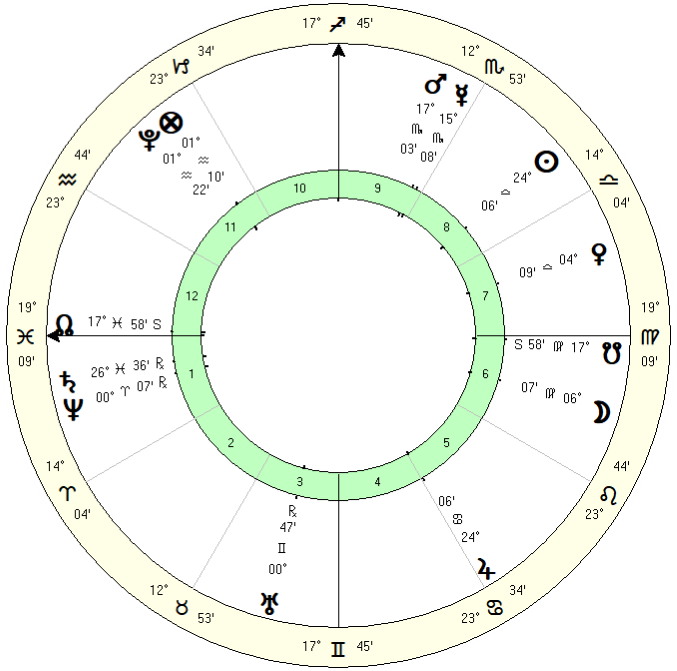


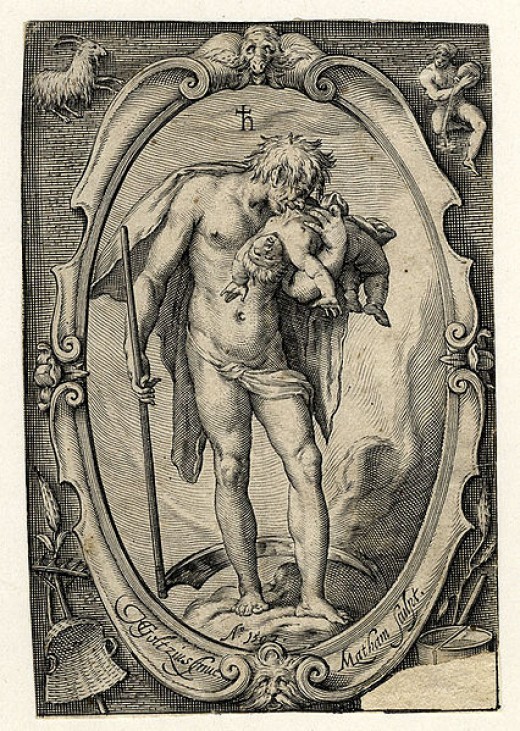

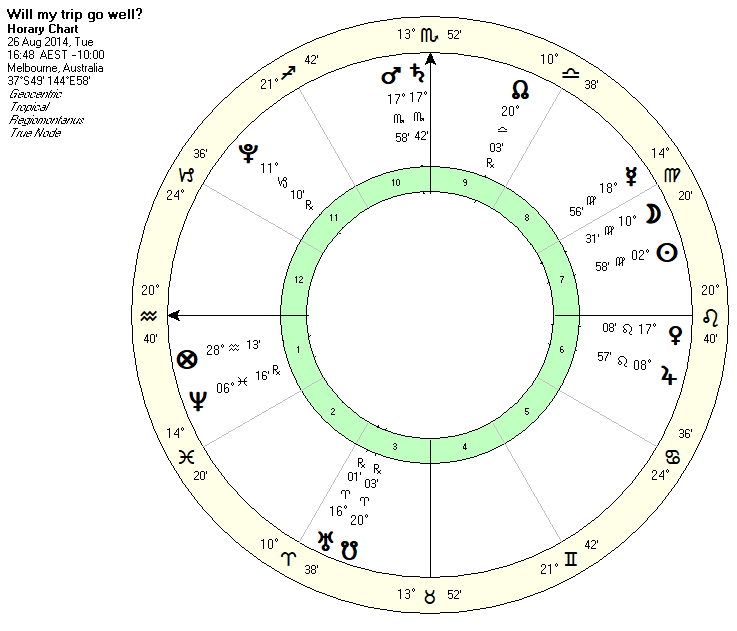
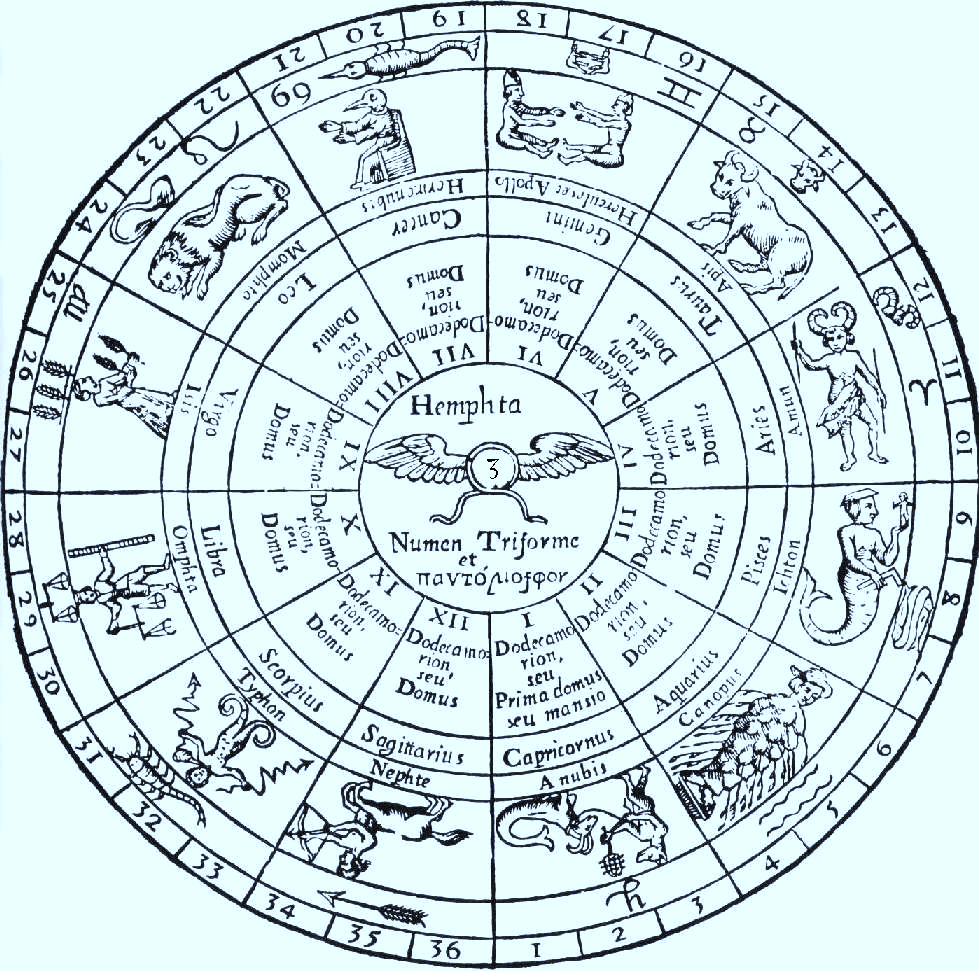
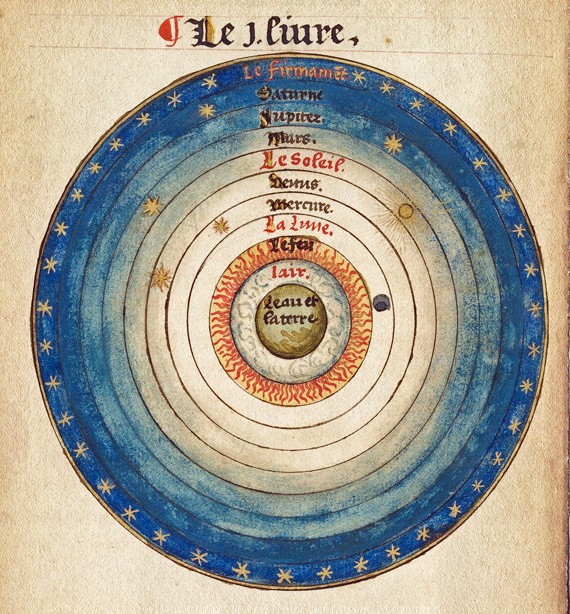
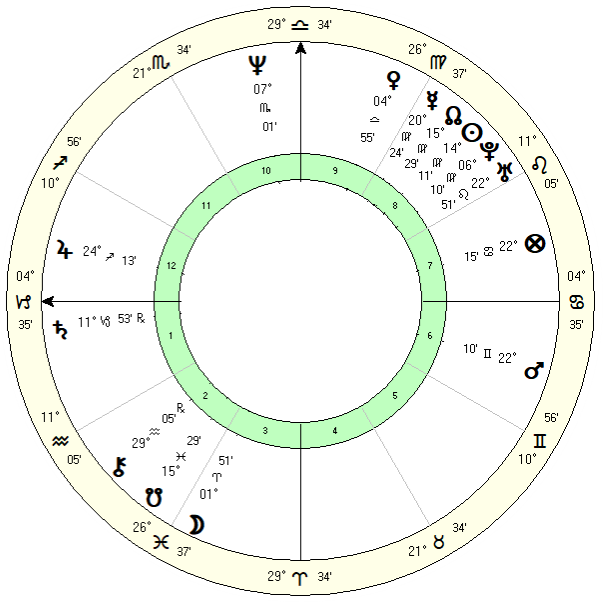
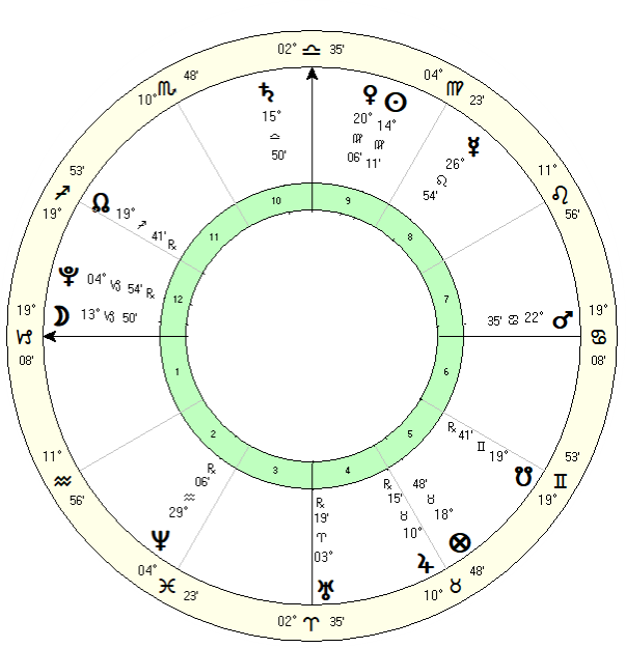
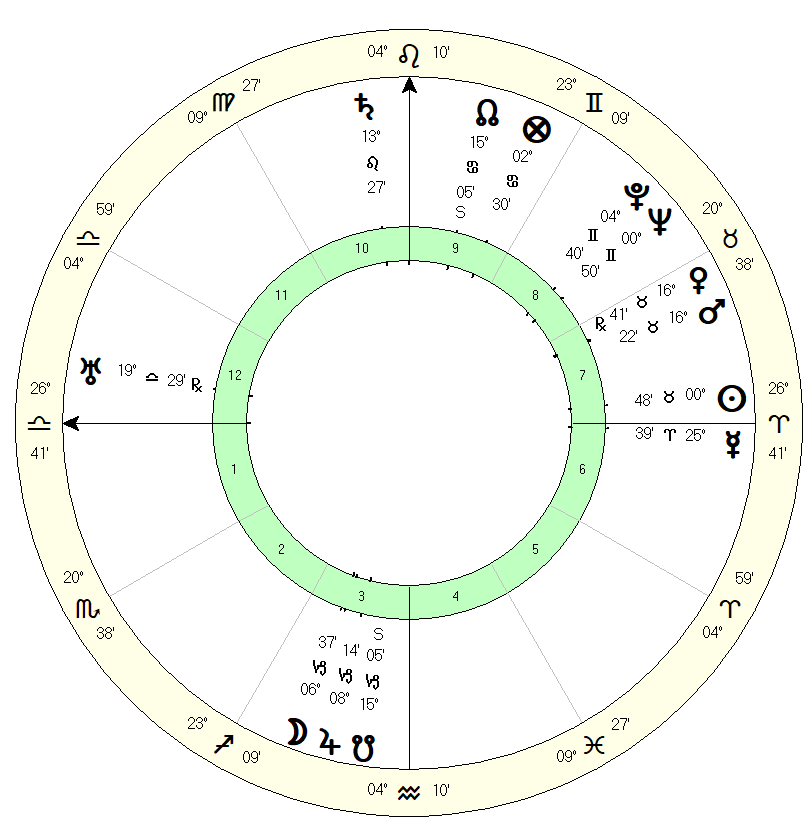

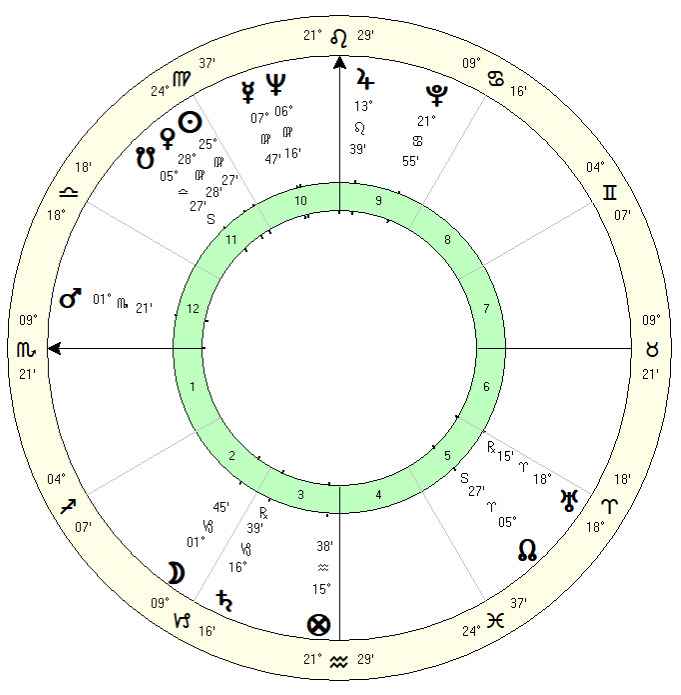
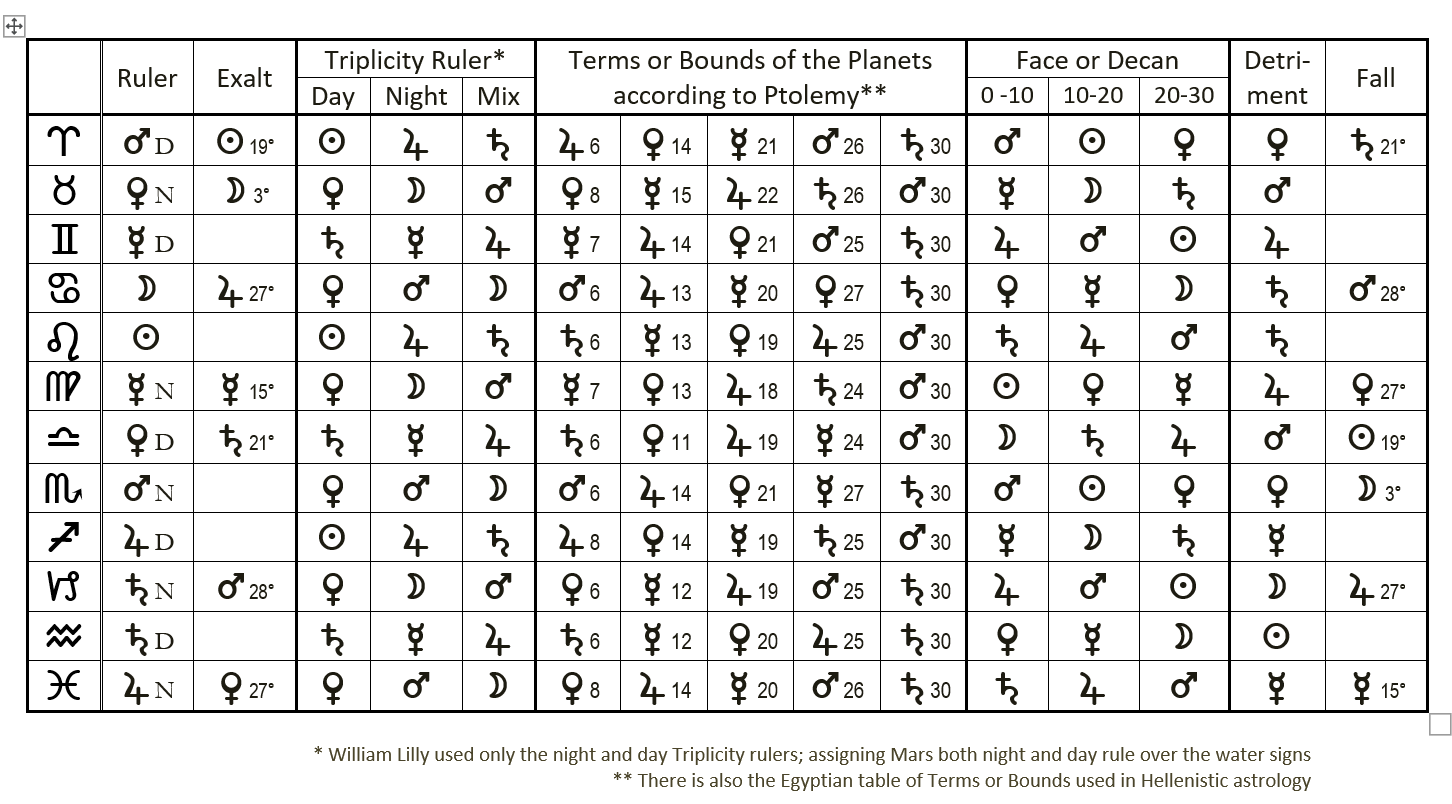
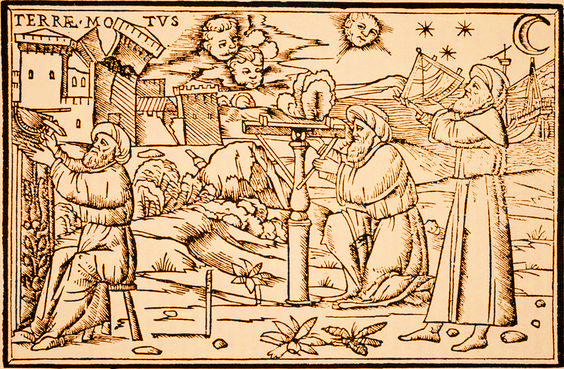
 Astrologicalmind