
Astrologicalmind

The magic of astrology explored

Category: Astrological musing

  • Charlie Kirk: Words have Consequences (part 1)

    Wikimedia commons


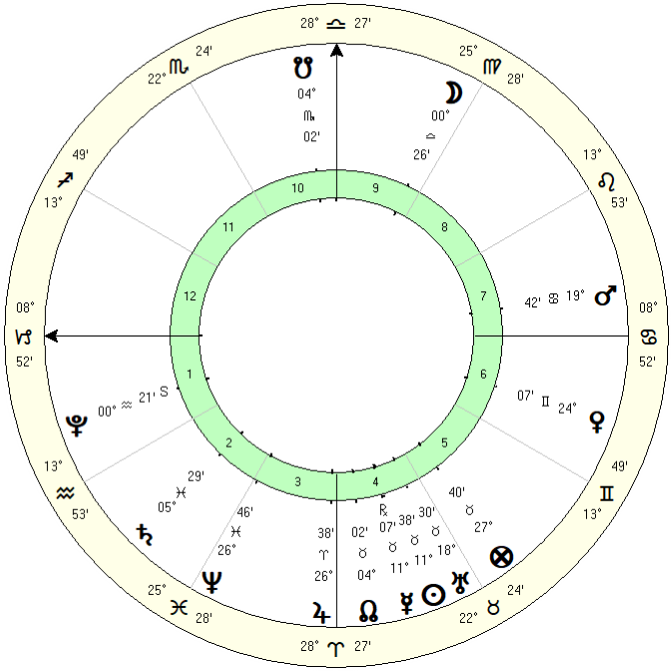
    Oct 14, 1993 in Arlington Illinois – PNE angles

    General Observations


    The Chart in Detail


    Mercury in Crisis


    Conclusion


    1. See article by Eve Dembowski https://astrologicalmind.wordpress.com/2025/10/23/no-birth-time-what-can-the-poor-astrologer-do/ ↩︎
    2. It is to be noted that the USA (Sibley) chart has 1 degree Aries on the IC. ↩︎
    3. The word inspire means; “to influence, move, or guide by divine or supernatural influence or action”.  The meaning is a metaphorical extension of the word’s Latin root: inspirare meaning “to breathe or blow into.” The metaphor is a powerful one, with the very breath of a divine or supernatural force asserted as being at work. ↩︎
    4. Having no essential dignity. The planet has no connection to that part of the zodiac. It is like a person that is lost in a foreign land. ↩︎
    5. Via Combusta is Latin for “the burning way”; it refers to the last fifteen degree of Libra and the first fifteen degrees of Scorpio. Considered to be particularly afflicting to the Moon at those degrees. ↩︎
    6. Lee Lehmann, Essential Dignities, Whitford Press 1989 Chapter 5, p. 127 -136 ↩︎
    7. In 2012 at the age of 18, Charlie met Bill Montgomery with whom he founded TPUSA (on June 5 2012) and Foster Friess who financed it. ↩︎
    8. It would not be until March 2016, that by progression, Jupiter would emerge from the beams of the Sun. The same year that he made his appearance at the 2016 Republican convention on July 18, 2016. On that day progressed Mercury was on the degree of his natal Mars. ↩︎
    9. The significator of the mind is the compound almuten of the ASC, Moon and Mercury ↩︎
    10. Kirk repeatedly stated that women should prioritize motherhood over careers, asserting young women are suffering because they are encouraged to focus on jobs over families. He criticized birth control, claiming it makes women “angry and bitter” and that females over 30 “aren’t attractive in the dating pool.” 
      Discussing news of Taylor Swift and Travis Kelce’s engagement on The Charlie Kirk Show, 26 August 2025  He said:
      “Reject feminism. Submit to your husband, Taylor. You’re not in charge”. Responding to a question about whether he would support his 10-year-old daughter aborting a pregnancy conceived because of rape on the debate show, “The answer is yes, the baby would be delivered.” published on 8 September 2024 ↩︎
  • No Birth Time? What can the poor astrologer do?

    “…and the Chaldeans say that from eternity there has been a divine and intelligible stream through the eastern/rising part of heaven. And this stream both moves and turns the cosmos, and brings to life everything in it by sending them their own soul… And every degree, when it came to be around this eastern/rising place, which is the gate of souls and the spiritual inlet of the Universe, is made powerful.”     
    Porphyry: Introduction to Ptolemy (3rd century)


    The Prenatal Eclipse


    For years I have used the pre-natal eclipse chart with my clients. I cannot recall when I began to do so or for what reason. I do not differentiate between solar or lunar eclipse. I simply use the one closest to the birth date. Once I identify the eclipse, I locate it to the birth location. Over the years I have found that the degrees on the angles of these relocated pre-natal eclipse charts are sensitive and important. These degrees are so often highlighted in synastry, that I now expect them to be.

    Eclipses are true syzygy, which is defined in astronomical terms as: a roughly straight-line configuration of three or more celestial bodies in a gravitational system. An eclipse occurs when there is a lining up of the three main bodies in our astrological cosmos: Sun, Moon and Earth. These three bodies equate to spirit, soul and body. The moment of an eclipse is a moment of opportunity, as the three aspects of man, the three levels of existence align; allowing an exchange between them. The light of spirit can enter the soul/psyche and be received into the body, and vice-versa.

    The moment of an eclipse is anchored to the location from which it is experienced. This results in its manifestation being unique to both the location and the individual to whom the eclipse is connected. While everyone born in a location within a particular time frame will share the same pre-natal eclipse horoscope, the location of the planets on the day of their birth will be different.


    Discovery on a Whim


    George Perry Floyd woke up on the morning of May 25, 2020 an ordinary man, black in America; he did not wake up with the intention of making a mark on the world; nor did he wake up that day to die on the street under the knee of Derek Chauvin.

    Through his tragic death the importance of George Floyd’s life was elevated beyond his individual human experience, to become a powerful symbol, a talisman for change. The cruel and heartless criminality of his death held a mirror to all that is unjust and corrupt in our world. In death George Floyd left a mark on the world. I was intrigued as to what astrological signature might be in his chart indicating such exaltation in his death.

    George Floyd was born on October 14, 1973 in Fayetteville, North Carolina. There is no recorded birthtime for him. Frustrating as this was, I decided to explore his chart nonetheless. Setting it for noon confirmed that he had a Moon is in Taurus, but I could not identify any angles/houses meanings.

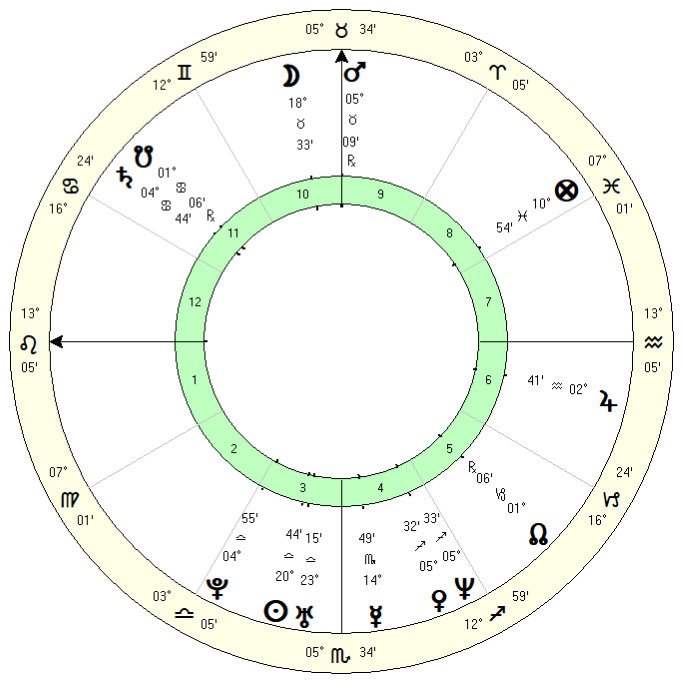
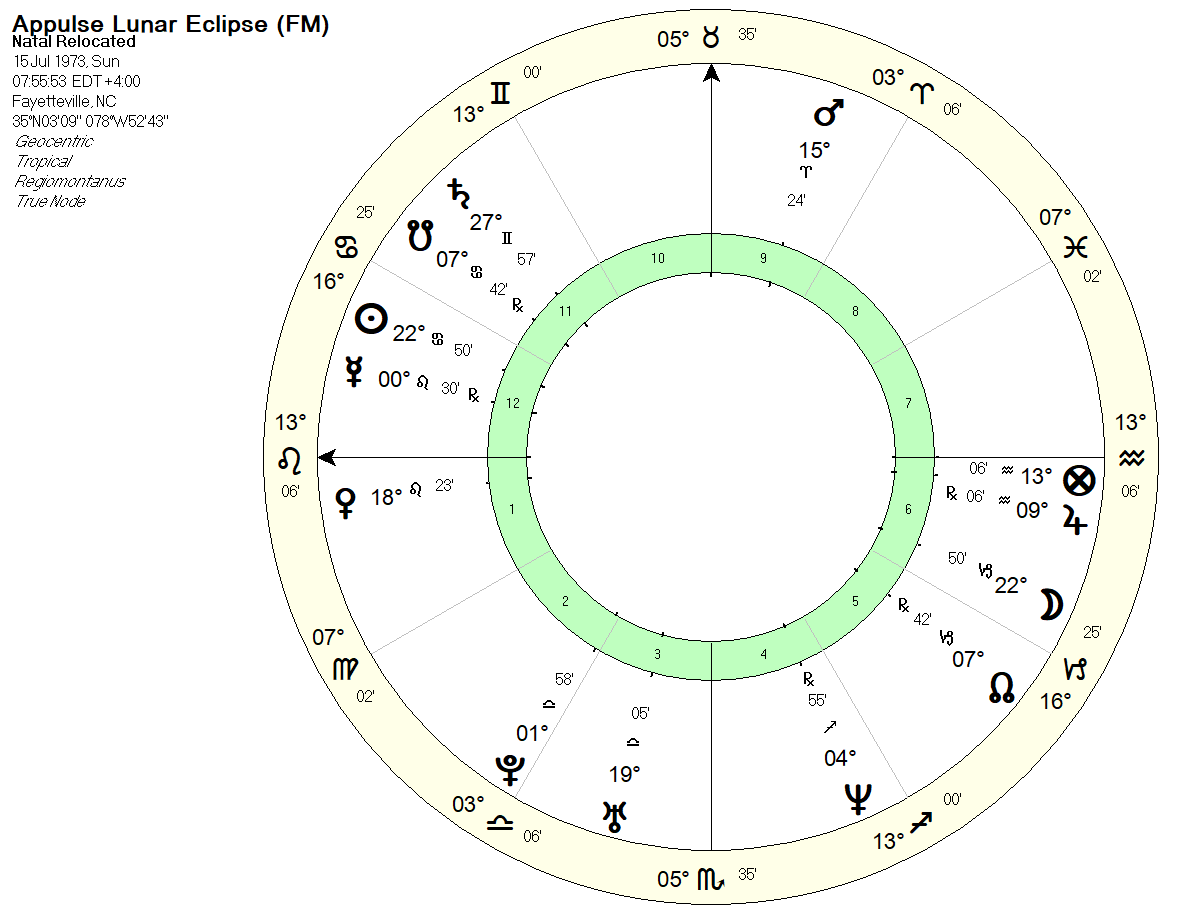
    I decided to look at the pre-natal eclipse chart which would have active angles and see if it might shed light on the manner of his death. The eclipse occurred on July 15, 1973; in Fayetteville NC it was at 7:56 am. It was a Lunar eclipse at 22 Capricorn. With 13’06” Leo on the ASC and 5’35” Taurus on the MC. I noted that the ruler of the eclipse degree, Saturn at 27 Gemini, was trining the USA (Sibley) chart’s Moon at 27 Aquarius, and was on the antiscia of the USA Venus at 3 Cancer.


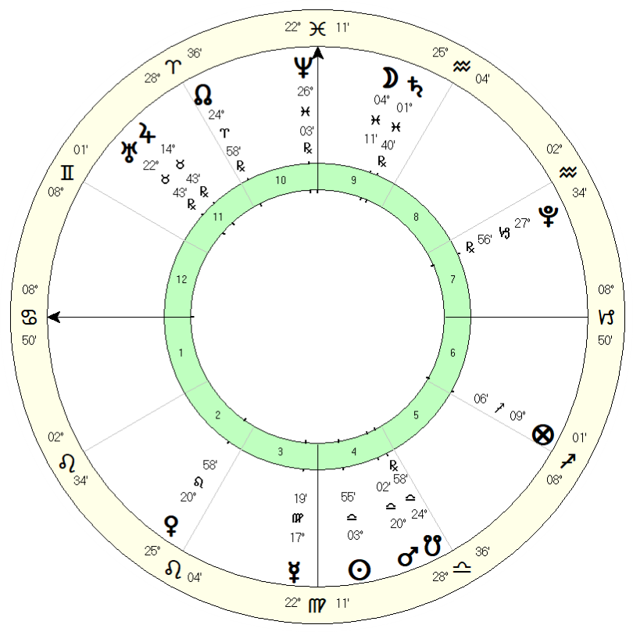
    George Floyd PNE Angles


    Oct 14 1973 in Fayetteville NC
    PNE angles giving a 1:58 AM time

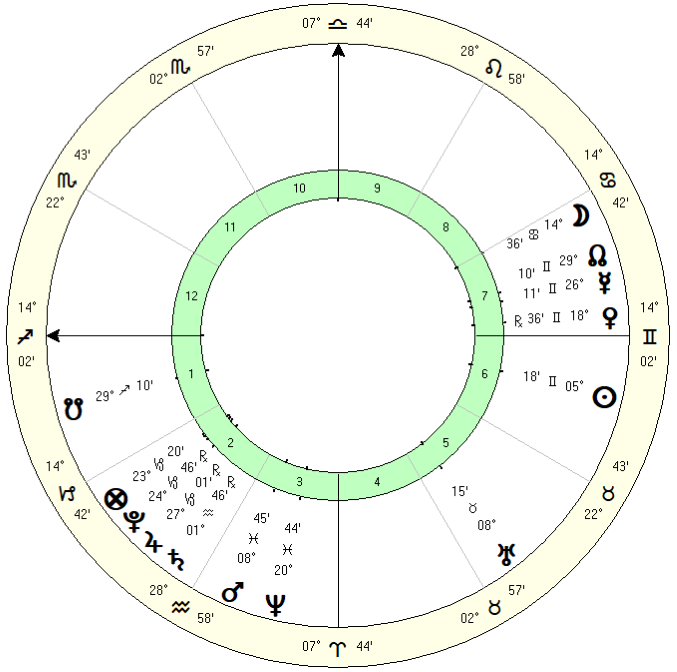
    George Floyd’s Death


    May 25, 2020 at 21:25 CDT in Minneapolis, Minnesota

    Transits:


    1. Syzygy is a traditional astrological term that refers to the pre-natal lunation degree. Considered very important in delineation of a natal horoscope. ↩︎
    2. The Lot or Part of Fortune is a calculated point found by taking the distance between Sun and Moon and projecting it from the ASC. I personally use the fixed formula. ↩︎
    3. Planets in each other’s sign or exaltation, but not making an aspect. Sometimes falsely referred to as being in mutual reception. These planets are really in mutual disposition. ↩︎
    4. Each planet is in fall when in the sign opposite the sign of their exaltation; they also have a specific degree that is said to be their degree of fall, which is opposite their degree of exaltation. Jupiter’s degree of exaltation is 27 Cancer, so 27 Capricorn is its degree of fall. ↩︎

  • What is a Horoscope? (a short philosophical digression)

    A horoscope is a map of the heavens, taken at a specific moment & place on earth; showing the relative positions of the Sun, Moon, planets, the ASC & midheaven in the degrees of the zodiac. A horoscope captures & anchors a moment, crystallizing it into a symbolic framework that provides a wealth of information. It is made up of three principal ingredients: the signs, planets and angles/houses. Each are of equal importance, symbolically defining and providing information on different: types of time and levels of existence.


    A very brief look at levels of time


    Looking at these three principal ingredients through the lens of time, we find that the signs of the zodiac are in essence timeless, they exist beyond linear time as we know it.

    The signs do not define periods time. While you may consider that zero degrees of the cardinal sign heralds the beginning of a new season, it is not so. Rather it is the Sun’s entrance into the cardinal signs that defines the seasonal division of time. The meaning of the signs is wholly symbolic and only activated when visited by a planet, at which point that planet begins to express its nature through the prism of that sign. The symbolism of the signs is not based on time; it is we who project our lived experience of the cycles of life onto them.

    Planets represent both real & symbolic time. As they travel through their diurnal and zodiacal path, each planet divides time in its own proportion, creating infinite interweaving real time cycles (the bread & butter of an astrologers trade). Via diurnal motion the Sun divides time into days and its journey through the Zodiac defines the years. The return of planets to a particular degree happens in a predictable real time.

    The movement of planets can also represent symbolic time. The degrees a planet travels may be taken to symbolically represent a particular unit of time; such as a planets movement in a day representing a year in secondary progression, or primary directions where a planets movement by diurnal motion over 4 minutes1 will equate to a year in the life.  Fidarias2 and other ‘time lord’ methods, divides the life into planetary periods, derived from their mundane time cycle, but used symbolically to designate unfolding periods in the life of an individual.

    The angles represent real timeand define how strongly the planets in signs will be manifested in our individual human life. When things will manifest lies with the movement of the planets. The ASC is the degree that dictates the other angles, for these are fixed to the location. The angles literally represent time over a 24-hour period.

    In summary: the signs of the zodiac are timeless; the planets divide life in real time movement & cycles and symbolic time through progression, planetary periods and such; the angles and houses define real experienced time.


    Even briefer look at level of existence


    In many of the world’s traditions, the universe, life itself was understood as existing on three levels or parts: the holy trinity3, the three parts of Hermetic wisdom4 and Plato’s theory of the tripartite soul5. This was envisioned as a triangle divided into three levels of existences, or divisions of the Universe.

    Looking at the three ingredients through level of existence we find that the top most section which represents the unchanging world of primary cause: the non-material, divine realm, the source from which everything emanates; this is best expressed by the signs, as the signs do not vary their nature.

    The middle section represents the in-between world of secondary cause:the world of elements, soul6 or psyche, which is best expressed by the planets who vary their expression and present different facets of their nature as they move through the signs of the zodiac and in their individual synodic cycle.

    While the base section represents the world of laws, the manifested, complex & everchanging, material world we inhabit.  This is expressed by the angles and houses, which represents the various areas of our everyday experience of life in this world.


    Sun, Moon & Earth


    The most important bodies in our astrology are: Sun, Moon and Earth (angles). They represent the tripartite nature of human beings; the three level of soul7; which are associated with the three levels of existence (spirit, soul or psyche and body).

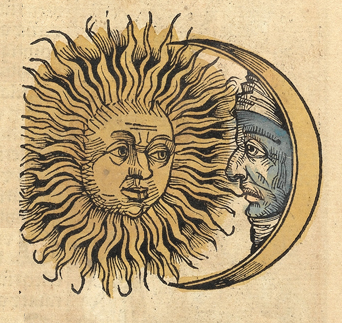
    Spirit related to inspiration. This is the human or rational soul, and is what we aspire to. It is consciousness. The unified divine aspect of self, shared by all humanity. It is represented by theSUN in the chart and is symbolised by the Circle which has no beginning nor end.

    Soul or psyche related to emotions. This is the animal soul; it is what moves and drives us. It is our senses (sight, smell, hearing, touch & taste), our feelings, instinct and emotions. This is the individuated aspect of self, that distinguishes us from each other.  It is represented by the MOON in the chart and is symbolised by the Crescent, the alembic that holds spirit giving it context and definition.

    Body related to matter and physical existence. This is the vegetative soul; it is the physical body through which we experience life. It is the biological functions and innate, non-rational intelligence of our body. It is represented by EARTH/the angles in the chart and is symbolised by the Cross of matter that anchors and manifests spirit in the physical world.


    1. Primary direction is based on the ascensional rising times of the signs over the ASC which varies according to location and seasons. ↩︎
    2. Firdaria are a system of planetary periods much like the dasa systems of India.  Each period of life falls under rulership of the classic seven planets and Nodes. ↩︎
    3. Holy Trinity—Wisdom (Word), Intelligence (Holy Spirit) and Power (Source). In the Christian faith these are associated with God the father, the son and the Holy Spirit. ↩︎
    4. Hermes ‘Trismegistus’ (thrice great) said to know the three parts of the wisdom of the whole Universe They are referred to as Alchemy, Astrology, and Theurgy, which are also known as the Operation of the Sun, the Operation of the Moon and the Operation of the Stars respectively.  ↩︎
    5. The Platonic soul consists of three parts, which are located in different regions of the body: logos (reason) located in the head; thymos (spirit/emotions) located in the chest/ heart area and Eros (desire) located in the stomach. ↩︎
    6. The term ‘soul’ can be problematic as it is defined and conceived differently by many and leads to complex theological debates. For clarity I define soul as a non-individuated essence that is the interface between Spirit and matter, connecting our earthly being to a higher power. My understanding is that soul exists in all things on different levels. Where there is life there is soul. (see note 4) ↩︎
    7. The human or rational soul; animal soul and vegetative soul. (See note 4) ↩︎
  • Saturn: the great malefic or the astrologer’s friend?

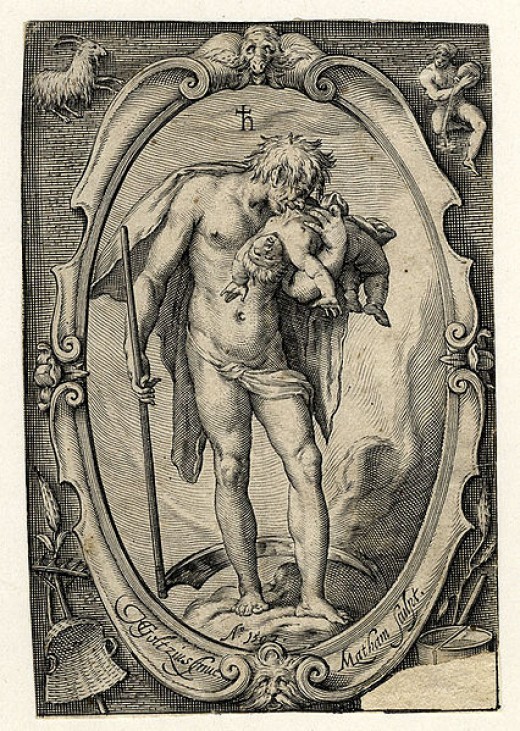
    Traditional astrologers viewed the planets quite differently than how we understand them today. They understood the planets to be living conscious beings, or as 12th century Guido Bonatti called them: superior beings.

     “…On those things which move a man to pose a question. The first is the motion of the soul, when someone is moved by his intention to pose a question. The second is the motion of the superior beings, namely when someone asks what they are impressing into the quaesited thing, what will come of it…”1

    Planets were not owned in the way we speak of them, when we claim some authority over “my Saturn” or “my Moon” … In the past each planet was understood as having a fundamental nature that dictated its specific function, promise and associated chain of correspondence. Depending on their condition at a particular moment in time, they would express the best or worst of their nature and fulfill their promise to a lesser or greater degree.

    The notion of some planets being “malefic” and others “benefic” is one that sits uncomfortably with contemporary norms. Our world promotes the notion of equality and neutrality, to the detriment of natural order. Each of the seven classic planets was understood to govern an aspect of the divine order which dictated that everything in this world must be born, grow, sow their seed and die. The benefic planets were life promoting, initiating growth, birth and expansion; whereas the malefic planets functioned to restrict and destroy, ensuring that no one out stayed their allotted time. Each was crucial in maintaining balance in the world.

    The human experience tends to judge one side of this balance more favorably that the other. We want to avoid the pain that comes with lose, grief and death; and to seek out that which promotes life, joy and happiness. One is brought to us via the malefic planets Mars and Saturn, while the other by the benefic Jupiter and Venus.


    Who is Saturn?


    Saturn rules time and the restriction this imposes on our earthly existence. As astrologers, we deal in time and are prone to get caught in its apparent, but deceptive forward momentum. However if we are to look honestly into our past, we can recognize that we have not moved far. The cycles of life, the movement of the planets and stars, mark our experiences, but time stands still in a forever present moment that is re-experienced over and over and over. 

    Traditional astrology understood the importance of Saturn, not only as the significator of time but also as the ally of the astrologer. For it was only through hard study and serious application to this sacred Art that any relationship with the “superior beings” (the planets) is possible.

    Saturn is encountered at the beginning and at the end of all endeavors, including life. He provides the body that allows us this earthly experience, and at the appropriate time, he takes it away. It is for this reason that he is associated with the ASC and 1st house, the beginning point that marks our birth; and the 8th house of death.

    Saturn is the first planet in the Chaldean order, the first planetary gate through which the Soul must pass on its journey into incarnation. Encountering Saturn, the soul takes on structure and authority as well as the limitations of the physical body, matter and time. Even as modern astrologers we are well aware of the association of Saturn with restriction and limitation. The reason for this becomes obvious when we consider that Saturn exists at the outmost edge of our visible solar system, and defines our natural limits. Saturn is the border between our known world and the Divine sphere of the fixed stars.

    The basic qualities that make up Saturn’s temperament are cold and dry to the extreme. Cold constricts and dry limits movement. Saturn is of a melancholic temperament; he is stern, serious and authoritative. He is a masculine and diurnal or day planet. Saturn’s extreme cold nature needs the warmth of the Sun to function in a more balanced manner, therefore though he may like and feel at home in the cold darkness of night, he functions better in the heat and light of the day.

    Saturn’s extreme cold and dry nature is what accounts for his reputation as a malefic planet. The absence of warmth and moisture is antagonistic to life and growth. Yet it is these qualities of Saturn that allows matter to crystallise and take physical form. It is the discipline and structure of Saturn that allows life to exist and ideas to take shape. From a human psychological perspective, it is only when we engage with the discipline and structure of Saturn that we accomplish anything.

    The tears of grief are another of Saturn’s gifts to the soul. Hidden deep in Saturn’s strictness and authority lays the impossible longing for the return to the divine. The grief of Saturn is the knowing that one must pass through incarnated life, with its pain and joys and that one’s authority is fleeting and illusionary. The ruins of the past, the laws of old, and the desolation of yesterday are all part of Saturn’s cold and dry rule; and so, his association with melancholy and in its extreme form, depression.

    The great malefic demands hard work and is associated with death and the inevitable end to all beginnings. Interestingly he is also connected with births, to which death is always a close possibility. This is illustrated by the fact that the birthing process is called “labour”, for it is indeed hard work to give birth and hard work is Saturn’s territory.

    From a traditional medical understanding Saturn governs the memory function of the “animal spirit” which resides in the brain. Without Saturn our individual thoughts and knowledge could not be retained. Saturn is the storehouse of wisdom.

    Saturn is associated with the hardest, heaviest and oldest things. He is associated with old age (from 70 to 99 years old) and the seventh age of man, the age of resignation and ideally, wisdom. Saturn is associated with the metal lead, the heaviest and most poisonous of all the metals. Saturn corresponds to the most toxic and poisonous plants, including hemlock and belladonna.

    Saturn is said to rule the bones, teeth and skin of the body, that which defines the structure and limits of the physical body. All boundaries are under the rule of Saturn. At the borders of our travels, we encounter Saturn in the form of immigration and border authority which demands that we present our documents, our right to passage, or we can go no further.


    No need to fear the great malefic?


    Once we enter the world of traditional astrology our view of life and reality changes. Once we open our minds to the wisdom of our lineage, it is very difficult not to be influenced by the great astrologers that came before us. However, it is the incredible commonality between human experience of the past and our own that takes us by surprise. The emotional and psychological needs of the everyday person have not changed over the centuries, even though our technology has.

    We live in a linear world that is imbued with the ideas that promote evolution and progress. Whilst everything on earth is born, grows, withers and dies in the endless cycle of life, giving rise to the illusion of a forward movement of time, it is but that; an illusion.

    Saturn is the path less taken, because it is the path of greatest hardship; the path of blood, sweat and tears. Saturn provides us with challenges and obstacles that in the end force us to confront the inevitable transient nature of life. Saturn teaches us that this life is an illusion to which we are not meant to get attached. But by making the effort to befriend Saturn and do the hard work he requires, we are rewarded by the awe-inspiring storehouse of ancient wisdom that is his domain; and by making friends with Saturn the door is open to the other superior beings in our cosmos: Jupiter, Mars, Mercury, Venus and the Luminaries.


    1. Guido Bonatti Book of Astronomy – Treatise 5: 146 Considerations  translated by Benjamin Dykes ↩︎

  • Void-of-Course Moon

    On March 20, 2023 the WGA (Writer Guild of America) began negotiations on new contract with the AMPTP (Alliance of Motion Picture & Television Producers), which represented the major film & television studios).  One month later, on April 18, 97.85% of WGA  members voted to take strike action if a satisfactory agreement was not reached. The concerns of the WGA included: loss of financial residuals due to streaming media, the move towards a ‘gig economy’ model that threatened member’s financial and career prospects, general working conditions and the threat posed by AI.

    Six weeks after negotiations began, they broke down and the WGA downed pens at midnight on May 1, 2023 beginning a strike that would last 21 weeks. It would take 5 months before the two sides could reach a deal that saw the strike officially end at midnight on Sept 27, 2023.


    Pens Down


    May 1, 2023 at 3:59 PDT Los Angeles California


    Course of Events


    • For the first two month or 8 weeks nothing happened. (Moon is VOC for 7 plus degrees)
    • Ten weeks into the strike, on July 12, it was reported that the AMPTP would not return to the negotiation table till late October when the writers would be suffering financial strain and be willing to accept whatever the studios proposed. Naturally this enraged the WGA. (Moon 8 degrees Libra, now in orb of Mars – but Mars is not yet in orb of Moon4).
    • Thirteen weeks into the strike, on Aug 4 WGA & AMPTP leaders meet face-to-face for the first time since the start of the strike, with little apparent progress. Even the government of California wrote to the companies represented by the AMPTP (on Aug 30) imploring them to return to the negotiations as the strike was having a devastating effect on the economy as a whole. (Moon 13 degrees – Mars and Moon were now in each other’s orb. Moon has now entered into orb of her aspect to Venus).
    • On Sept 14, nineteen weeks after the start of the strike, the two sides agreed to restart the negotiation in earnest (Moon at 20 degrees – aspect with Mars has perfected.)
    • A deal is reached on Sept 24 and the strike officially ended on Sept 27 at midnight and the WGA go back to work.
    • The deal is ratified on Oct 9 (Moon 23 degrees – aspect to Venus perfects)

    The timing of the strikes ending is shown by the movement of the Moon to Mars, but also by Mercury who would travel just over 5 degrees before going direct (stationing at 5 degrees 51 minutes Taurus) equating to the 5-month duration of the strike. This was actually what I used to tell my daughter that the strike would last till roughly Sept 25th. I was off by a couple days.

    In real time the strike ended at the moment when the ASC/DES degrees were reversed almost to the minute; and the Moon was conjunct Saturn – the Moon being almost at the degree of Saturn in the strike chart; and the Sun close to the degree of the Moon in that same chart.


    1. The Moon is Void-of-course as she is not within her 12 degree orb of making any aspect. ↩︎
    2. Much of the dispute surrounded the issue of streaming content throughout the world without the creators (writers) being compensated for this new manner of delivery that had been extremely profitable to the studios. ↩︎
    3. All water signs are said to be mute, as water creatures make no sound. ↩︎
    4. The orb of Mars is 8 degrees ↩︎

  • The Radical Question

  • The Inconvenient Problem of Houses

    Astrology has a problem; it is a perennial issue that most will encounter at some point in their astrological studies, and which can never be fully shaken off. Throughout Western horoscopic astrology’s history this inconvenient problem has caused many a discourse to descent into bitter disagreement and threatened to derail the profound truth and beauty of astrology.

    House systems have always been a great point of debate amongst astrologers, sometimes to the point of ridiculousness, as has been made evident by the recent drama unfolding online. The self-aggrandizing and emotionally charged condemnations of those who hold different views regarding the topic; belies the illusion that this may have any real importance in the grander scheme of life, or dare I say, astrology. This is at once sad and laughable.

    Over the past few decades, the notion of a whole sign houses (WSH) has become very popular particularly in the US. This has been primarily due to the work of project hindsight, which promoted the notion that the WSH was the original system used by Hellenistic astrologers. The basis of this idea stemmed from their translations of Greek texts, in particular the work of Vettius Valens (75 CE). These texts are actually somewhat vague on which house system was used in practice, and are devoid of any actual drawn charts. Whether the idea of WSH stems directly from any clear statement found in the translated texts, which is debatable; or that it arose from the translator’s interpretation of the texts seen through the lens of their own expectations and preconceived notion on the subject is not the issue that I will be discussing1. However, the ensuing controversy is.

    While there is still much debate that can be made as to whether this ‘new’ house system is in fact the original system, it is in many regards a moot point. No other area of astrological doctrine has caused so much bickering over the centuries as the division of the sky into astrological houses.


    Many years ago, I began my formal study of astrology. This was during the height of enthusiasm for humanistic or psychological astrology. As with any astrological course we were introduced to the signs, the planets, and the houses. Charts were presented to us in the preferred format of our teachers. There was no reason or need to question that format, which included the house system of their choice.

    Years later when I began to explore works by different astrologers, I started to notice that charts did not always look the same. There was the obvious fact that some astrologer included different points in their chart (asteroids, vertex, Part of fortune); but sometimes the chart looked different because they used a different house system.  

    At first, I ignored these different house systems continuing to use the one favoured by my original teachers: Placidus. I told myself that it worked, so why go change things. I was not aware of the reason I used Placidus, nor did I know exactly how the Placidus system differed from other house systems, such as Campanus, Regiomontanus, Porphyry, Alcabitius to name a few2. Like many students of astrology, I chose to use a particular house system by default.

    As my studies continued, I learned that astrologers have different ways of approaching chart delineation. They had different opinion regarding which technique were best and held differing views on the planets, signs, and aspect. As with any art, the artists choose their tools Astrologers could discuss these differences more often with interest and respect for the other, without resorting to attacks and impassioned demands that their way is the only way and the ultimate truth of the matter. To understand why the subject of houses is so fraught with emotion and passion, I believe it is important to look at the whole of astrology from a larger perspective.

    Humans are by nature creative beings. The human experience gave rise to stories and myth which they projected onto their environment. It was only natural that humans would stand in awe and wonder at the Cosmos which enveloped them and lite up the night sky.  The heavens inspired a sense that there was a higher realm populated by divine beings and gods, who played out the everyday drama of human life on a grander scale. They came to believe that our earthly experience was intricately linked to the heavens, and so ritual evolved in order to commune and interact directly with the divine realm of the gods.

    Human are also by nature rational beings. The perpetual movement of the cosmos was observed and over time the reoccurring patterns and phenomena noted. This elicited a need to record, measure and find some rational meaning to this constant and yet ever-changing sky. Astrology may reflect life’s mysteries, but it grew out of human curiosity and the desire to decipher the mechanism by which these mysteries might works.

    Out of this competing mixture of human experience and divine beings; of mathematics and poetry; of science and art, horoscopic astrology emerged. As groups of stars and planets were identified, the building blocks of astrology were set: the signs of the Zodiac and the planets including the Sun and Moon that traversed them. The signs and planets may have been understood to exist in a distant realm of the deities, but they manifested themselves by rising, culminating and setting within the confines of our local sky. And so, we divided the local sky and created ‘houses’ so as to know where these divine emissaries were having their effect relative to our mundane human experience. Houses are the interface between the heavens and earthly experience.


    Houses in the astrological scheme


    The philosophical notion that at the beginning of time everything emanated from one pure source. Existence being the result of a Creator dreaming, thinking, or speaking us/it into being, is a common thread found in the fabric of many traditions. The notion that the further one gets from the source, and the closer to physical manifestation, the more complex and corrupted3 things become.

    According to Plato the world that we inhabit is but an imperfect manifestation of a greater reality consisting of non-material ‘qualities’ that combine to make up all that exists. Plato called these qualities ‘forms’ and hypothesized that these essential ‘beings’ existed in a realm that laid beyond the physical manifested world that we experience. To have knowledge of a thing according to Plato, one needed to go beyond the sensory experience of that thing and come to know the essential ‘forms’ from which it was made.

    In effect the idea that our world and physical body are but imperfect reflections of the essentially pure non-material spirit from which it is born. Our senses inform us only of the manifested and therefore imperfect material reality we inhabit. True knowledge and its ensuing wisdom can only come by piercing through the illusion of the senses and engaging our rational mind or Spirit. Without doing this we are left with mere illusion of knowledge and opinions4.

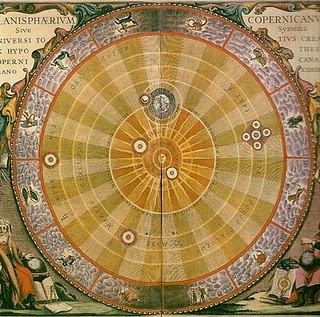
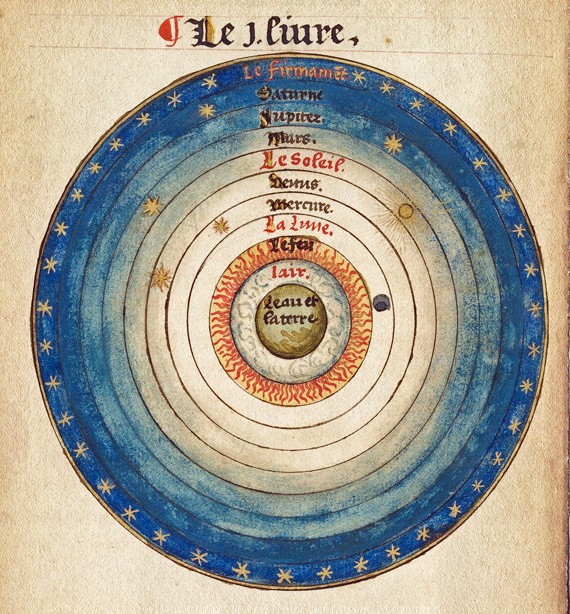
    This idea was further expounded on when looking at the model of the universe according the Aristotle/ Ptolemy that puts the earth at its center, divided into the four level of the element (Fire, Air, Water and Earth) and surrounded by the seven planetary spheres, the sphere of the fixed stars and finally the Primus mobile, beyond which exists the single pure source, the one, the monad that put the whole scheme into motion5.

    The further out we move from earth, the more constant, less corrupted, and purer a thing is considered to be. The zodiac exists in the furthest sphere from earth. It is closest to the Source from which it was conceived. The symbolic nature of the zodiac inspires us to reach for the heavens and search for meaning. 

    As we move towards Earth through the planetary spheres, the more distant a planet is the more stable its cycle. The superior planets: Saturn, Jupiter and Mars which are furthest from Earth6 have a relatively constant cycles; but once we get to the inferior planets: Venus and especially Mercury their cycles get far more complex, their movement more erratic and harder to follow. The Moon, moving swiftly connects the planets and distributes their virtues to the central sphere that is the Earth. This central sphere, our manifested world, is forever changing: the cycle of birth, growth, decay, and death is inherent through the continual interaction of the elements and their primary qualities7.

    The astrological houses are measured from the perspective of a particular place on earth. They are a division of the sky that is measured from the ASC, the eastern point of the ecliptic, a ‘fixed’ point relative to a particular place on earth and the MC the highest point on the ecliptic. The houses map the primary motion of the Sun/ Moon and other planet’s daily journey through our skies. The relationship of the houses with the observer is altogether more personal and direct, and through them the effect of a planet in the zodiac is grounded to reveal its specific influence upon a particular place on earth at a particular moment in time. From the perspective of the Ptolemaic/Aristotelean cosmos, the doctrine of astrological houses is by definition the most ‘corrupted’ and least pure thing in our astrology. The houses are earth bound, they are created relative to a particular place on this planet; they are at once forever changing and simultaneously fixed to a place/point in the manifested world we experience.8

    Houses evolved to represent areas of life and arenas of earthly, human experience. Houses reveal the stage on which the drama of human experience unfolds, and if we are being honest, we have to admit that we love a good drama.

    Is it a wonder that house systems are the one area of astrology that people become attached to or in some cases reject outright, as in the case of Cosmobiology. Is it a wonder that it also the most disputed? Is it a wonder that the subject of houses causes some of the most dramatic and emotive arguments between otherwise level headed astrologers? I think not.

    Choose your house system (or not), continue working with the higher beings that populate our cosmos, commit yourself to mastery, take responsibility for your words, be present and humble, but most of all, always remember that opinion is not knowledge.


    1. For a more thorough understanding of this see Martin Gansten’s paper on the subject https://brill.com/view/journals/ijdp/4/1/article-p1_1.xml
      ↩︎
    2. For a full breakdown of the differences in house system see Deborah Houlding’s The Houses: Temples of the Sky (The Wessex  Astrologer Ltd 2006) ↩︎
    3. Corruption is related to the constant change of physical corporal life. All life on earth eventually dies and decays. This is the meaning of being impure and corruptible. ↩︎
    4. [1] The fascinating fact that Mercury is the planet that signifies astrology and is associated with the rational mind should not be lost to any of us. Its glyph incorporates: the cross of matter, the circle of spirit and the crescent of soul. ↩︎
    5. Some model added an extra 10th sphere between the fixed stars and the Primus mobile…that of the Zodiac. I would ascertain that this would be when the Zodiac became connected with the cardinal seasonal points and decoupled from the stars. ↩︎
    6. In the Aristotelian/Ptolemaic scheme of the Universe ↩︎
    7. The two active qualities: hot & cold initiate movement. The two passive qualities: moist & dry modify it, creating the elements and constant cycle of life. ↩︎
    8. The ASC/DES and MC/IC anchor is fixed to a place on earth and will remain the same relative to that place, regardless of time or season. (If 21 Leo rises and the MC degree is 14 Taurus; every time 21 Leo rises at that place, 14 Taurus will be the degree on the MC.) ↩︎

  • Defining Traditional Astrology

    The great lineage of Astrology which stretches back at least 2 millennia is now being reawakened. In this post I am are going to focus on the philosophical and some of the technical differences between so called traditional astrology and modern astrology.

    Traditional: The passing of beliefs or customs from one generation to the next. Any long held method, practice. Of or pertaining to time-honored orthodox doctrines.
    Orthodox: Adhering to what is commonly accepted


    On some level all astrology is traditional, as all are handed down by a previous generation of astrologers. However it is important to remember that there was a major break in the transmission of astrological knowledge and wisdom which resulted by the 20th century, in the development of very different types of astrology, which have a much shorter and more recent history; the “tradition” of modern astrology only extends back at most a couple centuries. Maybe a better term to describe what has come to be known as “traditional” astrology would be “classical” astrology.


    Classical: Traditional in style or form, or based on methods developed over a long period of time. Of a kind that has been respected for a long time. Used to describe something that is attractive because it has a simple, traditional style. Belonging to or relating to the ancient Greek and Roman world, especially to its language, literature, art, etc.


    Traditional astrology is Western horoscopic astrology as it was practice and written about from roughly the 2nd century BCE through to the end of the 17th century. This encompasses roughly 2000 years of tradition and includes the astrology practiced by Vettius Valens, Masha’Allah, Al Biruni, Bonatti, through to William Lilly.

    Over those centuries astrology reflected the political, intellectual, religious and social shifts in society; as well as their prejudices. Techniques were added, dropped and refined, yet the core doctrines on which astrology was founded remained fundamentally unchanged. The astrologers of old understood the importance of their roots and proudly called upon the astrological greats that came before them. As Guido Bonatti stated in his Book of Astronomy; treatise II (13th Century):

    I will therefore speak, following the footsteps of our venerable predecessors, on those things which will seem useful for this work, calling to mind their opinions – namely, Ptolemy, Hermes, Jafar, Ibn Qurra, al-Qabisi, al-Khayyat, al-Kindi, al-Andarzagar, Masha’allah, ad-Dawla, Jirjis (and others who have studied in this science), by adding those things which will seem useful to me, according to how God grants me grace in organizing them and restore to me my memory.


    Birth of Modern Astrology


    The late 17th Century saw a seismic shift in our perspective and understanding of reality, man, his world and the Cosmos. This heralded the beginning of the “age of enlightenment” also known as the scientific age. The paradigm changed from a view that held the manifested world to be a result of a non-material, essentially divine reality in which consciousness or spirit was primary; to one in which the physical, material world was the primary reality.

    The enlightenment saw the formerly accepted essentially divine nature of the Cosmos replaced by a mechanical/mathematical one. The accepted reality now became, of a rational Universe adhering to physical laws, albeit driven by the hand of God. There was a rejection of the inherent intelligence of the Cosmos; the planets and signs were stripped of their numinous intelligence.

    The enlightenment’s focus on matter and the physical had two effects on astrology. The first was of disenchanting it by removing its access to the Divine realm. The second was to fragment and separate it into bits, leading to the proliferation of specialization.

    Traditional or classical astrology can not be contained or exist within a sole physical universe, nor can it be defined by “scientific” empirical observation. Within this new paradigm astrology lost connection to its roots.

    Modern astrology that focuses on character analysis and the development of the individual, had its genesis in the 19th century, after approximately two hundred year of decline. By the 20th century, many different schools of astrology had developed, based on various principles. Philosophically these are very different astrology, born out of a different paradigm to the tradition. Some of these new schools include:

    The Hamburg School of Astrology, also known as Uranian astrology. Was founded in 1925 by Alfred Witte. Uses hypothetical transneptunian planets and midpoints.
    Cosmobiology: Developed by Reinhold Ebertine, (1940) Took a more critical and scientific approach to astrology. It refined the use of midpoints, did away with houses and charts. Was critically biased against traditional astrology.
    Evolutionary Astrology: A form of natal astrology based on the philosophic principle that human being evolve through many lifetimes. Pluto and the Lunar nodes in the birth chart are used as pivot point to understanding an individual position in their evolution.
    Esoteric Astrology: Based on the work of Theosophist Alice Baily, and her ideas on the evolution of soul consciousness. It uses an entirely  different set of rulerships which is unique to esoteric astrology.
    Humanistic or Psychological Astrology: A 20th century development, that was influenced by Jungian principles, mythology and archetype. It takes a non deterministic approach to the natal chart.


    Modern astrology has given us some wonderful tools with which to describe the character and explore the psychology and personal evolution of an individual. This in itself is a reflection of our modern understanding of reality; with its emphasis on the individual, and how astrology impacts him and his world. To illustrate this, take for example the title of the first chapter in the 1989 edition of “Alan Oken’s Complete Astrology” (1974):  Astrology and its Place in the Universe of Man. The second paragraph reads:

    “…Yet your physical body does not represent your true dimensions. It is the extent of your consciousness which determine your relative position in the scheme of the Universe. Your physical body is but an anchor of your total being and has as its base, the Earth. As such it is subject to all influences of this planet just as our globe is, in effect, directly regulated by any motion of the Sun and it, in turn, is integrally linked to the fate of the Galaxy. In his consciousness of himself, Man, like a infant, often forgets that he is part of a greater plan of creation.”

    Contrast Alan Oken’s 20th century words with those of 13th century astrologer Guido Bonatti, who begins his great work, Book of Astronomy with these words:

    “The Soul which is in man is quite noble. It gives essence and perfection to the body, and its foods are very noble, with respect to the foods of the body, since the soul is most noble with respect to the body. And the soul rejoices in intellectual gain, and that depends upon the knowledge of philosophy; and in that the soul rejoices, and is delighted…And there is nothing in which the soul gains so much as in astronomy or astrology.
    For through this study, we know and understand creatures beyond passion; unalterable and immutable in another essence since they are the super-celestial bodies. And through these creatures we are able to draw near to an understanding of the Creator, and to know however much more the human mind is able to attain, and to perceive Him to be beyond passion and unalterable.”


    The Differences Between Modern and Traditional Astrology


    Broadly and philosophically speaking the difference between traditional and modern astrology can be summed up as such:

    • Traditional astrology recognises the inherent intelligence or “consciousness” of the Cosmos and Planets.
    • Traditional astrology emphasises the Creator or God, the Divine, the world of spirit and our relationship to it.
    • In traditional astrology mundane matters of everyday life and the body, were seen to be subservient to the superior bodies; the soul could negotiate with them.
    • The traditional natal chart is a picture of the individual’s fate, his environment and place in the world, only part of which is his mind.
    • In Modern astrology everyday matters are seen to be reflected or mirrored in the Cosmos.
    • Modern astrology focuses on the consciousness of the individual.
    • Modern astrology emphasises the individual and how the Cosmos impacts or describes him and his processes.

    The Modern natal chart is seen as a picture of the individual’s mind or psyche. Aside from Cosmobiology, which did away with the horoscope and replaced it with a 90 degree dial, modern astrological horoscope look the same as traditional charts. There are some differences:

    The use of outer planets and asteroids: Traditionally, astrology only used seven planets: 2 lights and 5 wandering stars to be precise. Whenever the   planets are presented they are the ordered by distance and speed. Called the Chaldean order: Saturn, Jupiter,   Mars, Sun, Venus, Mercury and Moon.  This puts the Sun in the center of the planets.

    The use of minor aspects: Traditionally aspect had to divide the 12-fold zodiac equally and so only the Ptolemaic aspect were used   (opposition, square, trine, sextile and conjunction). Aspects did not have orbs; planets did. Some minor aspect were recognised, like the semi-sextile & the ‘inconjunct’, but these were not considered strong enough to have much effect.

    The use of Vertex, black Moon Lilith and other astronomical points: Not used in traditional astrology, though there was a whole doctrine of Lots, also known as the Arabic Parts. Today only the Part of Fortune is used in modern astrology.

    Secondary progressions/Solar Arc: Traditionally primary direction were used. This fell out of favor as the calculation became too difficult it was replaced by the much simpler day for a year progressions or Solar Arc.

    Emphasis on transits – especially of the outer (modern) planets: Traditional astrology makes use of a variety of planetary period or time Lords,  yearly and monthly profection and Solar and Lunar returns.


    Modern Zodiac Centric Astrology


    There is more focus on the Signs of the Zodiac in modern astrology. Traditionally, the Zodiac Signs were understood very differently. William Lilly begins his chapter on the signs of the Zodiac by setting out the various ways they were divided: by quadrant or season; by elements (hot or cold and dry or moist);  by sect, diurnal or nocturnal (masculine or feminine); by modality (moveable, common or fixed); whether bestial, humane or feral, fertile or barren; mute or voiced. He then writes of the nature, description, and diseases signified by the twelve signs. On the nature of Aries (CA page 93):

    “Aries is a masculine, diurnal sign, moveable cardinal, equinoctial; in nature fiery, hot and dry, choleric, bestial, luxurious, intemperate and violent: the diurnal house of Mars, of the fiery triplicity and of the East.”

    In Alan Oken’s – Alan Oken’s Complete Astrology  the chapter on Aries is called: Aries – I Seek Myself  (page  57).  He begins with these words:

    “Aries symbolises the realization within oneself that one is different and apart from the rest of humanity. It is therefore the individualizing agent, the ego, the consciousness of self. Aries is the beginning, the first emanation of self-awareness coming from the realm of the collective.”

    There follows eight more page describing  various aspects of Aries in different context and ending with positive and negative keyword concepts for Aries:

    Courageous and bold
    Fool hardy and a zealot
    Inspirational to others
    Egotistic show of bravado
    Intuitive and perceptive
    Oblivious to all thoughts but own
    Always takes the initiative
    Direct and decisive
    Lacks of subtlety; opinionated
    Like to lead others out of darkness
    Uses other exclusively in self- interest


    Modern astrology focuses on and makes more use of the Universal signification of the planets. Each planet has a function that every individual must contend with. Alan Oken again (page 211).

    “Saturn allows for personal growth, but only through the fulfillment of one’s earthly obligations and responsibilities. Thus the position of Saturn in the natal horoscope reveals what obstacles one has to overcome in order to achieve success…It is the energy of this planet which tests one’s endurance. It brings the trials and stumbling blocks so that an individual can attain the strength and wisdom he needs in order to deal with life’s difficulties.”

    Compare to William Lilly (CA page 58 -61)

    Nature: He is a diurnal planet, cold and dry (being far removed from the heat of the Sun and moist vapours), melancholic, earthly, masculine, the greater infortune, author of solitariness, malevolent”

    Lilly then lists what Saturn signifies or rules: in manner and actions, corporature, quality in man, professions, sickness, savours, herbs, plants and trees, beasts, fishes, birds, places, minerals, stones, weather, winds, years, countries and finally angels.


    Traditional astrology uses the universal meaning of a planet, but focuses on the specific signification of planet within a chart.
    The universal meaning of a planet was based on its nature (hot, cold, dry, moist), its place in the scheme of   the solar system. It specific signification depended on what it governed or signified in the chart.

    Traditional astrology recognizes malefic and benefic planets: One of the most contentious ideas to many modern student. The benefic planets: Venus and Jupiter brought about growth and pleasures, while the function of the malefic planets: Saturn and Mars was to bring about destruction; in order to keep the cycle of life flowing.

    Sect: diurnal or nocturnal chart: Day and night charts were delineated differently. Some planets were understood to be stronger by day, some by night. This divided the planets into two Sects, consisting of a luminary, a benefic and a malefic planet. The day sect was: Sun, Jupiter and Saturn; the night sect was Moon, Mars and Venus. Mercury joined the day sect when oriental to the Sun, the night when occidental to the Sun.

    In traditional astrology the essential and accidental dignity of a planet is very important: The condition of a planet dictated how well it could function and do its job. Essential dignity was based on a   planet’s position in the zodiac and there were five: rulership, exaltation, triplicity, terms and face or decans.   The accidental condition of the planet was based on its relationship to the Sun and Earth included: house   position relative to the angles, aspect, speed and direction.


    The Rise of the Astrological Alphabet


    Bonatti quotes Al-Qabisi about Saturn he gives us a hint of what has to be one of the biggest difference between Modern and Traditional astrology. The associations between house and sign meanings. mixed with rulership.

    “Saturn is a masculine, diurnal planet, and he works at intemperate coldness and dryness. He is significator of fathers and grandfathers and all ancestor who is signified by the 4th house, but this is more by accident than nature, for he naturally signifies the person or body of the native, on account that the first thing that happens to a man is the physical person through which being is given to him.”

    Firstly, modern astrologers assigned rulership to the three outer planets: Uranus, Neptune and Pluto. This destroyed the symmetry of the ancient system and exposed the total misunderstanding about the meaning and function of rulership and dignity.

    Secondly, the “astrological alphabet” was created; this de-rooted modern astrology from its tradition. The astrological alphabet connects the signs of the Zodiac and the terrestrial houses of the horoscope, as well as the planet ruling the signs. So the first house and the first sign, Aries became associated, and since Aries was ruled by Mars, the first house takes on Mars quality. The second house and the second sign, Taurus and Venus became associated…etc..

    Once we get to Scorpio, Aquarius and Pisces, the outer planets were added to the mix: the 8th house and Scorpio, took on Pluto qualities, the 11th house and Aquarius, Uranus qualities and the 12th  house and Pisces, Neptune qualities. The astrological alphabet blurs the lines between sign and house and the symbolic meanings of both has become muddied. Having a planet in a house was like having it in the sign erroneously associated with that house.

    While this “system” may appear logical on the surface, it is at odds with the centuries of tradition and the foundation of Western astrology. The astrological alphabet has created much confusion and separation between modern and traditional astrology.

    Only in traditional medical astrology do we find a connection between houses, signs and ruling planet. The outer planets do no appear in the scheme. In traditional astrology the signs, were understood to be the celestial “houses” or domiciles of the planets; they had no relationship to the terrestrial houses of the horoscope. The traditional scheme of rulership was based on a planet’s relationship with the Luminaries in particular the Sun; not on similar characteristics between the sign and a planet. It also informed the doctrine of aspect.

    To conclude, the main difference between modern and traditional astrology is one of perception and philosophical understanding as to the nature of life. Modern astrology reflects the modern idea that fate can be overcome or transcended by our free will; the (natal) chart reflecting the individual and how best they can navigate life.

    Traditional astrology is not focused on the individual or their will, but rather on the will of the Divine. The chart helps to understand our place in the overall order so that we may align with it. I will leave you with the words of William Lilly from his letter to the student (1647). 

    “My Friends, whoever thou art, that with so much ease shall receive the benefit of my hard studies, and doth intend to proceed in this heavenly knowledge of the stars, wherein the great and admirable works of the invisible and all-glorious God are so manifestly apparent… Consider and admire thy Creator and be thankful onto him, be thy humble, and let no natural knowledge, how profound and transcendent soever it be, elate they mind to neglect that divine Providence, by whose all-seeing order and appointment, all things heavenly and earthly, have their constant motion”


  • Why Study Classical Astrology


    When first faced with classical or traditional astrology1 some astrologers steeped in the multifaceted mythical images of psychological and archetypal astrology are put off by what appears to be a dull, colourless and outmoded form of astrology. However, classical astrology is far from colourless or outmoded. It may take some effort to crack its archaic veneer, but once this is done the exquisite rationale, beauty and inherent wisdom upon which astrology is built is revealed.

    Many astrologers especially those who have been doing astrology for a long time come to a point when they begin to feel the pull towards our inherited roots. Reading the old texts can be challenging and disheartening; the language appears stilted and the concepts are based on incomplete astronomical understanding may seem irrelevant to our modern worldview. It is necessary to approach these ancient texts from the perspective of the times in which they were composed. This requires at least a cursory knowledge of philosophical, scientific and cultural history.

    Classical astrology demands a more rigorous approach to its study: techniques must be mastered, rules learnt and practice needs to be constant. It is all of these factors that often put the student off learning classical astrology. But the rewards for doing so are many.

    It is impossible for a student to avoid the inevitable change that their astrological delineation will undergo once the door to the classical perception has been opened. This can engender a sort of “identity crisis”. In the same way that our growth from child to adolescent; or from single adult to committed parent can feel uncomfortable and even threatening, as we leave the familiar behind and enter territory we have not yet charted.

    We are a product of our times, and we live in a time corrupted by the hubris of our technological prowess. It is often assumed that the current scientific, political, social and philosophical understandings we now hold, have evolved out the old beliefs of the past. Therefore, it is suggested, we now possess a better, more accurate and thorough knowledge. This is like the arrogant naivety of the young who think they are the first to notice the shortcomings of the status quo and discover the joy of rebellion.

    To deny the relevance of classical astrology is to deny astrology itself. Coming to understand classical astrology makes us better astrologers, just as understanding history helps us to navigate the troubled times we seem to always be facing.


    For those who want to take the plunge, please contact me at eve@sta.co or schoolofclassicalastrology@gmail.com or go to www.sta.co

    1. By “Classical astrology” I mean Western astrology as it was practiced from circa 400 BCE to the mid-17th century CE. ↩︎
  • Traditional and Modern astrology: a philosophical exploration (part 5 – Pythagoras)


    Pythagoras and the Magic of Numbers


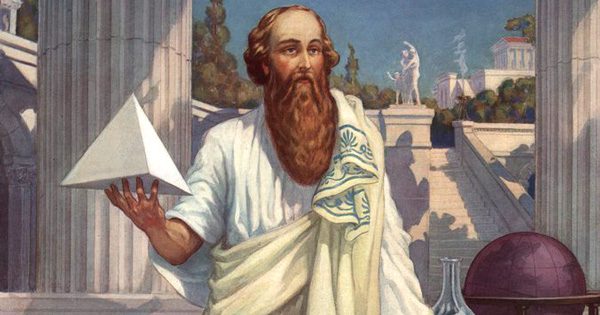
    It is probably redundant to say that most everything in our Universe can be understood through numbers. Mathematics is truly the universal language, the secrets of which were first explored and brought to our consciousness by Pythagoras who lived from about 570 to 495 BCE. He was a philosopher, mathematician, mystic and scientist who established a philosophical school in Croton in Southern Italy. Plato was one of his students. Little is actually known about Pythagoras the man; however his ideas and teachings have been very influential. Pythagoras is famous for saying that “ALL is number”. While we may never know whether Pythagoras the man actually said this, we do know that he saw numbers as more than just a means of quantifying things; to the Pythagorians numbers were understood to have and to bestow qualities as well.

    The ideas attributed to Pythagoras gave rise to sacred geometry as well as musical theory. His assertion that numbers had qualities and could be experienced expanded the notion we have of mathematics to include an esoteric dimension which included the ability to bring about healing. The doctrine of aspects in traditional astrology is based on Pythagorean principles.


    Pythagorean number theory


    One or the Monad is not considered a true number; it is the principle of number. It signifies the creative potentiality of all things, for it is potentially any number. It is both mother and father and is the source of all other numbers. One, is like God for it preserved; multiplying by one always gives you the number you started with, it preserves that number. It is unity that has yet to be manifested as it remains potentially anything and everything.

    Two or the Dyad is also not considered a true number; but rather a process that flows from the Monad. Two is the source of multiplicity and the principle of knowledge, for it creates the difference between the knower and the known. The Dyad is said to attract the Monad to it and from it generates the rest of the numbers; as such it is related to love.

    Three is the first actual number. It is a figural number because three points creates the shape or figure of a triangle. Three signifies knowledge and consciousness, as the knower and the known can now be recognized from a third perspective, bringing about conscious understanding or consciousness of knowing. The trine is related to three, giving easy understanding or communication between the planets.

    Four is the number that represents manifestation and solid physical foundation. It is of course related to the square. The circle, which has no beginning and no end is said to represent unity or God as yet not manifested, the square represents manifested unity. From an astrological perspective four can be associated with the foundational cardinal point of the chart; the angles ASC, IC, DES and MC. These represent the body/health, home/family, relationship/marriage and career/purpose which are the foundation of human life.

    The multiplication of three and four gives us the number 12 and we have twelve zodiac sign. While the addition of three plus four gives us seven which corresponds to the seven visible planets.

    Six is a perfect number for it contains one, two and three (1+2+3=6), it is both odd and even (2×3=6). It is the number associated with reconciliation and represents “ensoulment” of the body by the soul. The number six creates 2 triangle that fit together bringing the elements together or God and the manifested world together.

    We can see evidence of the Pythagorean number theory is the traditional doctrine of aspect. The monad is like the conjunction, the Dyad is like the opposition, the number three relates to the trine, the number four represents the square and finally the number six relates to the sextile.

    Twelve was seen as representing a version of the bodies/sphere in the Universe: the one eternal and unifying God (realm of the fixed stars), the 7 planets, the 4 sub-lunar elements(fire, air, water and earth), arranged from most orderly to the least, from most perfect to most corrupted.


    According to the Pythagorean understanding there were 3 parts of the Soul: the Curious part, that seeks knowledge, the Ambitious part that seeks honours and the Covetous part that seeks profit or power. Each part of the soul needs to function properly and be harmonized with the other 2 parts. We can associate these parts of the soul with the 3 traditional outer planets; the Curious soul with Jupiter, the Ambitious soul with Mars and the Covetous soul with Saturn (as the empire builder).