The industrial revolution (1750 – 1850) changed the lives of ordinary people and had a profound effect on society. The shift from an agriculturally based economy to a manufacturing one saw a decline in rural population and an increase in urban living. It also led to changes in the distribution of wealth and class distinction; as entrepreneurs were able to make fortunes in manufacturing which in turn created new jobs and led to the rise of a new middle class through the 18th and 19th century. As this middle class became more numerous, better educated and influential, they developed an interest in and fascination for occult subjects and mysticism evidenced by the founding in the mid- 19th century of the theosophical society amongst others. It was through the mystery schools of the late 19th early 20thcentury that astrology began to re-emerge from its years in the wilderness and find a new audience.
The astrology that returned was changed and coupled with the legal challenges that many of its practitioners faced, astrology came to reject event-oriented and predictive horoscopic analysis while focusing on natal astrology with an emphasis on character analysis and the psychological and spiritual development of the individual.
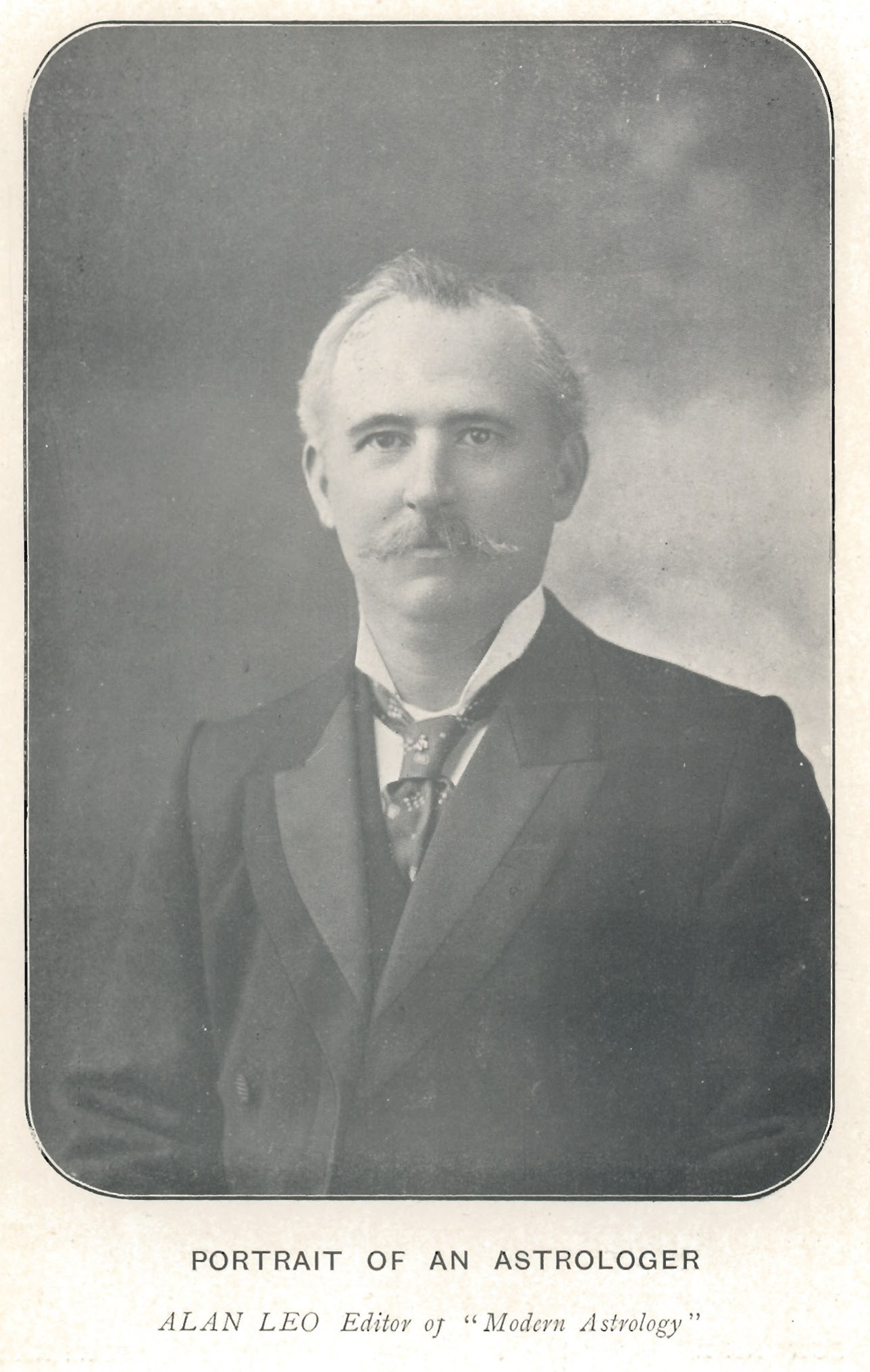
It was Alan Leo (1860 – 1917), an immensely successful and influential astrologer who through his work put astrology firmly on the road to the more individual focus and psychologically-oriented horoscope delineation of modern times. He is rightly known as “the father of modern astrology”. Being a devout theosophist he also incorporated many of the concepts of karma and reincarnation into astrology. One of the principle things that modern astrology rejected outright was horary, which was seen by Alan Leo as being spiritually dangerous.
“Horary astrology, as practiced today, is the vilest rubbish imaginable, and not worthy of the name. Indeed, it is not astrology at all, but simply divination, for which purpose geomancy or card laying would answer just as well… It is the curse of the science and the ruin of the astrologer.”1
While it could be argued that so much of the techniques and knowledge of traditional astrology had been lost, making the practice of horary near impossible, the main issue was probably more philosophical and possibly legal.
By the early 20thcentury the world had changed to such a point that the reasons for astrology’s initial decline were but a distant memory; a forgotten and irrelevant footnote in the history of science. It had been so long since astrology had figured in serious theological, intellectual or scientific discussion, that most would find it unlikely that it ever had.
Without prediction, astrology was safe from legal persecution and accusations of fortune telling. Focusing on character analysis was a good way of deflecting any awkward need to justify astrology to an intellectual world steeped in a scientific perspective, which was firmly focused on material rationalism. Astrology could continue to amuse and entertain the masses without being any threat to serious thinkers of the day.
The astrology that emerged in the early 20th century was rooted in the mystery schools of the 19th century. It was also informed by the new science of psychology and the advances in astronomy. This astrology incorporated recently discovered planets, emphasized universal significance of the signs and planets and became firmly focused on natal astrology and character analysis. By the 1980’s ancient myths, Jungian ideas, popular psychology and a sprinkling of “new-age” concepts were dominating astrological discourse, but astrology was still unacceptable in serious, academic circles.
Alan Leo from Modern Astrology II/VII: 10 (1896) pp. 434-437 as quoted by Patrick Curry in A Confusion of Prophets Collin & Brown (1992) p. 165 ↩︎
While we may never know exactly how or when horoscopic astrology first began. We do know that it sprung out of a time and place that was greatly influenced by the cosmological ideas of the Babylonian, the celestial religions of the Egyptians, the Hermetic magical understanding of correspondence in nature and the philosophies of the great classical thinkers and their schools, including Pythagoras, Plato, Aristotle and the Stoics. The period between the 4th and 2ndcenturies BCE was a time when many of the ancient cultures and their accumulated wisdom came together. The city of Alexandria and its famous library became the cultural and commercial centre of the Western world. Here Jewish, Egyptian, Babylonian and Greek traditions intermingled and unified under the Greek language of the Hellenistic lords. Horoscopic astrology appears to have been the results of this interchange of wisdom and ancient learning.
The Babylonian contributed their concept of the 12 fold zodiac and the planetary positions in the signs. The Egyptians brought the concept of the 36 decans and the importance of the rising decan which is possibly the origin of the Ascendant and it’s the importance in the horoscope. The Greeks contributed their understanding of the characteristic of the planetary Gods, the elements and most importantly their system of planetary rulership which was based on the distance of planets to the Sun.1
From these rich ingredients arose horoscopic astrology; a subject which was to profoundly influence man throughout his cultural, religious and political history. Astrology was understood to be at various times: a tool for predicting a predestined and fated future, a way of interpreting the will of God or the Gods, a form of Divination with which one could enter into a dialogue with the God(s) and sometimes a bit of all the above. By highlighting some of the mysteries that have fascinated mankind since the dawn of the ages, astrology engendered serious philosophical and scientific debate and challenged intellectual thought and beliefs over the centuries.
Horoscopic Astrology
One of the foundations on which horoscopic astrology was based was a perception of life which was accepted for over two thousand years. This view was idealistic and held that the physical, transient, sub-lunar world that we experience through our senses was the result or expression of an immaterial, eternal and essentially divine reality. Over the centuries the details of what that essential reality actually constituted and how the natural world and humans were connected or related with it, was the subject of much debate; however the understanding that matter was subservient to a higher and more refined spirit or mind was the accepted paradigm.
In the centuries leading up to the birth of the Jesus, the pagan religions perceived the world as being at the mercy of the Gods whims. The planets were representatives or symbols of these Gods, and so could be relied upon to display their will or intentions. Astrology could forewarn man of the Gods intentions; man could then proceed to make decisions that were in accordance with them, thereby avoiding the displeasure and wrath of their Deities.
In the early centuries CE, as pagan polytheist beliefs were overshadowed by the monotheist beliefs of the Judaic/Christian and later Islamic religions; the planets lost their positions as representatives of myriad Gods, but retained their role as emissaries or signs from the singular Divinity, at least for a period of time.
As Christians challenged the dominance of pagan beliefs in the 3rd and 4th centuries CE, the role and influence of astrology changed. Astrology reached a height of sorts, during the dying days of the Roman Empire. The Roman emperors used astrology as a tool to give them political advantage; though this was not always to the advantage of their astrologers2.
With the collapse of the Western Roman Empire, schools and libraries closed as financial support dried up, the knowledge of the Greek language died out, and the people became less literate. It is with gratitude that we should view the Arabic and Persian astrologers of the early Middle Ages; for while Europe descended into the period we now know as “the dark ages”, the intellectual light was transferred to the Middle East and there the wisdom of the ancient world including astrology was preserved, refined and expanded.
Astrology in the Arabic World
In the 5th and 6th centuries Hellenistic astrology travelled to the East and was intermixed with the astrology of the Persians3. Many of the Greek astrological texts were translated into Pahlavi (the language of the Persians) and we can surmise that some additions would have been made. It is unfortunate that no manuscripts from this period have survived, having been destroyed when later the Arabic Muslim armies overthrew the Persians and established their own empire.
Finding themselves in need of help to administer their empire the Arabs invited experts and intellectual giants of the world to assist them in building and maintaining their empire. They established a cultural, commercial and intellectual center emanating from their capital Baghdad; a city whose foundation date and time was elected by a group of astrologers4. For the next few centuries Baghdad and the Arab world attracted philosophers, artist and intellectuals of all sorts including astrologers.
Medieval or Arabic astrology flourished from the mid-8th century and lasted for about 200 years. A new translation project began as surviving Greek and Pahlavi texts were translated into Arabic. While the so called Arabic astrologers of the 8th and 9th centuries (many of whom were actually either Persian or Jewish), did refine some technical and mathematical points, the astrology they practiced remained for the most part, Hellenistic. It is from this period that we begin to encounter the concept of planetary orbs, quadrant house systems and the beginning of horary astrology proper.
By the 11th century Europe began to reawaken from its 600-year hiatus. As the Christians began to repulse the Muslim from the Hibernian peninsula and reclaim their territory; they discovered the libraries left in their wake. Europe’s intellectual fire was reignited. By the mid-12thcentury one of the most feverish translation projects began. Arabic texts on all subjects including many on astrology were being translated into Latin. Classical Hellenistic works were made available for the first time in over six centuries to a very intellectually hungry Europe.
Return of Astrology into Europe
After astrology was reintroduced into Europe in the 12thcentury, it took its place at the centre of theological, scientific, mathematical and philosophical debate. It was an accepted subject of serious study that invited much debate, criticism and controversy5. It was one of the principle subjects taught in the newly founded Universities. The basic curriculum consisting of the foundational trivium: grammar, logic and rhetoric; and the more advance quadivium: geometry, music, astronomy and arithmetic.
It is important to remember that during the middle age and renaissance, science and theology were more closely aligned; in fact, religious dogma aside, they had the same goal, to understand and come to know the nature of life and the universe. Within the study of nature, God was a given and needed to be reconciled with science as well as astrology.
In the west astrology reached the apex of its popularity and influence around the mid 1600’s; a time in which the political and social structures of Europe were irreparably changed by the English civil war, which culminated in the execution of Charles I.6 At the end of the 17thcentury astrology experienced a sharp decline in influence. The reasons for this decline are multi-faceted and complex.7 Astrology did not die so much as it was split into various factions that were unable to survive the tumultuous paradigm shift of the time.
The Splintering of Astrology
After the restoration (circa 1660 – 1685) there was a backlash against astrology, more specifically judicial astrology8, which had been used as a propaganda tool during the volatile and insecure period of the civil war. Astrology had become associated with seditious radicalism which was perceived to be the cause of so much destruction and unrest. The natural desire for calm and peace made many suspicious of anything that reminded them of that dangerous and dark period in their recent history; therefore astrology and astrologers were no longer trusted.
At the same time the new intellectual climate favouring a more Baconian9 science based on observation and experiment, began to view judicial astrology as being irrational and overly steeped in magical thought and superstition. Publicly astrology lost favour with the intellectual world. Though many of the great minds of the late 17th, early 18th century privately acknowledged the validity of astrology, especially natural astrology10, they believed that judicial astrology had been corrupted and needed to be purged of irrational beliefs, popular magical connotations and political rhetoric. Many hoped to restore astrology, bringing it more in line with “natural philosophy”.11
There was another branch of thinking which believed that astrology had strayed from the purity of its classic Ptolemaic roots, and needed to be purified by eliminating the ‘false Arabic inventions’, the magical thinking and the new rational scientific thinking that had polluted astrology. Though many wanted astrology to be restored or purified in order to takes its rightful place in the world of the educated elite, its negative reputation and fragmentation weakened it so that it could not defend itself against its critics.
As the world and life came to be understood from the perspective of mechanical, material and intellectual rationale, rather than from the perspective of divine creation and immaterial soul; the perceived connection of astrology to divination and magic led to its diminishing importance in science and philosophy, and its eventual banishment from intellectual discourse. By the early-18th century much of what had previously been the domain of astrology, became redefined as astronomy or medicine; while astrology was dismissed as trivial and irrelevant or worse, misguided superstition. By the end of that century astrology had been relegated to the fringes and was of no consequence in academic or intellectual circles.
A third arm of astrology did survive and remained popular with the majority of the rural and uneducated public; this was the simplified astrology of the popular almanacs which the intellectual elite rejected and mocked as being only fit for the “vulgar” commoners. The common rural folks held on to evident truth of idealism (mind before matter) for longer.
Eventually even this more popular astrology was attacked when the vested interest of the industrial power fought to eliminate these almanacs because they were rooted to a past that was subject to the natural rhythms of time, which did not accord with the more mechanical “clock” time of the industrial age.
For a full and detailed history of astrology’s beginnings see Nicholas Campion, the Dawn of Astrology, (Continuum Books, the Tower Building, 11 York Road, London) ↩︎
See Ben Bobrick, The Fated Sky: Astrology in History (Simon & Schuster, Rockefeller Center, New York)p. 27-60 ↩︎
Sassanian Persian empire flourished between 220 to 650 CE ↩︎
The chart was elected by the Caliph Al-Mansur’s court astrologer Nawbakht the Persian, Umar al-Tabire and the young Masha’Allah. The chart was set for July 31, 762 around 2:40 PM in Bagdad, Iraq. ↩︎
Benson Bobrick, The Fated Sky: Astrology in History, (Simon & Schuster, Rockefeller Center, New York) p. 91-92 ↩︎
The execution of the King was a momentous event which destroyed the long held notion of the “divine right” of the King to rule. I believe this created a split between us and the divine, which has led to the fragmentation of our world. ↩︎
For more information about this see Patrick Curry, Prophecy and Power (Princeton University Press, Princeton, New Jersey 1989) ↩︎
Judicial astrology refers to specific chart analysis and judgment leading to individual prediction or advice, as different from natural astrology which looks at the natural phenomenon such as weather, health and mundane events, associated with celestial movement and cycles. ↩︎
Roger Bacon (1214-1294) whose ideas were later developed by Francis ↩︎
Once we enter the world of traditional astrology our view of life and the world changes. It is very difficult not to be influenced by the great astrologers that came before us. However, it is the incredible commonality between human experience of the past and our own that takes us by surprise. We live in a world that is imbued with the ideas that promote evolution and progress. Whilst everything on earth is born, grows, withers and dies in the endless cycle of life and death giving rise to the illusion of a forward movement of time, it is but that; an illusion.
Traditional astrology understands the importance of Saturn, not only as the ally of the astrologer but also as the significator of time. Saturn of old was also called the Lord of deception and it is possibly his rulership over time which earned him this moniker. As astrologers, we deal in time and are prone to get caught in its apparent but deceptive forward momentum. But looking back into the past, we recognize that we have not moved far. The cycles of life, of the planets and stars, mark our experiences, but time stands still in a forever present moment that is re-experienced over and over and over.
The theory that Darwin made famous; that every living creature adapts and evolves is so accepted that it is nigh near impossible to conceive of a past that is not somehow more backwards than our present day. Astrologers are far from immune to this notion and so they take up each “new” discovery in our skies as a sign that we, the collective, have evolved in our consciousness. This implies that in the past, the consciousness of the people was not as evolved and therefore was lower than that of people alive today.
Even a cursory knowledge of political, philosophical or even astrological history would disprove this notion. The wisdom of the past is awe inspiring when one makes friends with Saturn and takes the time and effort to explore it.
Traditional and Modern Astrology
The word traditional means to follow a tradition, which is defined as: “a) Passing of beliefs or customs from one generation to the next. b) Any long held method, practice…etc.…” 1 All forms of astrology practiced today fall into the definition of tradition, as all derive from the ideas and work of others who have come before. The term “traditional astrology” has over the past 20 years or so, come to mean the astrology as it was practiced prior to the late 17th century, but this is not to say that modern astrology does not have its own tradition. However it is important to remember that there was a major break in the transmission of astrological knowledge which has resulted in the development of a very different type of astrology in the 20th century; this is the astrology we call modern.
Many modern ideas that have been incorporated into astrology are recent additions to a very ancient subject that have little connection to its past tradition. With the recent availability of modern translations of the older texts, we are experiencing a resurgence of interest in traditional astrology, which has reinvigorated the field but also highlighted some divisions within the rarefied world of astrology today.
Horoscopic astrology as it was practiced prior to 1700 encompasses roughly 2000 years of tradition2: and it includes the astrology as practiced by Vettius Valens, Ptolemy, Masha’Allah, Guido Bonatti through to William Lilly and his contemporaries. Over this time astrology was refined; certain techniques were developed, the application and emphasis on astrological doctrines shifted and changed to reflect the cultural, philosophical, religious and political developments of the times and location.
There are differences between the astrology that William Lilly practiced and that of Vettius Valens, however they are founded on the same basic fundamentals and are more similar than is the astrology of William Lilly to that practiced by the majority of 21st century western astrologers. The historical circumstances that led to this situation is one that needs to be understood if astrologers are to reconcile the rich legacy they have inherited to the art that they practice today.
There was a long tradition prior to circa 400 BCE of omen based astrology, but astrology that uses a horoscope or chart with a calculated Ascendant did not appear until about 400 BCE ↩︎
Where is the cat? This is a horary question that has almost become cliché. Why do these loveable creatures seem to get into so much trouble? Maybe it is our love and dedication to them that is the real problem. In any case it is wonderful when a chart can alleviate the stress and worry of an owner.
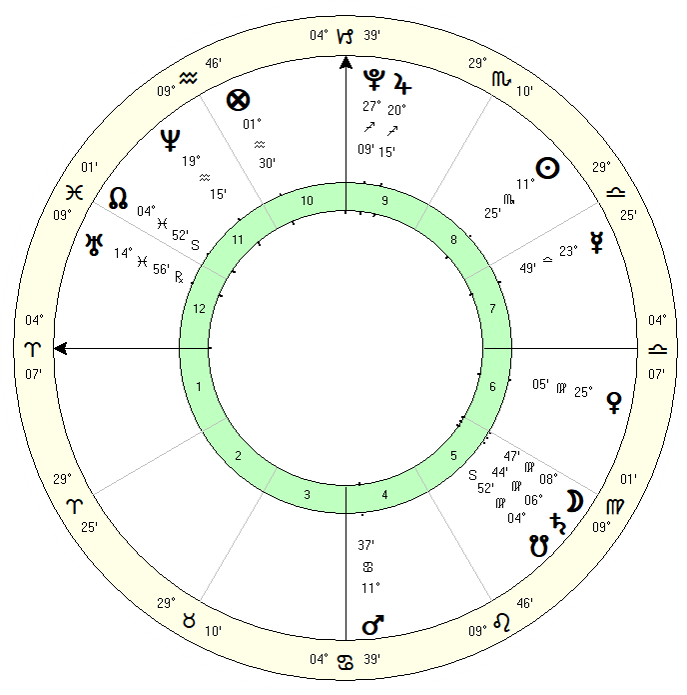
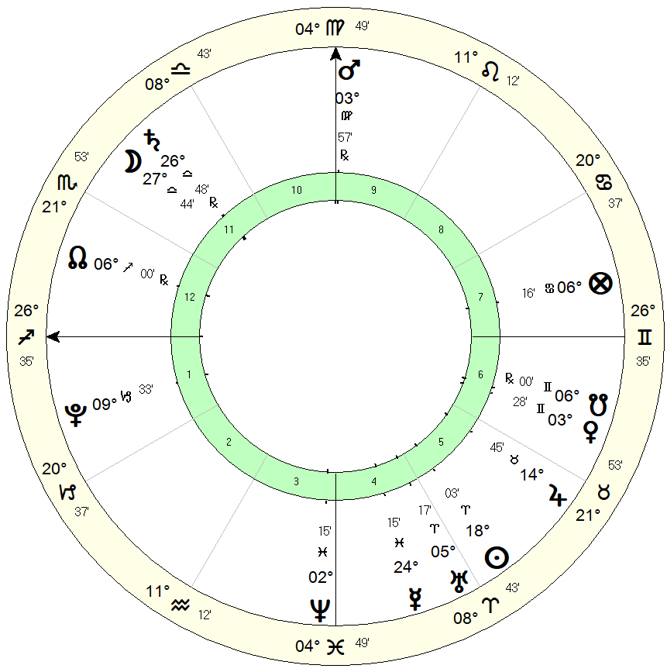
November 4 2007 at 16:48 AEDT Melbourne Australia
BACKGROUND
The querent showed up at my house very distressed; she was making the rounds of all the neighbours looking for her cat, Pukka, who she thought may have hidden in someone’s garden after an incident 2 days prior. Pukka had followed her to the milkbar (in Australia this is a small corner store) and as the cat followed her across the street she appeared to have been hit by a car. Pukka ran under a parked car, but when the querent went looking for her, she had she was not there and she didn’t respond when she called to her.
SIGNIFICATORS
The Querent is signified by the Aries ASC and its ruler Mars. Mars is in fall in the 4th house trining and receiving the Sun in the 8th. The querent was thinking the worse; her significator was in the house of the grave and trine a planet in the 8th house of death, anxiety and anguish of mind. She strongly feared for Pukka’s safety. Luckily Mars is receiving the Sun by trine, indicating that the querent will get some benefic and joyful light on the matter. The Sun rules the 5th(of children and pleasure) and she spoke of Pukka as being her baby.
Pukka the cat is signified by Lord 6 Mercury and the Moon. Mercury has dignity by term and has accidental strength being angular and free from the Sun’s beams. He is also helped by his sextile aspect to Jupiter. Mercury is also favoured by his conjunction to the lucky fixed star Spica; a fortunate omen!
As Mercury has only just gone direct, he was moving very slowly, under 30 minutes. A fitting description of a cat having just been injured and hiding away somewhere, probably sleeping and not being very active. As Mercury is now starting to pick up speed, we have yet more positive testimony that Pukka’s fate is improving, not getting worse.
The fact that neither Mercury nor the Moon are applying to, or making an aspect to either Lord 8, Venus or the turned Lord 8 (the 8th from the 6th being the radical 1st)Mars, as well as the mutual reception between Venus in Virgo and Mercury in Libra show us that Pukka is still alive.
The Moon is on the cusp of the 6th, indicating Pukka is very close by, possibly somewhere behind her house. The Moon’s last aspect was to Saturn 2 degrees before indicates the incident with the car; which had occurred 2 days before. Saturn rules the turned 6th house, so this fits in well with the cat being hurt. The Moon’s next aspect is to Mars Lord ASC in 3 degrees, suggesting the cat will be back in 3 days. And she was!
WHERE WAS PUKKA?
As to where Pukka was hiding, the testimony in this chart suggests that she was inside or under something, close to a dry and even ground, (L 4 Moon in Virgo, Mercury in Libra); maybe a garden shed (Moon with Saturn) that was old and abandoned. There was such a shed just behind the querent’s apartment block. The elderly woman who owned the property would not let the querent go into or near the shed as she feared it was unsafe and might collapse. It was an old wooden shed, grown over and totally abandoned; a perfect place in which a cat could hide and recuperate.
The important thing is that Pukka returned in three days as evidenced by the chart, she seemed to be fine though rather hungry. She was probably a bit shaken and sore by the encounter with the car and so hid away to sleep and heal.
Every astrologer has done this at some point in their career; given a really good reading to someone and then realized that the chart was wrong! It happened to me just the other day and I could of course blame Mercury for being combust and having turned retrograde (on my Uranus none the less), but maybe I should just admit that I was just careless. Now it wasn’t the birth data that I got wrong, but the consultation chart.
I have been using consultation charts for a long time now. I always set the chart for the time that the appointment is made. I have found that coupled with: solar return, profections, progressions and naturally the birth chart itself, the consultation chart is a mine-full of information.
So last week I set the consultation chart for a regular client; I knew about the issues and situation she had been dealing with in recent times. Looking at the consultation chart I could see many connections between it and my client’s natal and solar return charts; including its IC and her solar return ASC being on the same degree and its ASC being my clients profected ASC for the year. I expect to see these types of connection between consultation charts and my client’s charts; this confirms the validity of the consultation chart to me.
Wrong Chart
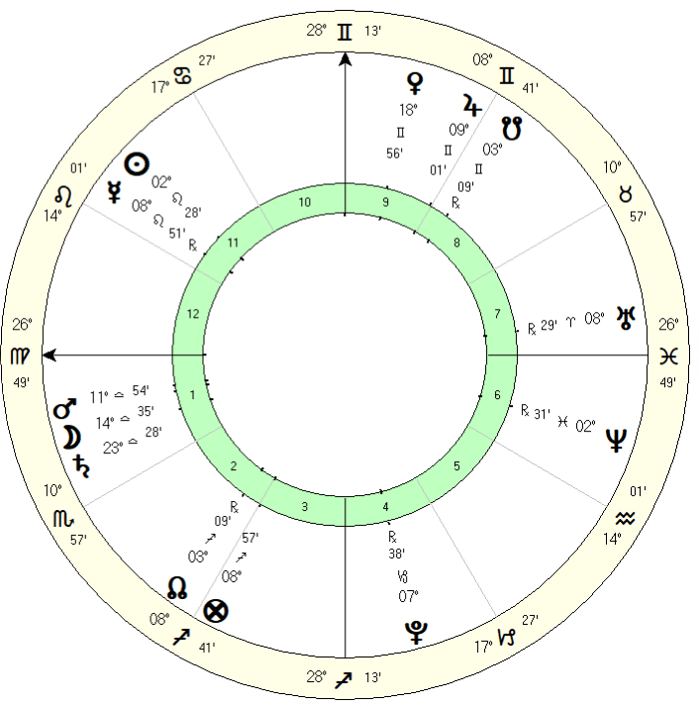
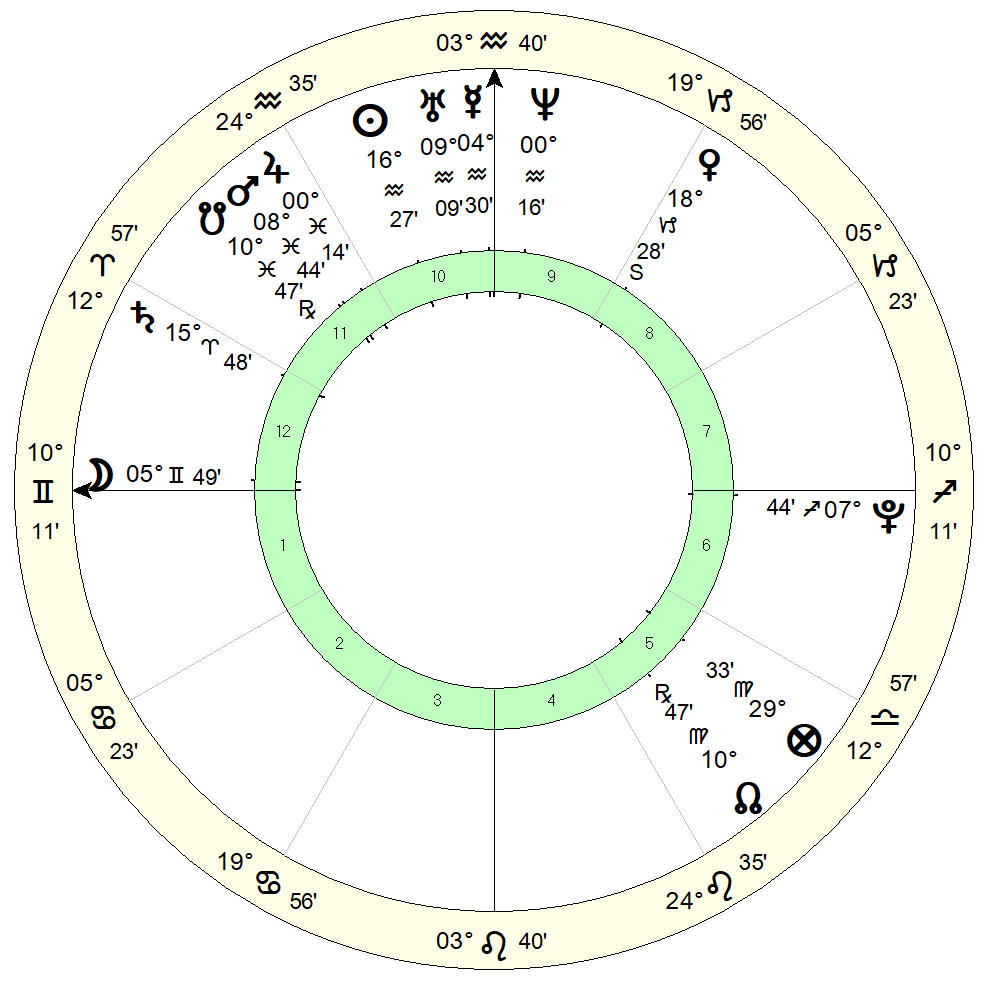
July 24 2012 at 11:47 am AEST Melbourne, Australia
In blissful ignorance I continued analyzing the chart. Scorpio was rising; its ruler Mars was in the 12th house in Libra, between Saturn and the Moon. Mars was in a separating trine with Jupiter, sextile with Mercury and moving towards a trine with Venus. Both Venus and Jupiter were in Gemini and the 8th house. In fact Mars was in a partile trine to the cusp of the 8th.
I knew that my client’s mother had died some 18 month earlier and that there were issues with her brothers relating to the inheritance, her assets and property. Mars being with Saturn Lord 3 (her brothers) and the Moon Lord 10 (her mother) and the emphasis on the 8th house, particularly as Jupiter was by profection, Lord of the year and exactly transiting her natal IC, I concluded that the whole situation surrounding her brothers and her mother’s estate was foremost on her mind and that she was finding it difficult; having problems taking action or making a stand on the issue as her significator, Mars was in detriment in the 12th house.
Sure enough that first thing out of my clients mouth when she arrived was about her trip back home and the dilemma she was having feeling caught between her brothers; whichever way she went would alienate one or the other, yet she felt that both were looking to her to resolve the situation. In fact she really didn’t want to deal or even think about the whole issue, but knew that she could not continue to ignore it.
The situation like all family disputes is complex and her brothers relationship is intense (Pluto is in the 3rd house). The appointment went very well as we explored many options related to her ability to figure out which approach to take. When she left I felt that it had been a very insightful and productive session, and then I looked at the consultation chart; it was not only the wrong date, but also the wrong time!
How could I do this? Yet the chart “worked” in guiding us to the core of her issue, through which she found a possible course of action for her to follow. This was to take a more “spiritual” approach which is suggested in the chart by the partile sextile between the Moon (ruler of the 9th) and the Sun in its own sign in the 10th.
Correct Chart
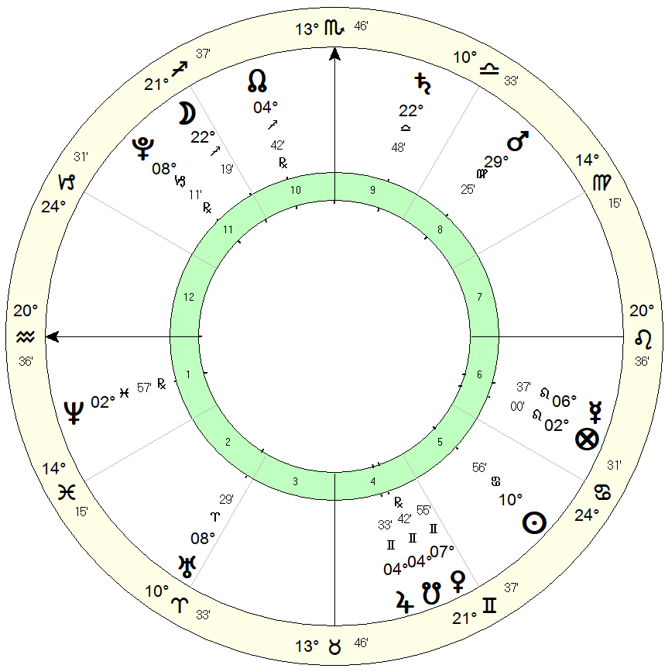
July 25 2012 at 10:00 am AEST Melbourne, Australia
Going back and setting the chart for the correct date & time, I could not see the situation nearly as clearly, though it could probably be extrapolated. There are few connections between this “correct” chart and my client’s natal and/or solar return charts. Had I looked at this chart I would not have been drawn to conclude that she was dealing with her family’s inheritance issues. However Mercury’s aspect to Jupiter and the 9th house cusp, as well as his conjunction to the Sun does point to my client’s conclusion of taking a more spiritual approach to her situation.
I am left with a sense of awe at the mystery of astrology! How can such specific information be drawn from a seemingly random chart? There is obviously some force at work which is beyond our control and that “knows” best.
The querent is a young woman trying to establish herself as a stylist in a competitive field. Initially she asked me whether she; should be involved in a project she had committed to? After a bit of probing we came to understand that what she really wanted to know was whether there was any benefit for her in being involved. So the question became “Will I benefit from being involved in this project?”
The project was a fashion runway show for some young emerging designers and included the shooting of a promotional video. There was no money involved, though it promised to be a creative and possibly good networking opportunity. As her focus of interest is photo and props styling, she was made responsible for all props. She was now having second thoughts about the project as she had a lot of paid work on and felt that it was going to take up far more time than she first had anticipated. She also had a sense that the woman in charge of the project had subtly manipulated her into getting involved and was very vague as to the time commitment it would involve.
Simple Judgement
The chart has Aquarius rising giving Saturn exalted in Libra as significator of the querent. Saturn is being sextiled by the Moon in Sagittarius who could also be taken as a significator for the querent. The project, being a creative project that falls into the category of entertainment, I gave to the 5thhouse and therefore was signified by Mercury in Leo in the 6th house. Mercury is disposited by the Sun in Cancer in the 5th house, which I took as the “Boss” of the project, the woman who was putting the project together and had asked my client to be involved.
Both Mercury and the Sun are in the signs of Saturn’s detriment. The answer was clear. She would not benefit from this project, in fact it was likely to be to her detriment. Mercury in the 6thimplies that she will be worked like a slave and the Sun’s position in Cancer shows us how the Boss could manipulate the Moon, our querent to do whatever it wanted.
The promise that this would be a good opportunity to network and make contacts, was not going to happen as Mercury, the project was already separating from Jupiter, the ruler of the 11thhouse who signified these contacts. However, Saturn being in a partile sextile with the Moon on the cusp of the 11thhouse indicates that the querent is already making contacts. A fact that the querent conceded.
I have been working with Solar return charts and profections for many years now. I take the ruler of the profected ASC as Lord of the Year and look at its position, condition and configuration in the Solar Return chart. When angular the native is more of a driving force behind the events that will take place that year, when cadent things happen through the outside impetus. I have found that the returning of angles in the solar return chart to the same signs as in the natal chart indicate a significant years.
Here is the story of a Solar Return. My son was visiting over the Christmas holidays and he asked me to look at his chart. His birthday being in April I drew out his next Solar return chart. As he had been living abroad in Cambodia for 4 years I could have relocated his SR chart, however I have found better results by simply using the natal position. So his Solar Return chart was set for Melbourne Australia, his birthplace.
Natal Chart
His natal chart has Sun exalted in Aries ruling his MC, however the 10th place from the ASC is Virgo, ruled by Mercury. His Aquarius Moon is in the 3rd house, a placement I have found many writers to have. There’s an abundance of Taurus giving him a staying power and the ability to work hard.
The Ascendent of the Solar Return was almost at the same degree as his natal ASC, which made this a significant or important year for him. The ruler of the solar return ASC, was Jupiter in Taurus in the 5th, close to cusp of the 6th house and deposited by Venus, ruler of the 6th positioned in the 6th .
Solar return
He was turning 29 so he was in a 6th house profected year, with his profected ASC being 21 Taurus. As he has Mercury, Mars and Venus in Taurus in his natal chart my first thought was that he would have a busy year. Since the profected ASC landed on and was ruled by Venus; Venus was a clearly the Lady of the Year. Venus rules the natal 6th and 11th house, and the 1st and 6th house by profection.
In the SR chart Venus is cadent in the 6th house in Gemini and conjunct the South Node. The theme of being busy, working hard but getting little recognition or honours during that year becomes more pronounced as the 6thhouse is emphasized by profection, natal and solar return placements. Further testimony supporting the denial of such honours is provided by Venus applying to perfect a partile square to retrograde Mars in Virgo on the MC; and the essential condition of the MC ruler, Mercury in Pisces, where he is in detriment, fall and peregrine.
The Solar Return Moon in Libra is conjunct Saturn, reinforces the sense of hard work and also hints at his forthcoming Saturn return which will impact his 11th house of friends and colleagues.
So I made my judgment: “This year, you will be working really hard, be very busy and may go back to doing something from your past (Venus conjunct the South Node), but you will get little recognition publicly for all your efforts. The events for the year will be initiated by others rather than by you. It will be an important and significant year which will be fortunate as both profected and Solar Return rulers are the benefics (Venus and Jupiter) and both are in good condition in the natal chart and not too bad in the Solar Return Chart. You may have difficulties with friends or colleagues .” (Moon/Saturn in the 11th)
So What Happened
My son could not make much sense of such a reading as he had been working as a journalist for 3 years and freelancing for the past year with quite a bit of success. He didn’t understand how being very busy and working hard would not bring him recognition, nor did the idea that events would be initiated by others make much sense, as it was through his own travel and ideas that he had come up with the material for all the articles he had been writing and selling. And how, he asked could the year be “good” if he was going to be so busy but get little recognition?
All I could say was that this is what I saw in the chart.
A couple month later, about 1 month before his actual birthday, he received a phone call out of the blue from a reputable publishing company asking him if he would be interested in writing a book on modern day Cambodia. He signed the contract in June (a couple months after his birthday) and was busy researching and writing for a good 18 months. He worked really hard and initially got no recognition. He said that doing the research for the book recalled his time at the University. He also experienced resentment and professional jealousy from some of his older journalist friends which he found uncomfortable.
So my judgment stands; and my son was duly impressed.
A note of interest: In most of the traditional text it is written that when Venus is the Lord of the Year or a time Lord, she will bring about events and circumstances to do with relationships, marriage or women generally. I could see no indication in the chart of this being relevant in that years; as there was no emphasis on the 7th houseshowing relationship or marriage (and he was currently not in a relationship). Though it is interesting that it was a woman who called him asking him to write the book!
Barbara Waters wrote in 1973 “Horary Astrology and the Judgement of Events” (page 14): “Saturn in the 7th house, the astrologer’s judgement is clouded…the reason for his blindness hardly matters because his judgement is clouded and cannot be objective.”
This chart has Saturn in the 7th house and I, the astrologer got it wrong. I even jokingly told the querent after giving my erroneous judgement that: “since Saturn is in the 7th house I am probably wrong”. On that point I was right. Looking back at the chart the answer seems obvious, however at the time “my judgement was clouded”.
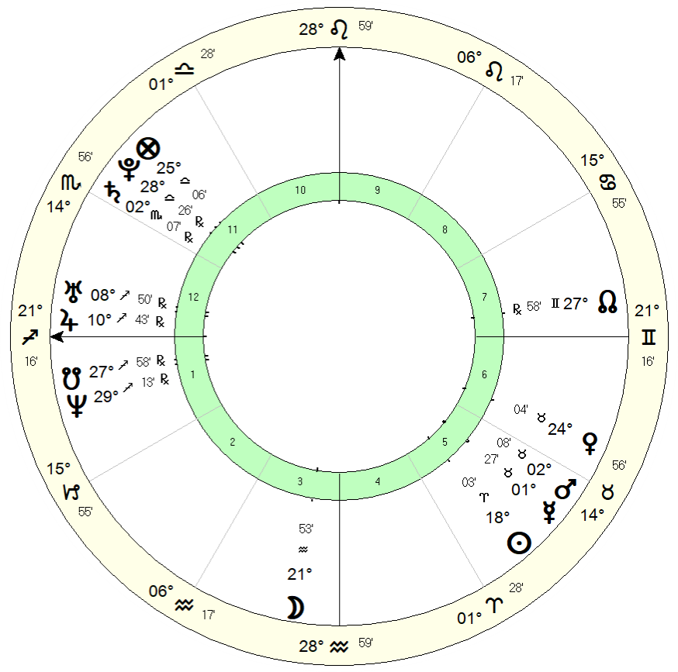
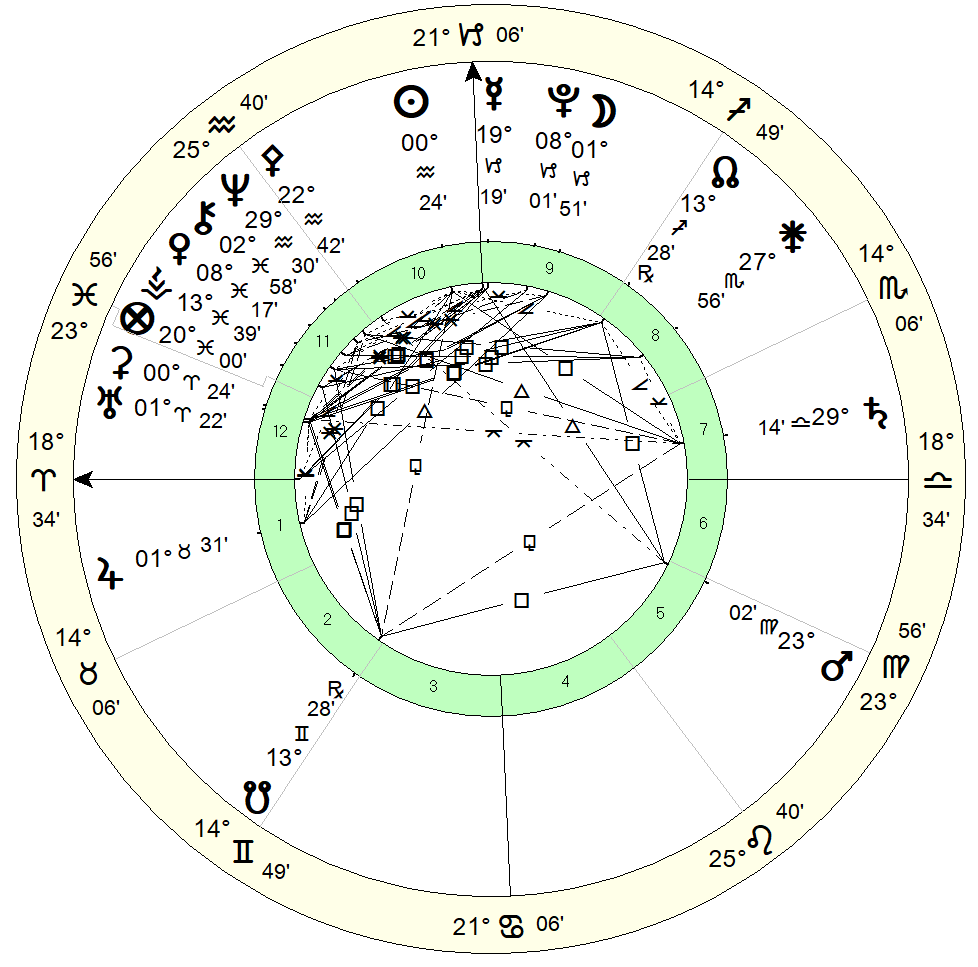
“Where are my glasses?” (21 Jan 2012, 12:52 PM, Melbourne Australia)
The querent had a trade table at an astrological conference. While setting up she had misplaced her glasses which were a new pair of designer prescription glasses. I was speaking with the querent, a friend and fellow astrologer, joking around as one does at a conference surrounded by colleagues and associates. When she told me of her lost glasses I offered to find them with a horary.
Only having the querent’s computer at hand I set the chart, but when I first saw it, I was shocked to find a chart filled with a million aspect lines and various asteroids and other points. To me the chart looked a confusing mess and I said: “I can’t see anything!”… I asked to change the settings and finally “saw” a chart as I am use to; clean and simple with few lines.
The querent is signified by the ASC and its ruler Mars in Virgo (working at a marketing table at a conference), the glasses are signified by the 2nd house ruler, Venus in Pisces, exalted (being designer glasses), but this placement also indicated that they are not in a totally foreign place, but rather a place where they are being “honoured”. There were a number of indications that the glasses would be found: the Moon in Capricorn is making a trine to Jupiter a planet in the first house, both luminaries are above the horizon.
But the only thing I saw was that there was no aspect between, Venus and Mars or the Moon and Venus (or Mars). I also saw the peregrine Mercury was on the MC, and I concluded that someone had found them, picked them up and walked off with them. Not a thief so much as an opportunist.
I could not get beyond the fact that the Moon would first hit Pluto before he could complete his sextile to Venus; which I interpreted as a prohibition. (This chart adds to my growing understanding that the outer planets do not function in the same manner as the seven classical planets do).
The fact that the Moon was in a partile trine with Jupiter in the ASC and had just separated from a sextile with Saturn (after which it ingressed into a new sign) shows that the glasses were probably in the possession of someone in authority, as Jupiter rules the 9th the conference was being held at a University) and Saturn rules the MC (also both Jupiter and Saturn tend to suggest a person with authority). The glasses were found at the front desk of the conference and the querent was reunited with them a couple days later.
As for the astrologer, she learnt a valuable lesson; never try to read a chart without giving it due reverence.
As a rule, I normally do not think that “should” questions are able to be answered with horary, but every once in a while I get a chart that is just so clear, the answer so obvious that it defies this “rule”.
The querent had recorded a song and wanted to get it released but was told that without a video clip this would never happen. He has been trying to get someone to “direct” the clip as he felt totally unqualified to do so himself, though he had lots of ideas about how he wanted it to look.
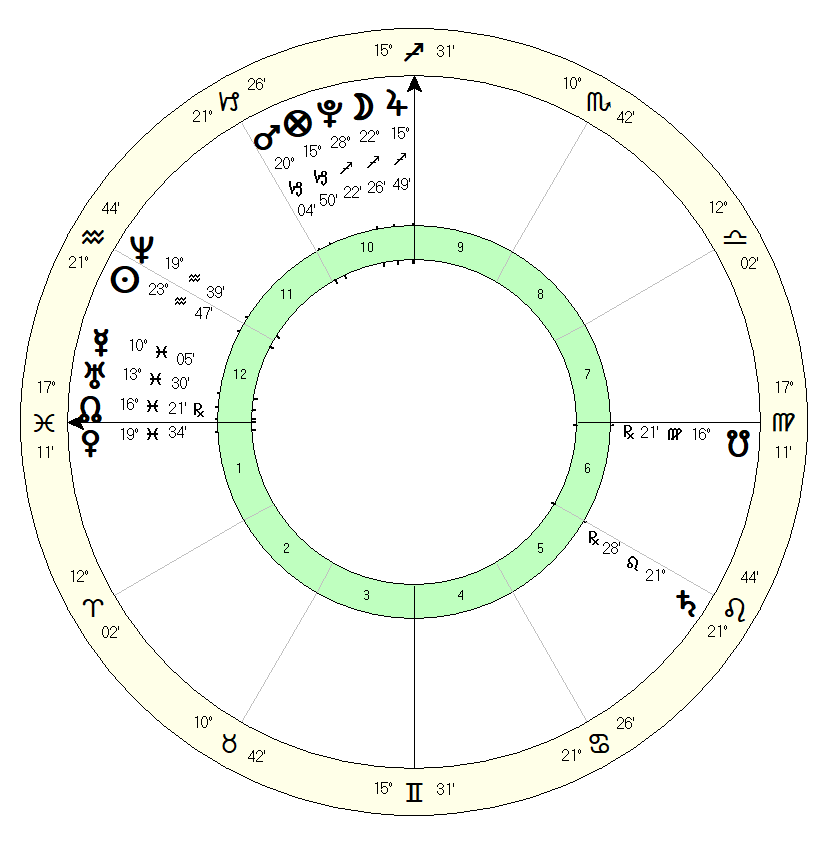
8:47 am on February 13, 2007 in Melbourne
This chart shows the significators of the querent highly dignified and fortified, while the significator of others ( 7th ruler, Mercury) or employees (6th ruler, Sun) are both in bad zodiacal condition and in weak positions, giving us the answer.
The querent is signified by Lord of the ASC, Jupiter in Sagittarius is on the MC. Venus being on the ASC would also signify the querent. Both are dignified benefics and on the major angles clearly providing the answer; yes he should direct the clip. The Moon also in the 10th close to the MC and conjunct Jupiter, is about to sextile the Sun (Lord 6), and Venus sextile Mars ruler of the 2nd (the money) and 9th (the vision), on the 11th cusp. With the help of friends ( 11th house) and hiring others (Lord 6) the job will be done. Mars being exalted the vision and the friends assisting will be of a good quality.
The sextile of the Moon and Sun can be understood as bringing the vision to light, as the Moon is ruler of the 5th house which could signify the creative project, especially relevant as the Moon’s last aspect was a sextile to Neptune (conjunct the Sun) and universal significator of film.
It is also interesting that the Nodes are conjunct the ASC/DES axis, showing a fated quality to this question. Having tried to find someone to direct this clip for quite a long time with no success; signified by the Sun (Lord 6) in detriment on the 12th cusp opposite Saturn in detriment retrograde, being let down by others promising one thing and not coming through. These others could also be signified by Lord 7 Mercury in Pisces and with Uranus in the 12th very unreliable. Neither Sun nor Mercury engenders any sense of reliability and trust.
The querent did go on to direct the clip with the help of friends and others. The exalted state of both Venus (the querent) and Mars (the vision and friends) show us that the querent was not 100% comfortable doing this but he was capable. It was a successful project whichsaw his vision realised.



 Astrologicalmind