Once we enter the realm of traditional astrology our view of life and the nature of reality shifts. As we begin to encounter the philosophical rational, the beauty and precision that is at the heart of traditional astrological doctrine, we cannot help but be influenced and inspired. As we rediscover the wisdom of astrologers that has been handed down through the centuries, we are left to wonder at the profundity of our astrological legacy. However, it is the commonality of our contemporary human experience with that of those who lived in the distant past, that takes us by surprise. It is that which binds us through time.
We live in a world that is imbued with ideas promoting evolution and progress. Whilst everything on earth is born, grows, withers and dies in the endless cycle of life, giving rise to the illusion of a forward movement of time, it is but that; an illusion.
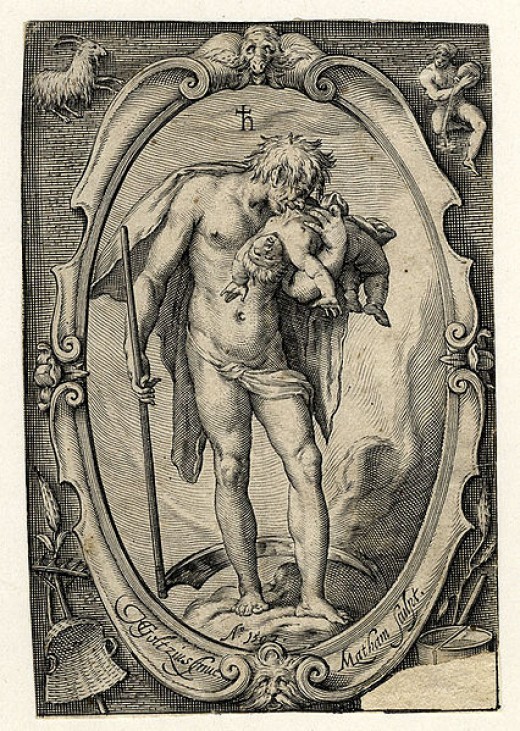
Classical astrology understands the importance of Saturn, not only as the ally of the astrologer but also as the significator of time. Saturn of old was also called the Lord of deception and it is possibly his rulership over time which earned him this moniker. As astrologers, we deal in time and are prone to getting caught in its apparent but deceptive forward momentum. By looking back into the past, we recognize that we have not moved far. The cycles of life, of the planets and stars, mark our experiences, but time stands still in a forever present moment that is re-experienced over and over and over.
The theory that Darwin made famous; that every living creature adapts and evolves is so accepted that it is nigh near impossible to conceive of a past that is not somehow more backwards, less evolved than our present day. Astrologers are not immune to this notion and so they enthusiastically interpret each new discovery in our cosmos as a sign of the collective evolution in our consciousness. This implies that the consciousness of people in the past was not as evolved as that of people alive today.
Even a cursory knowledge of political, philosophical, or astrological history easily disproves this idea. The wisdom of the past is awe inspiring when one makes friends with Saturn and takes the time and effort to explore it. While technological advances made by humans gives the outward appearance of progress (or evolution) the actual nature of human kind has not changed. We still have the same concerns and desires, for health, happiness, wealth and power. This is why traditional astrology has not lost any of its importance. In fact, I would argue that it has as much relevance today as it ever did.
The term traditional astrology is one that I use to identify horoscopic astrology as it was practised up until the mid-seventeenth century in the Western world. From its inception (circa 400 BCE) till its demise some 2000 years later astrology underwent changes which are reflected in the variations of techniques used and are encompassed in the concepts on which astrological wisdom was built. Beginning with the Hellenistic period, flowering through its Arabic stage, returning to Europe during the late medieval age and emerging as a serious discipline in the renaissance, astrology wove into its development the historical, cultural, religious, and philosophical concepts and prejudices of the times.
There are differences between the astrology that was practised in the various periods over these two thousand years, but the basic principles, which underpinned it, remained to a greater extent unchanged. It was only with the advent of “the age of enlightenment and reason” when a radically new understanding of our world and the reality of the Universe took hold, that astrology was forcibly altered in order to survive1 . From that point on, matter was measured and understood to be the spring from which life emanated and the foundation on which reality was built. Physical laws of cause and effect over took the divine laws of essence, soul and the spiritual understanding of creation.
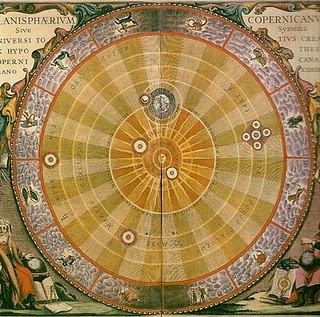
There is no place for traditional astrology in a worldview that is anchored in a mechanical and materialistic understanding of reality. When matter, rather than mind became accepted as the principle building block of life, astrology along with all other doctrines based on metaphysical principles were made redundant unless they could prove their adherence to physical laws. One of astrology’s basic principles is its observations of the movement and cycles of the planets from a geocentric perspective, so when it was demonstrated that the movement of the planets in the solar system were heliocentric, astrology was deemed by some to be based on a false premise. Some astrologers tried to reform astrology in order to make it more acceptable to reason and natural philosophy, stripping it of its association with Hermetic magic, divination and neo-Platonic spirituality. However, the advances in science marginalised astrology and the attempts to reform it failed; it’s now perceived tainted past making it vulnerable to ridicule.
As maligned and ridiculed as astrology became it nonetheless refused to die! Evidence of astrology working continued to be a thorn in the side of science, a thorn that could be ignored but not easily removed. As long as there was some spark of a possible physical or materialistic causation to explain astrology’s effect and this could be demonstrated or ideally proved, then astrology would, begrudgingly have to be allowed to exist. Unfortunately, astrology cannot exist comfortably within these confines, and many fine research astrologers have spent countless and fruitless hours trying to prove the relevance of astrology from this materialistic perspective.
Astrology is not causative, it is reflective. What we see in the skies mirrors what is happening here on earth and what happens here is symbolically reflected in the skies, but cosmic movement do not cause these happenings. The physical world was understood to be a three-dimensional embodiment of soul, without which the physical world could not exist. The unseen world of essence and spirit, the world that lacks material manifestation was as real as the world of physical experience. This unseen world was the realm of the gods and semi-divine beings, who took on the form of many things including the planets. Our forefathers understood reality to be interrelated, nothing stood isolated on its own and the gods lived a neighbouring parallel existence to man. This gave rise to the ongoing debate about the place of human consciousness and freewill in astrology, a debate that has been raging since the time of St Augustine2.
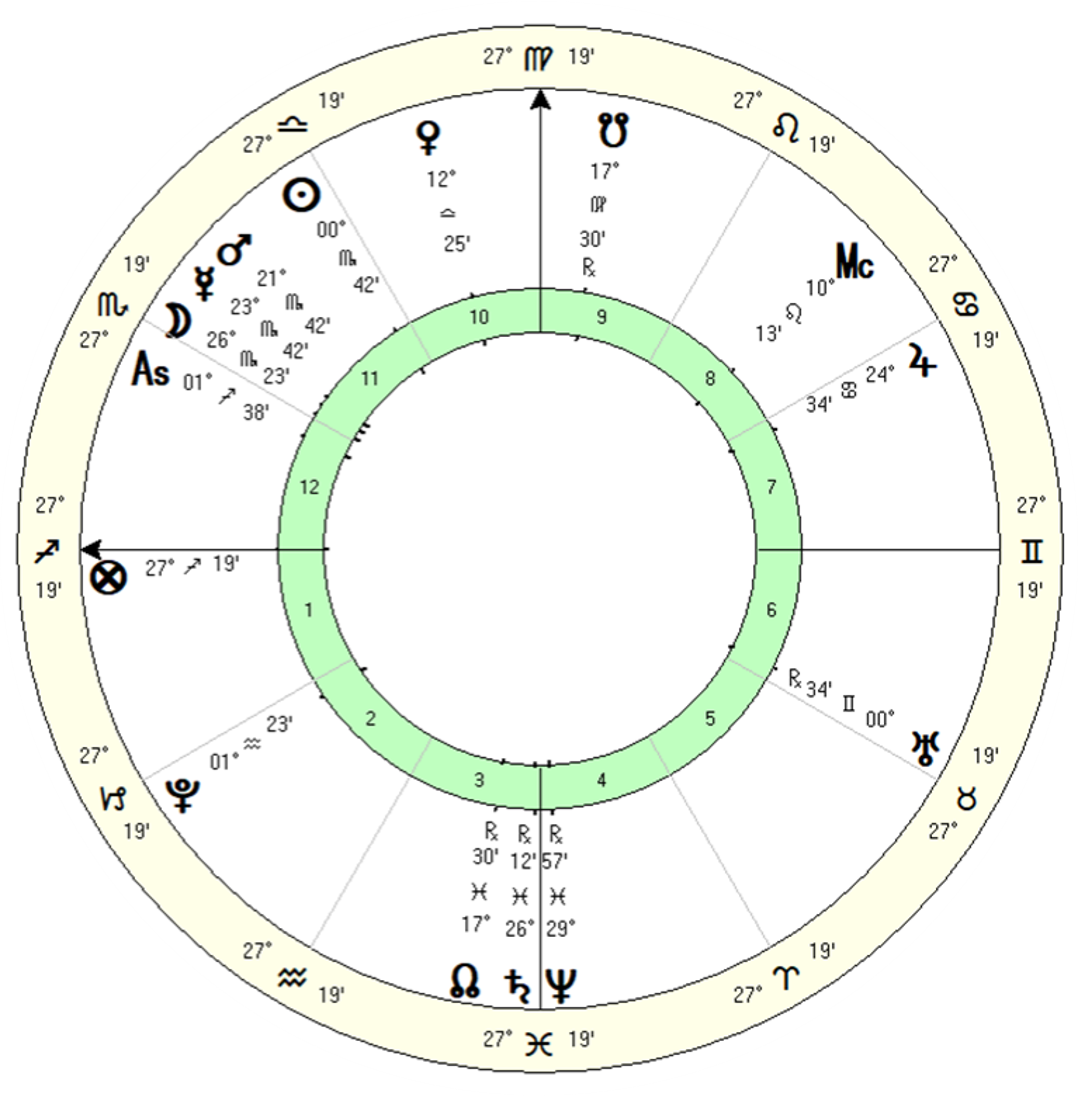
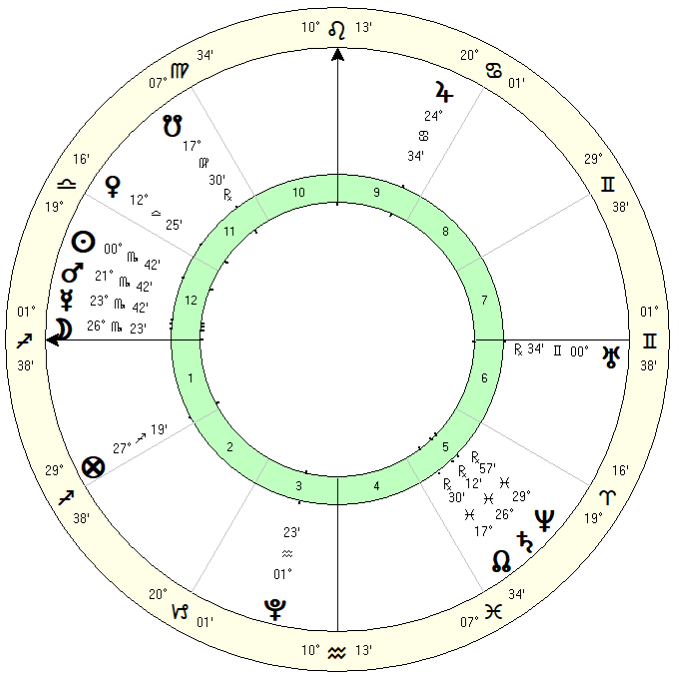
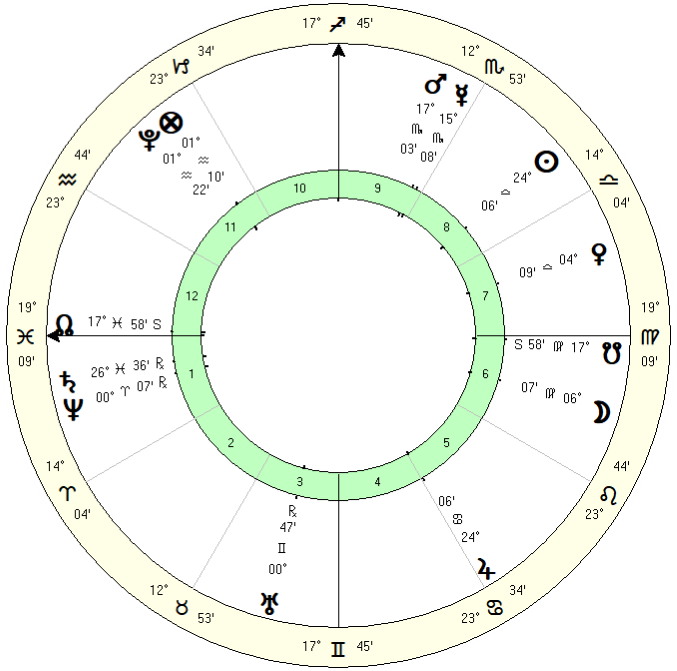
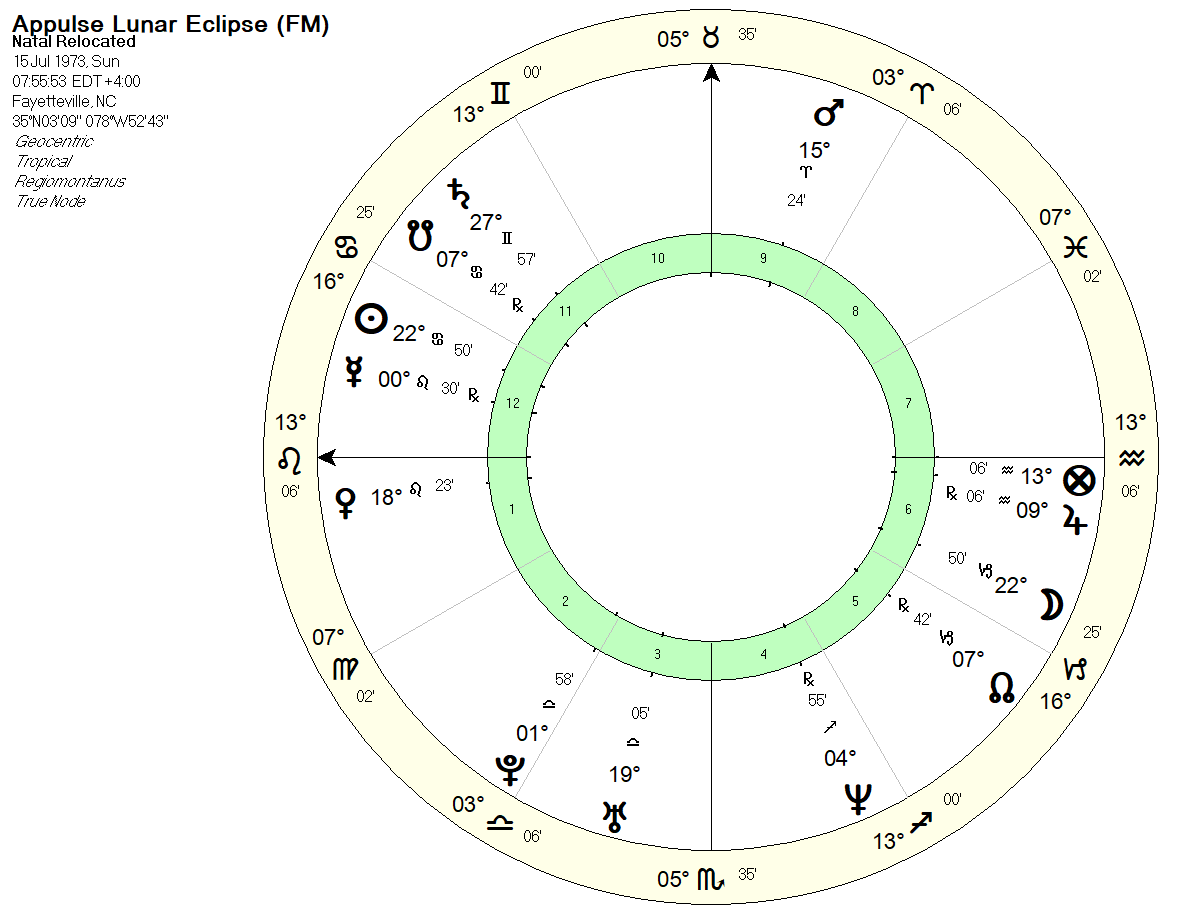
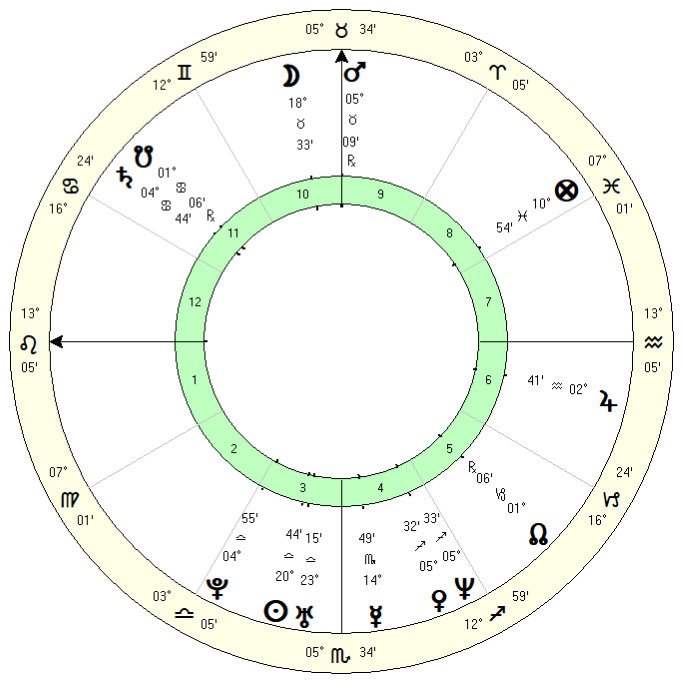
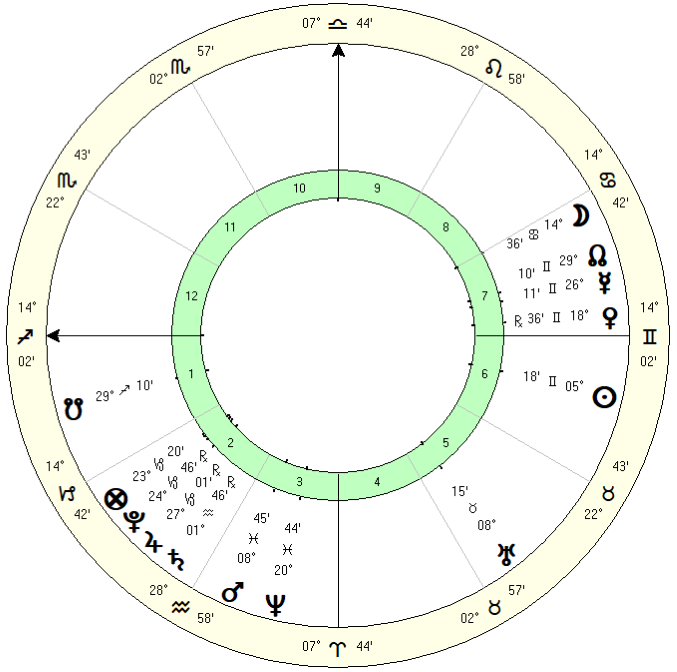
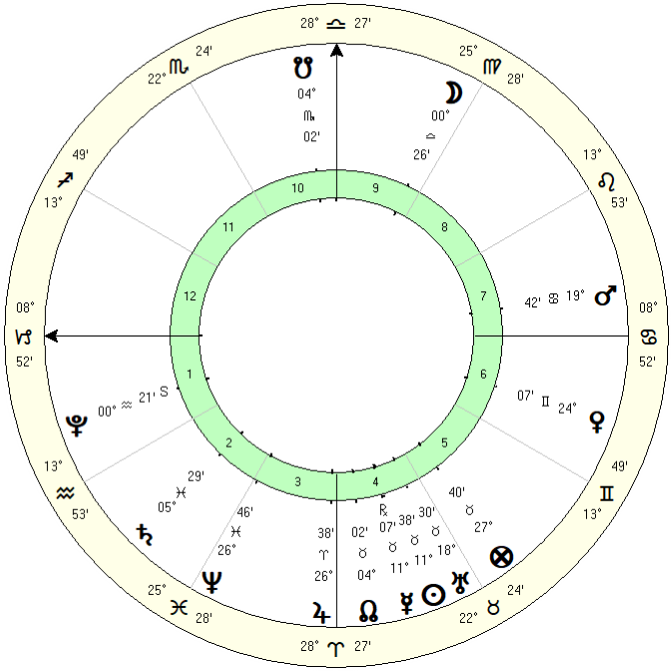
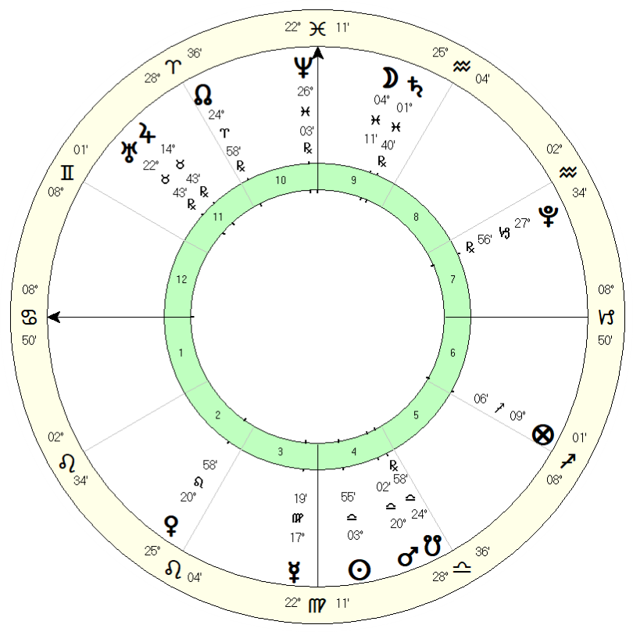
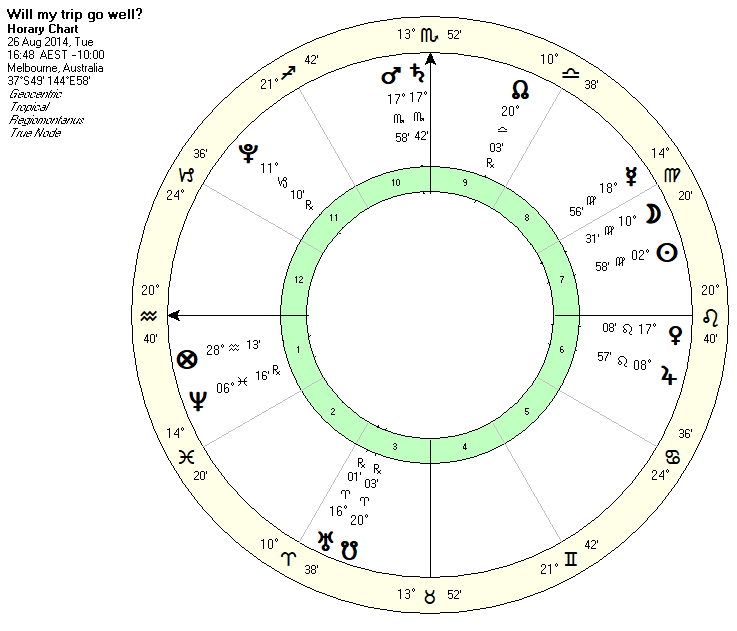
The astrologer’s job was to interpret the movement of the sky, thereby imparting the messages and wisdom of the celestial gods to the people on earth, in order to help them take right action; be it the right time to sow their crops, to marry or to make war. For it was known that not all moments in time are equal, as it is written; “To everything there is a season, and a time to every purpose under the heaven”3. Time, is measured by the cosmic movements and cycles of the planets and so it is only logical that one way that the quality of a particular moment in time can be defined is by the position of those planets relative to earth. A horoscope is a picture of a frozen point in time and its interpretation is the domain of the astrologer.



 Astrologicalmind